In this listicle roundup, we break down the most important AI assistant statistics for 2026 and explain what they reveal about real-world adoption and impact. AI assistants are no longer limited to demos or experiments. They now influence how companies build software, how employees work, and how consumers search, shop, and decide.
This guide brings together verified data on growth, usage, trust, and risk. We collect data from trusted online sources, and all source URLs are included at the end of the article for transparency so that readers can explore the original research with confidence.
AI assistants are transforming business processes fast. Hire skilled AI and ML engineers via Index.dev to stay ahead in 2026 and beyond.
Key AI Assistant Statistics and Highlights for 2026
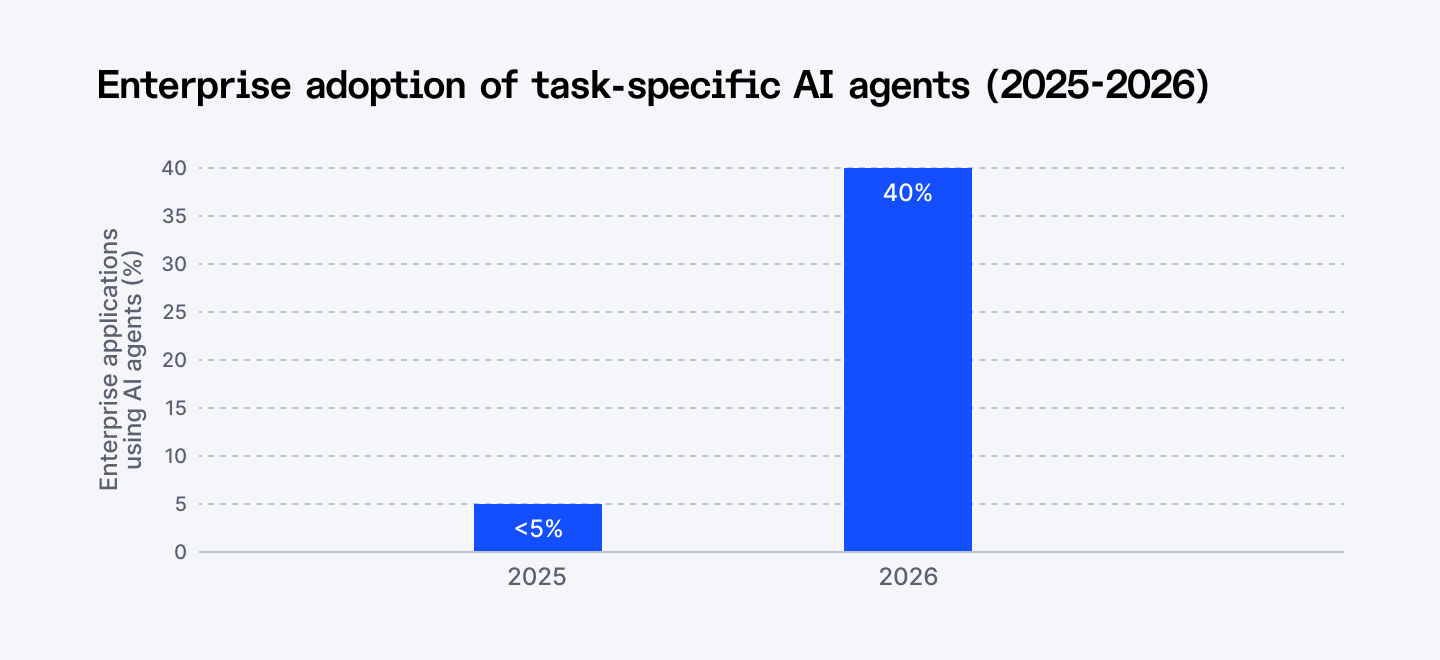
- 40% of enterprise applications will include task-specific AI agents by the end of 2026, showing that AI assistants are becoming built-in software features.
- AI-powered agents and robots could generate $2.9 trillion in annual U.S. economic value by 2030, linking AI assistants directly to national productivity.
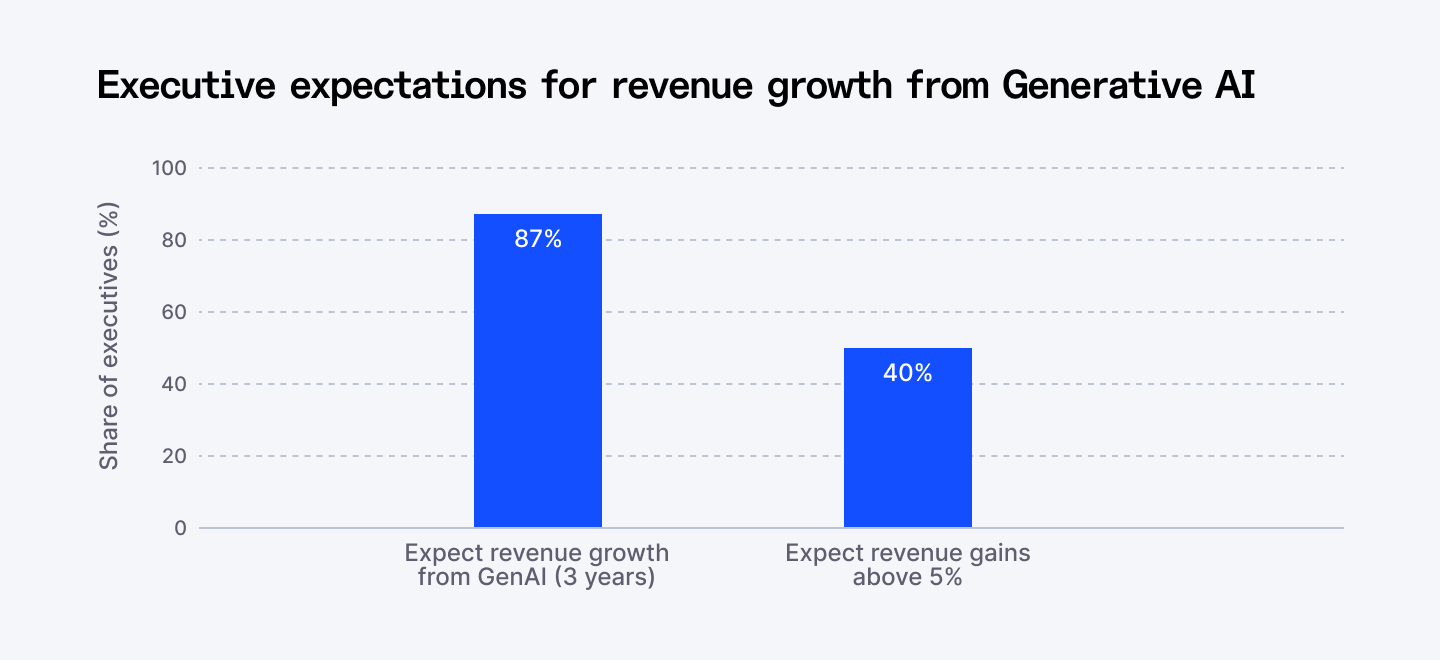
- 87% of executives expect revenue growth from generative AI over the next 3 years, demonstrating strong leadership confidence in AI assistants.
- 51% of organizations expect AI to augment 26–50% of global jobs in 2026, showing task support is more common than job replacement.
- 62% of organizations are already experimenting with AI agents, indicating widespread early-stage adoption.
- AI agent adoption jumped from 11% to 42% in just two quarters, driven by clear ROI from automating repeatable work.
- 84% of developers use or plan to use AI tools, with 51% using them daily, making AI assistants part of everyday development work.
- 19% of consumers now use AI assistants as their primary research tool, signaling a shift in discovery behavior.
- Over 40% of agentic AI projects may be canceled by 2027 due to cost, unclear value, or weak controls, highlighting governance risks.
- By 2028, 15% of day-to-day work decisions will be made autonomously by AI agents, showing growing reliance on assistant-led decision-making.
Global AI Market Growth and Economic Impact
Market size and economic output figures explain why AI assistants have moved from experimental tools to long-term infrastructure by 2026. The data in this category focus on global valuation, growth rates, productivity impacts, and national-level economic contributions. Readers can expect a macro-level view that connects AI assistant adoption to sustained investment and labor-efficiency gains. These numbers matter because enterprise adoption, public-sector policy, and long-term innovation depend on confidence in market growth. Without this economic momentum, large-scale deployment of AI assistants would stall.
- The global AI market was worth $87 billion in 2022 and is expected to grow to $407 billion by 2027, with a 36.2% yearly growth rate. This fast growth explains why AI assistants are no longer small experiments and are now becoming core tools used by companies worldwide.
- Research shows the AI market reached $390.91 billion in 2025 and could grow to $3.49 trillion by 2033. This growth comes from AI adoption in healthcare, finance, retail, and manufacturing, which shows AI assistants are spreading across almost every major industry.
- AI-powered agents and robots could create $2.9 trillion in economic value each year in the US by 2030. This means AI assistants can directly improve national productivity by helping businesses work faster and smarter.
- Generative AI could increase worker productivity by 0.1% to 0.6% every year until 2040. Even small yearly gains matter because they add up across millions of workers and many years.
- 75% of the total value from generative AI comes from four areas: customer operations, marketing and sales, software engineering, and research and development. This shows AI assistants create the most impact when they support core business work, not side tasks.
To translate this macro growth into pipeline, revenue teams are standardizing on data-rich sales intelligence tools that prioritize data accuracy, market coverage, and tight CRM integrations. For 2026, compare leaders like ZoomInfo, Apollo, 6sense, Cognism, and Lusha to align spend with ROI and go-to-market velocity.
Read next: Discover which countries are leading AI growth—and why it matters for jobs and hiring.
Enterprise Software and Agentic AI Expansion
Enterprise software trends reveal how AI assistants are becoming embedded system components rather than optional add-ons. The data here covers application-level integration, revenue contribution, interface shifts, and autonomous decision-making. Readers will understand how agentic AI reshapes the architecture of enterprise software and user interactions. These figures matter because they signal a transition toward AI-native applications where assistants operate continuously across workflows. This shift affects how software is built, priced, and adopted across large organizations.
- By the end of 2026, 40% of enterprise software applications will include task-specific AI agents, compared to less than 5% in 2025. This shows that AI assistants are becoming built into software rather than optional tools.
- Agentic AI is expected to generate 30% of all enterprise software revenue by 2035, worth more than $450 billion, up from only 2% in 2025. This shows AI assistants are becoming a major revenue driver for software companies.
- By 2027, one-third of agentic AI deployments will use multiple AI agents with different skills working together. This means AI assistants will handle more complex tasks instead of simple single-step actions.
- By 2028, one-third of user interactions will move from traditional apps to agentic front ends. This means users will interact more with AI assistants than with menus or forms.
- Researchers expect 15% of daily work decisions to be made automatically by AI agents by 2028, compared to 0% in 2024. This shows AI assistants are starting to make real decisions, not just give suggestions.
- By 2028, 33% of enterprise software applications will embed agentic AI, up from less than 1% in 2024, proving how quickly this shift is happening.
- By 2026, one-third of agentic AI systems will already combine agents with different skills, confirming that multi-agent systems are becoming standard.
Organizational Adoption and Scaling Status
Adoption data shows how far organizations have progressed from experimentation to real operational use of AI assistants. This category distinguishes between pilots, production deployments, and enterprise scaling. Readers can assess whether AI assistant use is still limited or becoming embedded in daily operations. These figures matter because the depth of deployment determines business impact. Understanding adoption maturity helps explain why some organizations see strong results while others struggle to move beyond trials.
- AI agent adoption jumped from 11% to 42% in just two quarters, showing companies are moving very fast once they see real value.
- 62% of organizations are experimenting with AI agents, which shows strong interest even if many are still testing.
- Nearly two-thirds of organizations have not yet scaled AI across the entire company, meaning most firms are still early in their AI journey.
- 23% of organizations are actively scaling agentic AI in at least one business function, while 39% remain in experimentation. This gap explains why results vary widely between companies.
- 51% of respondents say they already use AI agents in production, which means AI assistants are handling real business tasks today.
- Mid-sized companies with 100 to 2,000 employees lead adoption, with 63% using agents in production, often because they can move faster than very large enterprises.
Business Value, ROI, and Executive Expectations
Executive-level data explains why AI assistants continue to receive funding and strategic attention. This category covers revenue expectations, productivity gains, innovation outcomes, and the location of the financial impact. Readers will understand how leaders evaluate the success of AI assistants beyond experimentation.
These figures matter because executive confidence drives budget approvals, organizational change, and long-term deployment. Without measurable value, AI assistants rarely move from isolated use cases to enterprise-wide systems.
- 87% of executives expect generative AI to increase revenue within three years, and about half expect growth of more than 5%, which explains why AI budgets keep rising.
- 64% of organizations say AI drives innovation, but only 39% see direct impact on EBIT. This shows that AI value often appears first in specific tasks before appearing in financial reports.
- Only 4% of companies have advanced AI capabilities across all functions, while 22% are starting to see measurable gains. This gap explains why most companies are still learning.
- Leaders report 62% of AI value comes from core business processes. Companies that use AI in both core and support functions gain a stronger advantage.
- 45% of leaders use AI for cost reduction, compared to only 10% of others, showing AI helps control spending when used strategically.
- 80% of organizations set efficiency as an AI goal, but the highest performers also focus on growth and innovation, not just cost savings.
Workforce Impact and Job Augmentation
Workforce data clarifies how AI assistants change task distribution and skill needs rather than fully replacing jobs. This category focuses on the potential for task automation, job augmentation levels, workforce size expectations, and future skill requirements. Readers will gain a realistic view of how work evolves as assistants handle repetitive and analytical tasks. These figures matter for workforce planning, training programs, and employee communication as AI assistants become standard workplace tools.
- At current capability, AI agents can handle tasks that make up 44% of US work hours, while robots add another 13%. This shows AI mainly changes how work is done, not whether work exists.
- In 2026, 51% of respondents expect AI to augment 26–50% of jobs, while 30% expect 51–75%. Only 4% expect near-total job impact, showing most people expect a job change, not job loss.
- 32% of organizations expect workforce reductions, 43% expect no change, and 13% expect growth, showing mixed outcomes depending on strategy.
- By 2029, 50% of knowledge workers will need new skills to work with or manage AI agents, making training a priority.
- 67% of executives say AI agents will change job roles within 12 months, and 50% believe their operating model will look completely different in two years.
AI Assistant Use Cases and Industry Applications
Use-case data shows where AI assistants deliver measurable operational results today. This category spans cybersecurity, software development, healthcare, banking, agriculture, customer service, and marketing. Readers will see how assistants improve speed, accuracy, and cost efficiency when applied to specific problems. These examples matter because AI assistants succeed through focused deployment rather than broad promises. Industry patterns also signal where future investment and innovation will concentrate.
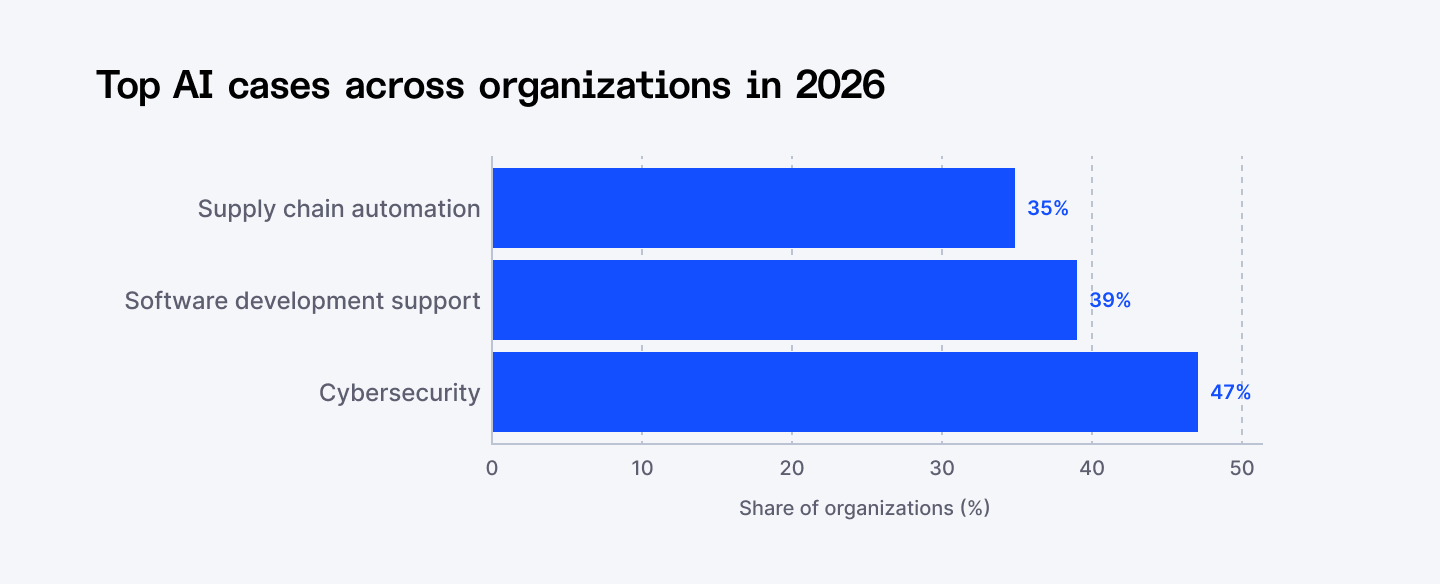
- In 2026, the top AI use cases include cybersecurity (47%), software development support (39%), and supply chain automation (35%), indicating that AI assistants focus on high-impact business areas.
- Generative AI reduced customer follow-up contacts by 20%, and 90% of service staff reported saving time and improving service quality.
- In a company with 5,000 customer service agents, AI increased issue resolution by 14% per hour and reduced handling time by 9%, proving large-scale efficiency gains.
- AI could save $150 billion per year in US healthcare by 2026 by improving diagnosis, workflows, and administration.
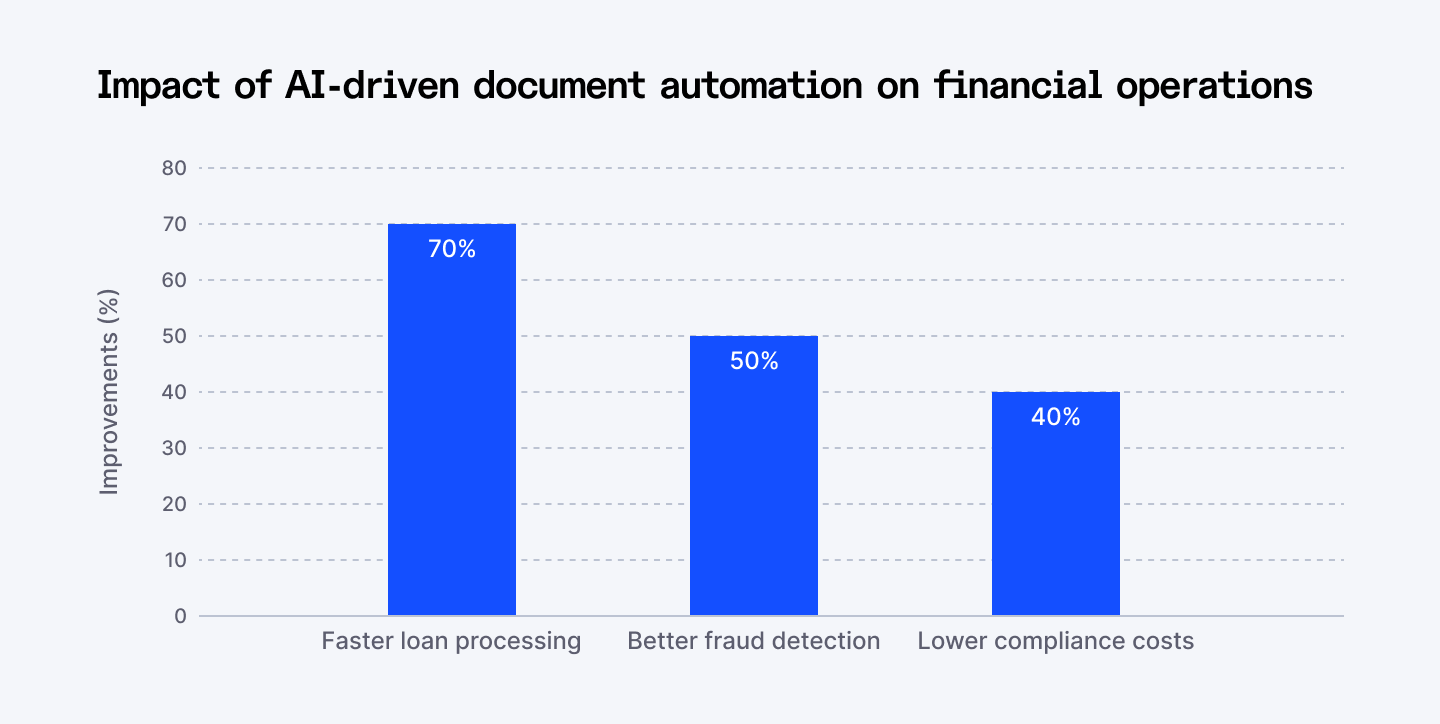
- AI-driven document automation enables 70% faster loan processing, 50% better fraud detection, and 40% lower compliance costs in banking.
- People plan to use AI assistants mainly for scheduling (52%), privacy management (45%), health monitoring (41%), and household tasks (41%), showing AI assistants are becoming personal helpers.
- AI will most influence robotics (52%), extended reality (36%), and autonomous vehicles (35%), shaping future industries.
- 60% of top agencies in the US already use generative AI to run always-on social media with minimal human input.
- Costa Group achieved 15% higher crop yields with AI-powered robots compared to manual pollination, demonstrating real impact in agriculture.
Developer Adoption, Productivity, and Trust
Developer data provides a ground-level view of AI assistant performance. This category covers usage frequency, productivity impact, trust gaps, resistance areas, and common frustrations. Readers will understand why developers adopt AI assistants while remaining cautious about accuracy and responsibility. These insights matter because developers directly influence integration quality, system safety, and long-term reliability of AI assistants.
- 84% of developers use or plan to use AI tools, and 51% use them daily, indicating that AI assistants are part of everyday development work.
- At the same time, 46% of developers distrust AI accuracy, while 33% trust it and only 3% highly trust it, which explains why developers remain cautious.
- Concern about AI struggling with complex tasks dropped from 35% in 2024 to 29% in 2025, showing tools are improving.
- 52% of developers say AI improves their productivity, especially for routine work.
- Outside work, 49% of agent users mainly use AI for language tasks, such as writing or translation.
- 52% of developers either do not use AI agents or only use simple tools, and 38% have no plans to adopt them.
- Developers avoid AI for high-risk tasks: 76% avoid deployment and monitoring, and 69% avoid project planning.
- 66% of developers say AI-generated code is often almost correct but still wrong, and 45% say fixing it takes more time.
- 70% say agents reduce development time, 69% say productivity improves, but only 17% see better team collaboration.
- ChatGPT (82%) and GitHub Copilot (68%) lead the developer AI market.
Consumer Behavior and Trust in AI Assistants
Consumer data explains how AI assistants influence research, shopping, and decision-making behavior. This category covers adoption rates, trust levels, early usage patterns, and avoidance signals. Readers will understand where AI assistants fit alongside traditional search and commerce flows. These insights matter because consumer trust determines whether assistants become primary interfaces or remain secondary tools.
- 19% of consumers already use AI assistants as their main research tool, showing AI is entering daily decision-making.
- 38% trust AI for general research, 21% for finding deals, and 16% for product comparisons, showing trust depends on task risk.
- 18% of shoppers use AI in most shopping journeys, while 38% avoid AI, showing adoption is growing but uneven.
- 76% of shoppers still start with traditional search, but 24% now rarely use search engines.
- 43% of consumers engage with AI when it is smoothly built into the shopping experience.
Many users also rely on curated directories and comparison platforms that list the best AI aggregators, helping them evaluate tools, features, and trust signals before choosing which assistant to use.
Up next: See which countries and regions are leading in AI readiness and how it shapes the future of work and business.
Risks, Trust, and Governance Pressures
Risk and governance data highlight the constraints slowing AI assistant adoption. This category covers security concerns, cost barriers, trust limitations, legal exposure, workforce anxiety, and project failure rates. Readers will understand why many AI initiatives stall despite strong interest. These insights matter because sustainable deployment depends on governance, safeguards, and organizational readiness rather than technology alone.
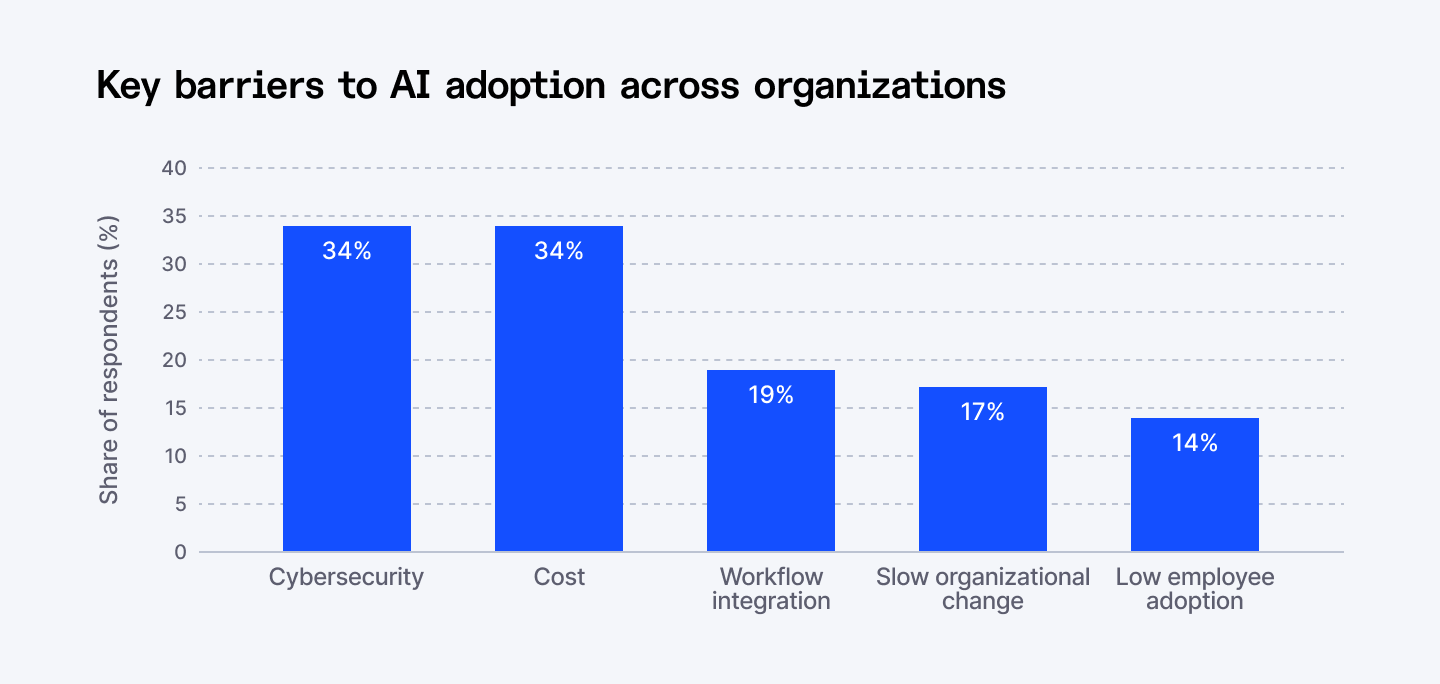
- Main barriers to AI adoption include cybersecurity (34%), cost (34%), workflow integration (19%), slow change (17%), and low employee adoption (14%).
- 28% of respondents say lack of trust is a top challenge, with higher confidence in data analysis (38%) and lower trust in financial transactions (20%).
- 61% of organizations report rising employee anxiety about job loss due to AI agents.
- Over 40% of agentic AI projects may be cancelled by 2027 because of cost, unclear value, or weak controls.
- Building enough AI data centres could take 5–7 years, slowing infrastructure growth.
- 91% expect demand for data analysts to grow due to agentic AI.
- By 2026, 50% of companies will require AI-free skill tests to protect critical thinking.
- By 2026, AI-related legal claims may exceed 2,000.
- 35% of countries may rely on region-locked AI platforms by 2027.
- By 2027, AI agents could disrupt productivity tools, creating a $58 billion market shake-up.
- 90% of B2B buying could be handled by AI agents, moving $15 trillion in spending, by 2028.
On the seller side, this shift is driving investment in GTM AI platforms that unify B2B data, intent signals, and account context, so vendor-side AI can match the precision of the buyer-side AI it will increasingly negotiate with.
High Impact Case Evidence
This section validates the AI assistant's impact using real deployments. It highlights measured gains in healthcare accuracy, customer service speed, and operational efficiency. These examples prove AI assistants create value beyond theory. Practical results build confidence for wider adoption.
- Microsoft’s MAI-DxO achieved 85.5% accuracy in medical cases, compared to 20% for experienced doctors, demonstrating that AI can outperform humans in specific tasks.
- Telstra reduced customer follow-ups by 20%, and 90% of staff saved time using generative AI.
- A company with 5,000 agents saw 14% higher issue resolution per hour, proving AI scales well in large teams.
Final Words
The AI assistant statistics for 2026 point to a clear shift from experimentation to everyday use. Organizations now deploy assistants to drive productivity, automate decisions, and support core workflows. At the same time, the data shows limits around trust, governance, and workforce readiness that cannot be ignored. Readers can use these statistics to benchmark their own progress, identify high-impact use cases, and avoid common pitfalls seen in failed deployments. For leaders, the data support smarter investment and policy decisions. For teams, it offers guidance on where AI assistants add value and where human oversight remains critical.
➡︎ Looking to build an AI-ready tech team? Index.dev connects you with vetted AI engineers worldwide — fast hiring, lower risk, and global talent.
➡︎ Want to explore more insights on AI talent, strategy, and hiring? Dive into our related guides on global AI talent pools, building an AI-first tech stack, hiring developers faster with AI, emerging AI roles, and how top companies solved remote AI hiring challenges.
FAQs
How widely are AI assistants adopted in enterprises in 2026?
40% of enterprise applications will include task-specific AI agents by the end of 2026. This shows AI assistants are no longer optional tools. They are becoming built-in parts of enterprise software. Many organizations now deploy them for automation, decision support, and workflow execution rather than limited pilots.
What economic impact can AI assistants create?
$2.9 trillion in annual U.S. economic value could be generated by AI-powered agents and robots by 2030. This estimate links AI assistants directly to productivity gains at a national level. The value comes from task automation, faster decisions, and better use of human time across industries.
Will AI assistants replace jobs in 2026?
51% of respondents expect AI to augment 26–50% of global jobs in 2026. This means AI assistants mainly support tasks rather than replace entire roles. Only 4% expect near-total job impact. Most changes involve shifting work toward higher-value activities, not job elimination.
How fast is AI agent adoption growing?
AI agent adoption jumped from 11% to 42% in just two quarters. This rapid increase shows organizations see clear ROI from automating repeatable work. Faster deployment cycles and measurable productivity gains are pushing companies to move from trials to production environments.
How do developers feel about AI assistants?
84% of developers use or plan to use AI tools, but 46% distrust their accuracy. While over half report productivity gains, many avoid using AI for high-risk tasks like deployment. This shows AI assistants are helpful, but human review remains critical in technical workflows.