AI is now a major reason for the fast growth of cloud development. Companies use cloud platforms to run AI models, store large amounts of data, and support stronger digital systems. At the same time, the use of AI in the cloud brings new cost, security, and workload challenges.
This guide shares clear and simple statistics on how AI affects cloud spending, adoption, workloads, market growth, security, and more. All data sources are curated from trusted sources, and the source URLs are attached at the end of the article.
Hire vetted cloud engineers skilled in cloud-native development, GenAI tools, and modern AI workloads.
Key AI in Cloud Development Statistics
Here are the most important numbers that show how AI shapes cloud development in 2026:
- 84 percent of organizations now use AI inside their cloud systems, showing wide cloud AI adoption.
- 72 percent use Generative AI in daily cloud operations, not just for testing.
- Public cloud spending reached 723.4 billion dollars in 2025, pushed by AI and heavy compute needs.
- AWS holds 31%, Azure holds 24%, and Google Cloud holds 11% of the global IaaS market.
- GenAI cloud services grew by 140 to 180 percent in Q2 2025, one of the fastest growth rates in the industry.
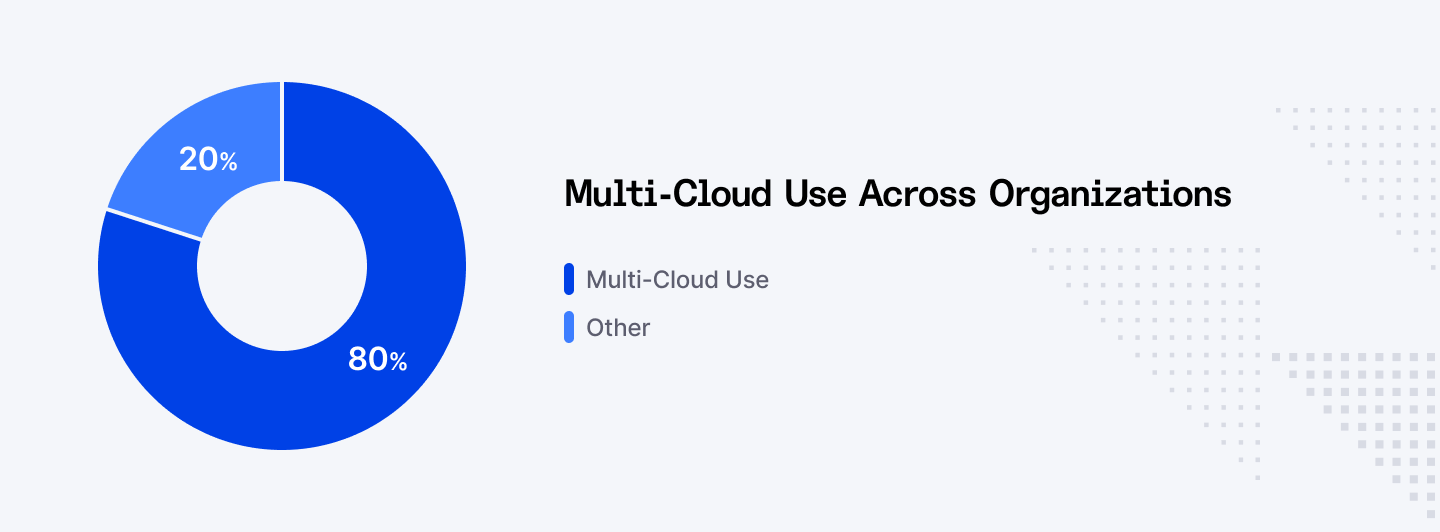
- 80 percent of companies use a multi cloud setup, mainly to support AI and data workloads.
- 62 percent of organizations have at least one vulnerable AI package, showing rising AI security risks.
- The world creates 2.5 quintillion bytes of data each day, and cloud platforms will store over 100 zettabytes by 2025.
AI Adoption in Cloud Development
Many organizations now rely on cloud based AI tools for tasks like automation, data analysis, software development, and customer support. The numbers show strong growth in Generative AI and machine learning use. They also show how fast companies move from testing AI tools to full use in their daily work.
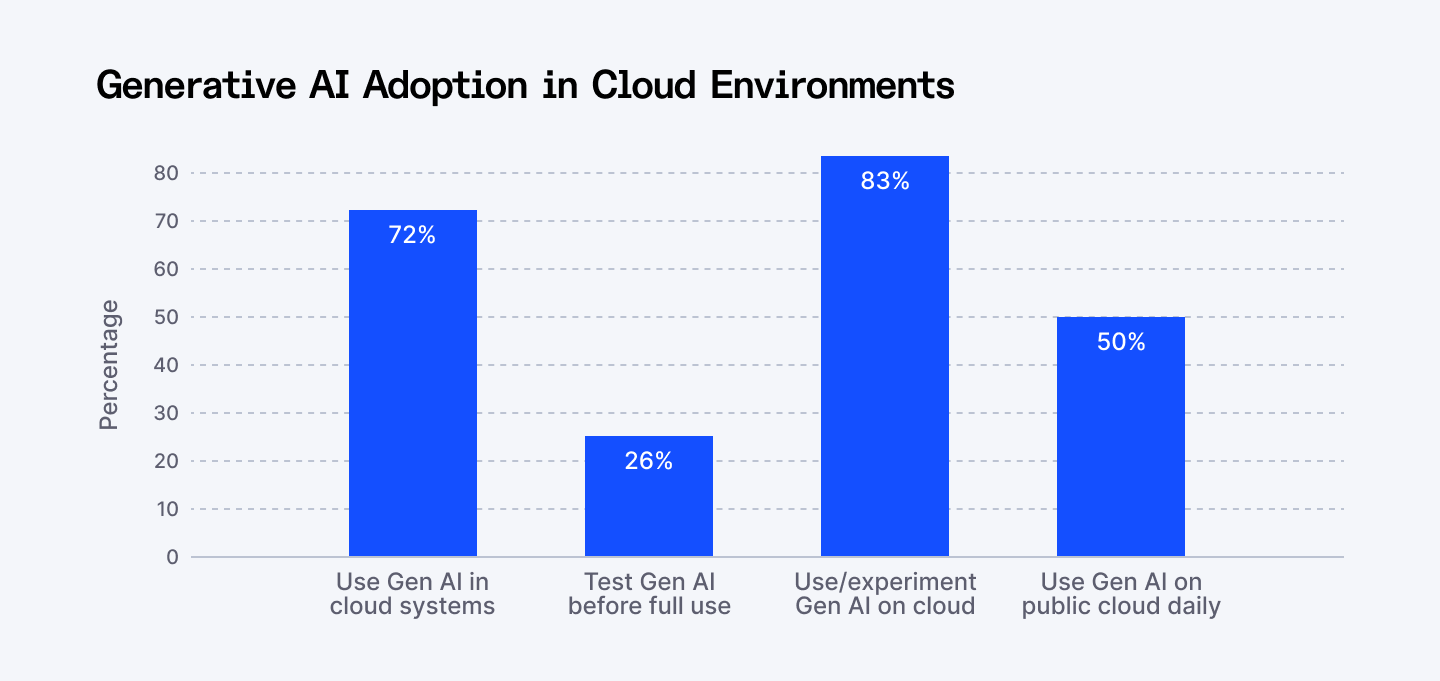
- 72% of organizations use Generative AI either in a large way or in a small way inside their cloud systems.
- Many teams still test Generative AI before full use, and this group makes up 26% of all organizations.
- 83% of organizations use or experiment with Generative AI services on public or private cloud platforms.
- Half of all organizations use Generative AI services on public cloud platforms for daily tasks.
- 79% of organizations use or test AI and machine learning PaaS services to support different cloud workloads.
- Non Generative AI and machine learning services support data and automation work for 30% of organizations.
- The use of AI inside cloud environments keeps rising and today this number has reached 84% across all organizations.
AI Cloud Spend
This section explains how AI increases cloud spending across many companies. AI models need more compute power, more storage, and stronger cloud services. Because of this need, organizations spend more money each year on public cloud platforms.
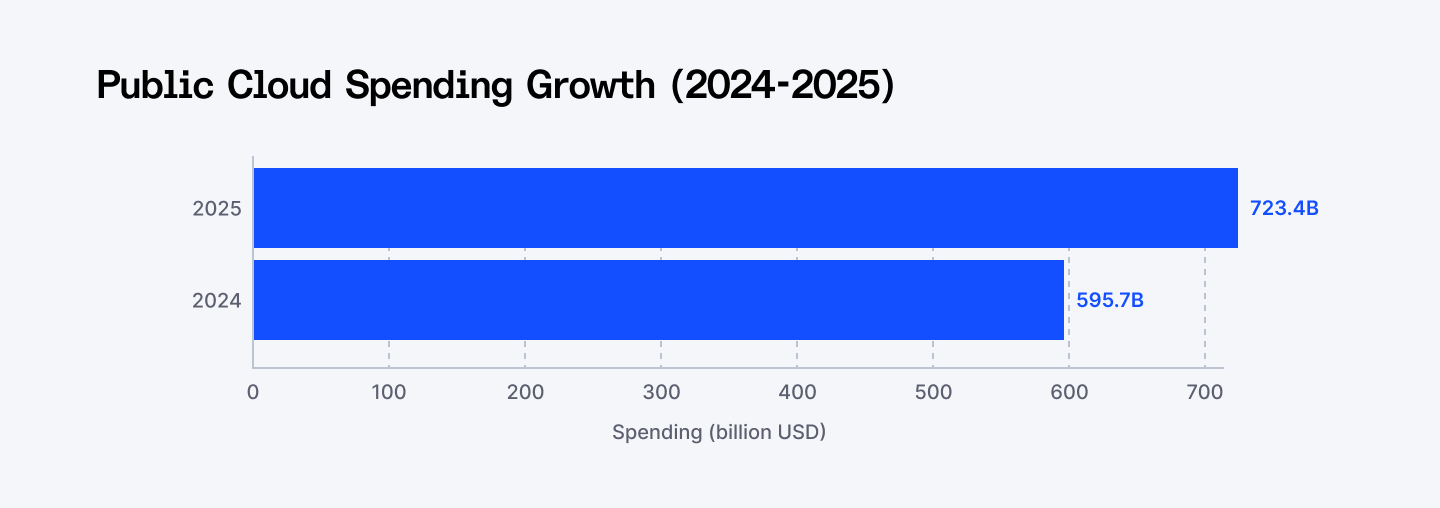
- Public cloud spending will reach 723.4 billion dollars in 2025, which shows strong growth driven by AI and hybrid cloud use.
- Cloud spending grew from 595.7 billion dollars in 2024 because more teams run AI and machine learning workloads in the cloud.
- Many companies now spend more than 12 million dollars each year on public cloud services and this share has reached 33% in 2025.
- 71% of organizations expect their cloud bills to rise because AI workloads need heavy compute and storage.
- Half of the cloud market growth in 2024 came from Generative AI, which shows how much AI shapes cloud investments.
- The cloud market also added 60 billion dollars in one year and Generative AI played a major role in that jump.
Next up: Discover the AI tools that help engineering teams cut cloud costs fast.
Cloud AI Market
These statistics share data about the size and growth of the cloud AI market. It shows how fast the market expands because more companies use cloud platforms to train, deploy, and manage AI models. The numbers also highlight how regions like North America lead this space.
- The global cloud AI market reached 87.27 billion dollars in 2024 and this value continues to rise each year.
- Many experts expect the market to hit 647.60 billion dollars by 2030 because AI workloads keep growing in every industry.
- The market will grow at a 39.7% CAGR from 2025 to 2030 as more companies depend on cloud based AI tools.
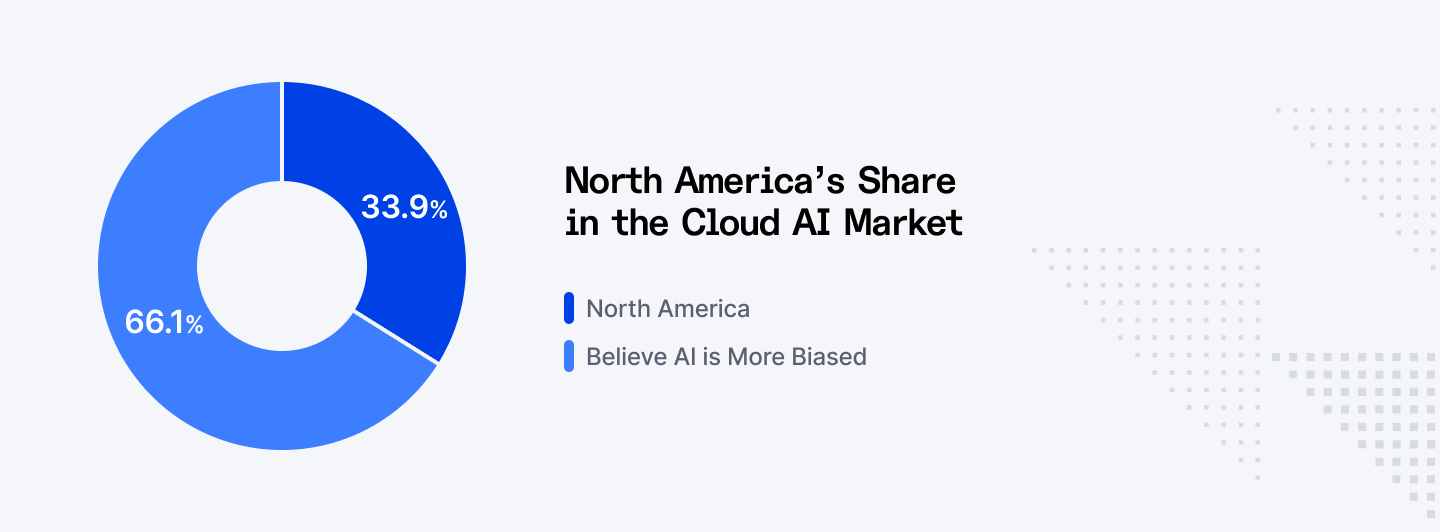
- North America held 33.9% of the total cloud AI market and this region stays ahead in cloud AI adoption.
Cloud Provider Market Share
This section explains how major cloud providers support AI workloads. It shows how much market share each provider holds and how many companies run their workloads on AWS, Azure, or Google Cloud. These numbers help you understand which platforms lead AI focused cloud development.
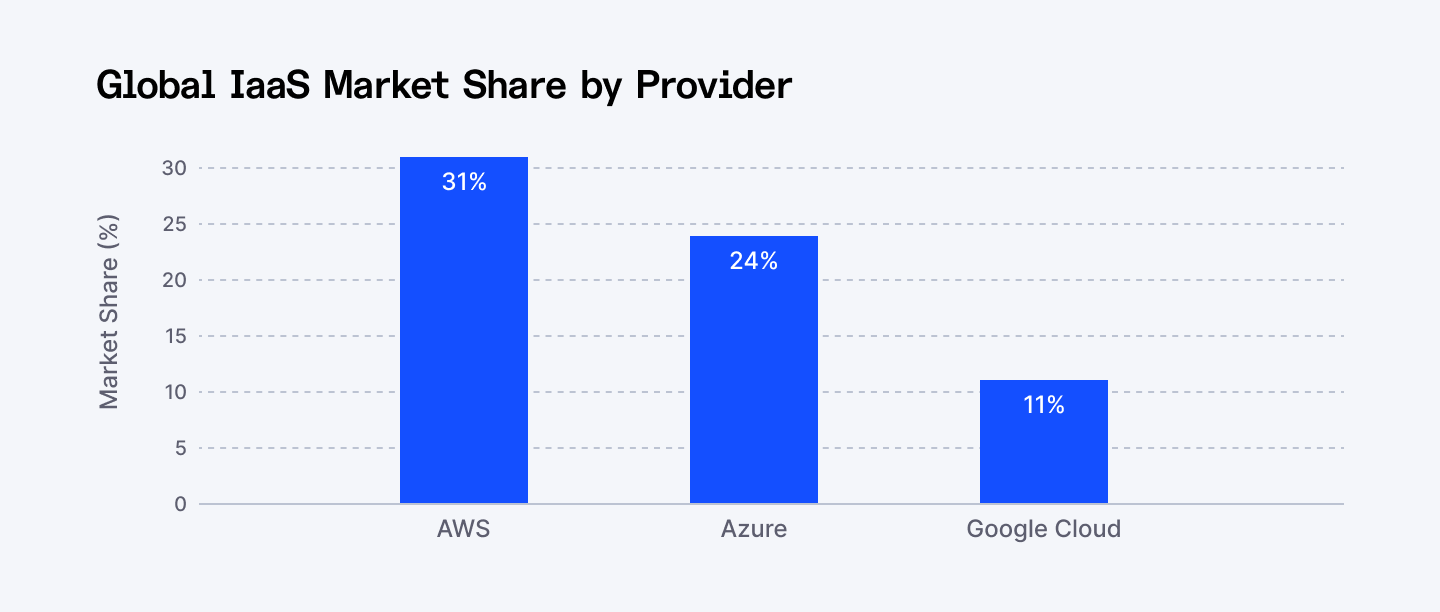
- AWS holds 31% of the global IaaS market and this makes it the top choice for many AI workloads.
- Azure follows with a 24% share and many enterprises choose it for AI and machine learning projects.
- Google Cloud holds 11% of the IaaS market and its growth comes from AI workloads and analytics tools.
- 53% of organizations run significant workloads on AWS and many of these workloads include AI tasks.
- Azure supports significant workloads for 46% of organizations and a large part of this load includes AI use cases.
- 19% of organizations run significant workloads on Google Cloud and many of them use its AI and data services.
- Enterprises use Azure more than any other provider and this share reaches 81% among large companies.
- 79% of enterprises use AWS and many of them run heavy AI or data workloads.
- Among small and medium businesses, 77% use AWS and this makes it a common choice for AI adoption.
Cloud and AI Workload Trends
Many teams now run Generative AI, machine learning, and data heavy tasks in the cloud. The data shows how fast these workloads grow and how cloud platforms become the main place to run AI systems.
- GenAI cloud services grew by 140 to 180% in Q2 2025 and this shows a sharp rise in AI workload demand.
- Many AI workloads run on AWS Bedrock, Azure OpenAI, and Google Vertex AI because these platforms support large models and training jobs.
- 50% of all organizations now run Generative AI services on public cloud platforms for daily work.
- More than 60% of organizations run over half of their workloads in the cloud and many of these workloads include AI tasks.
- AI and machine learning PaaS services attract strong adoption and 79% of organizations use or test these services.
Multi Cloud AI Usage
This data shows how companies use more than one cloud provider to manage AI workloads. Many teams choose a multi cloud setup because it gives better performance, more flexibility, and safer backup options. The data highlights how common multi cloud use has become in AI development.
- Many companies now use multiple public or private clouds and this share reaches 80% across all organizations.
- More than 54% of organizations use three cloud storage providers because they need more space for AI and data projects developments.
- 14% of organizations use more than one public cloud so they can move AI workloads between platforms.
- 2% of organizations use more than one private cloud and this setup supports controlled AI workloads.
- Only 8% of organizations use a single public IaaS provider which shows that most teams prefer multi cloud use for AI projects.
AI Specific Security Risks
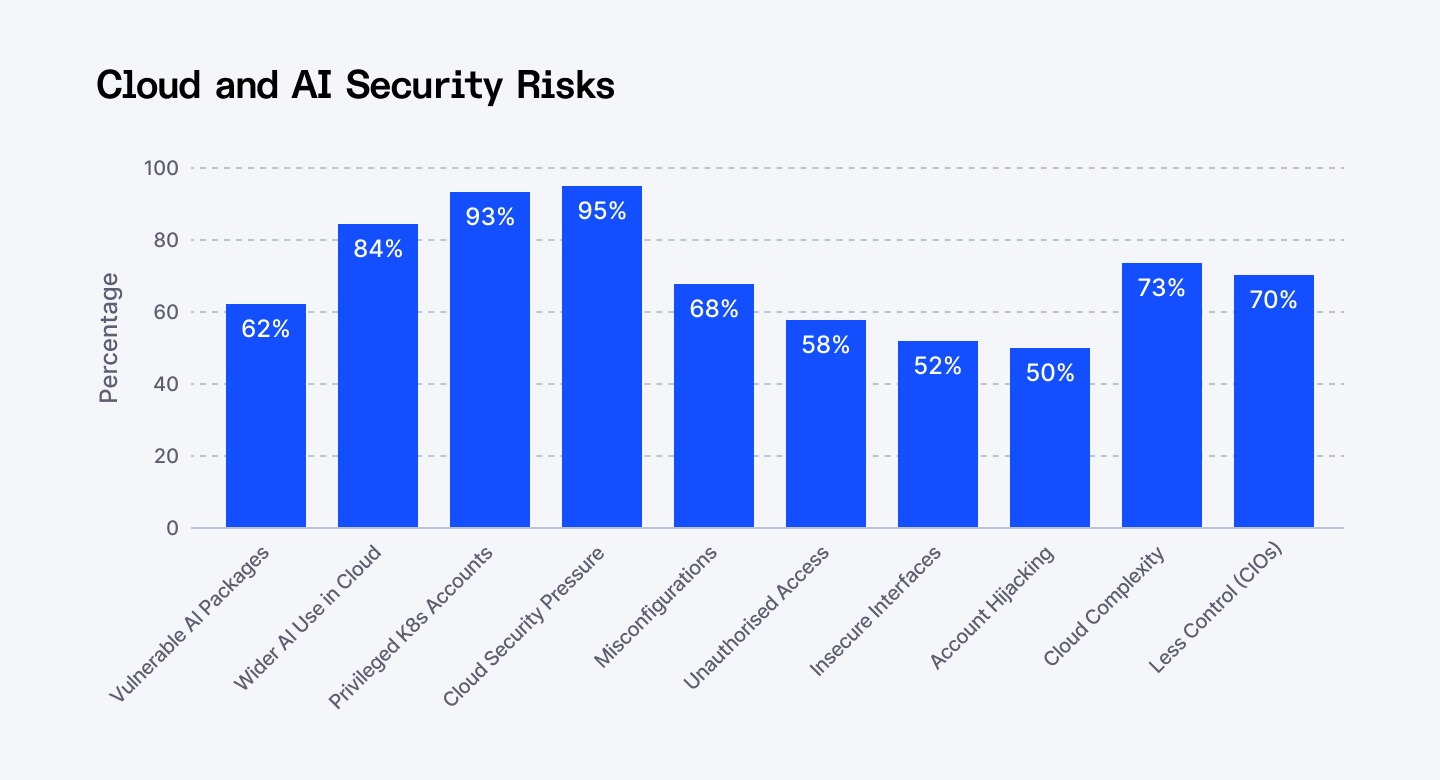
As companies run more AI models, they face issues like unsafe AI packages, weak access controls, and higher system complexity. The numbers show how serious these risks are for cloud teams. In response, many enterprises are implementing AI Security Posture Management to enforce consistent security and governance standards across AI deployments.
- 62% of organizations have at least one vulnerable AI package in their cloud environment, this creates real security risks.
- 84% of organizations use AI in the cloud and this wider use increases the chance of AI related attacks.
- 93% of companies that use Kubernetes have a privileged service account which increases the risk of a breach.
- Many organizations feel more pressure in cloud security and this share reaches 95% across all companies.
- Misconfiguration remains the top issue in cloud security and it causes 68% of reported problems.
- Unauthorized access affects 58% of cloud users and this becomes more common when AI tools grow inside the system.
- Insecure interfaces cause problems for 52% of organizations and these issues often appear in AI driven applications.
- Account hijacking affects 50% of cloud users and this risk grows when weak controls protect AI services.
- 73% of organizations say cloud technology adds more complexity and this complexity increases with AI use.
- 70% of CIOs feel they have less control in cloud environments because AI workloads require more oversight.
Cloud Data Explosion
This section explains how fast data grows around the world and how this growth increases demand for cloud and AI systems. Companies need strong cloud platforms because AI models train on large data sets. The numbers show how much data people and devices create every day.
- The world creates 2.5 quintillion bytes of data each day and AI systems depend on this data to learn and improve.
- Cloud platforms will store more than 100 zettabytes of data by 2025 and this increase supports the rise in AI workloads.
- For individuals and small teams looking to get started, free cloud storage services offer a simple entry point into the broader cloud ecosystem.
- There will be 75 billion Internet of Things devices by 2025 and these devices produce large amounts of cloud based data.
AI Tooling in Cloud Development
This section highlights the AI tools that cloud providers offer to help teams build, train, and deploy AI models. These tools make development faster and support complex AI workloads. The data shows how companies use these tools to improve coding, automation, and model performance.
- Amazon Bedrock now offers more than 100 foundation models and this helps teams choose the right model for their AI tasks.
- Amazon Q Developer speeds up coding work by about 80% which helps developers complete projects faster.
Many AI workloads run on AWS Bedrock, Azure OpenAI, and Google Vertex AI because these platforms support large language models and advanced machine learning tasks.
Read next: Learn the five steps smart teams follow to migrate data, avoid downtime, and scale with confidence.
Final Words
AI continues to shape the future of cloud development in every part of the world. The data shows clear growth in AI adoption, cloud spending, and multi cloud use. It also shows strong demand for AI tools, larger workloads, and more advanced cloud systems. At the same time, the rise of AI brings new security risks and higher pressure on cloud teams.
Companies now need strong tools, safer cloud setups, and better workload planning to keep up with this change. As AI grows, cloud platforms will remain the main place where organizations build, train, and run their most important AI systems.
➡︎ Hiring cloud or AI-ready developers? Index.dev connects you with vetted engineers skilled in cloud-native development, GenAI tools, and modern AI workloads.
➡︎ Want to dive deeper into cloud development skills and AI-driven engineering? Explore our full collection of practical guides on cloud roles, cloud-native development, skills to learn, and programming languages every cloud engineer should master. Start with these: cloud native developer job description template, top 10 cloud computing skills, 10 best cloud computing programming languages, and key differences between cloud engineer & DevOps engineer.
FAQs
1. How many organizations use Generative AI in the cloud?
About 72 percent of organizations use Generative AI in their cloud systems. This shows that most companies have already added AI tools to their daily cloud work.
2. How many companies are still testing AI tools?
Nearly 26 percent of organizations test Generative AI before full use. This group shows that many teams need more checks before full deployment.
3. How much cloud market growth comes from AI?
About 50 percent of cloud market growth in 2024 came from Generative AI. This means AI is now one of the main forces behind cloud spending.
4. What is the size of the cloud AI market?
The cloud AI market reached 87.27 billion dollars in 2024. This number shows how fast companies adopt AI tools through cloud platforms.
5. How common is multi cloud use for AI workloads?
Around 80 percent of companies use more than one cloud provider. Teams choose multi cloud to support heavy AI workloads and avoid lock-in.
6. How many companies face AI related security risks?
About 62 percent of organizations have at least one vulnerable AI package. This shows that AI growth also increases cloud security problems.
7. How fast are GenAI cloud services growing?
GenAI cloud services grew by 140 to 180 percent in Q2 2025. This sharp rise shows strong demand for cloud platforms that support AI models.
Data Sources
- https://orca.security/wp-content/uploads/2025/06/2025-State-of-Cloud-Security-Report-v2.pdf
- https://www.cloudzero.com/blog/cloud-computing-statistics/
- https://www.grandviewresearch.com/industry-analysis/cloud-ai-market-report
- https://info.flexera.com/CM-REPORT-State-of-the-Cloud
- https://www.mindinventory.com/blog/cloud-computing-statistics/