Hiring managers keep hearing that AI can speed things up. And the numbers back it up. A recent study with more than a thousand hiring managers showed that 99% already use AI in their hiring process, and 98 percent said it made them more efficient. The biggest gains came in screening, scheduling, and shortlisting.
Even with those wins, there’s still a real struggle to fill critical roles. Resumes pile up, interviews stretch on, and bias creeps into decisions. That’s why AI recruiting tools matter. They promise to take the load off managers, handle the repetitive work, and keep the focus on candidates who could actually thrive in leadership positions.
We explored seven of the most notable AI-powered hiring tools. Some, like Index, specialize in tech leadership roles. Others, like IBM’s AI Agents, support hiring at the enterprise level.
The test was simple: do these tools make the hiring process faster and smarter for managers, or do they just add more complexity?
Hire top 5% vetted developers in 48 hours with Index.dev. Fast matching, risk-free trial, and AI-powered recruitment at scale.
How did we select these tools?
We didn’t just pull random names from a list. To make sure these tools are genuinely useful for hiring managers, we set a few simple rules.
1. Relevance to hiring managers
The tools had to be more than applicant trackers. They needed to actually help managers evaluate candidates for leadership or specialist roles, where skills and decision-making matter more than just keywords on a resume.
2. AI at the core, not just a buzzword
A lot of platforms claim to use AI, but many are just automation with a fancy label. We focused only on tools where AI does the heavy lifting, like analyzing resumes, predicting fit, or improving interview quality.
3. Ease of getting started
No hiring manager wants to spend weeks learning a new system. We picked tools with simple onboarding, clear instructions, and dashboards that make sense without a manual.
4. Proven track record
We looked for platforms that are already trusted by companies. Case studies, success stories, or even customer reviews helped us see whether the tools actually deliver results, not just promises.
4. Coverage across different needs
Every company hires differently. Some are focused on tech roles, others on large-scale enterprise hiring. We chose a mix so you can see what works best for your situation, whether you’re filling one leadership role or building an entire team.
Identify hidden biases in AI hiring tools (and what you can do about them).
| Tool | Best For | Key Strength | Pricing Insight |
|---|---|---|---|
| Workable | High-volume hiring | Mobile AI screening pitchnhire | Starts ~$129/mo |
| Lever | Enterprise teams | CRM sync, analytics pitchnhire | Custom enterprise |
| Index.dev | Tech talent pools | Vetted remote devs index | Project-based |
| HireVue | Video assessments | Predictive success scoring index | Per-assessment |
| Paradox | Chatbot engagement | 24/7 candidate Q&A index | Subscription |
The 7 best AI recruiting software for hiring managers
1. Index.dev
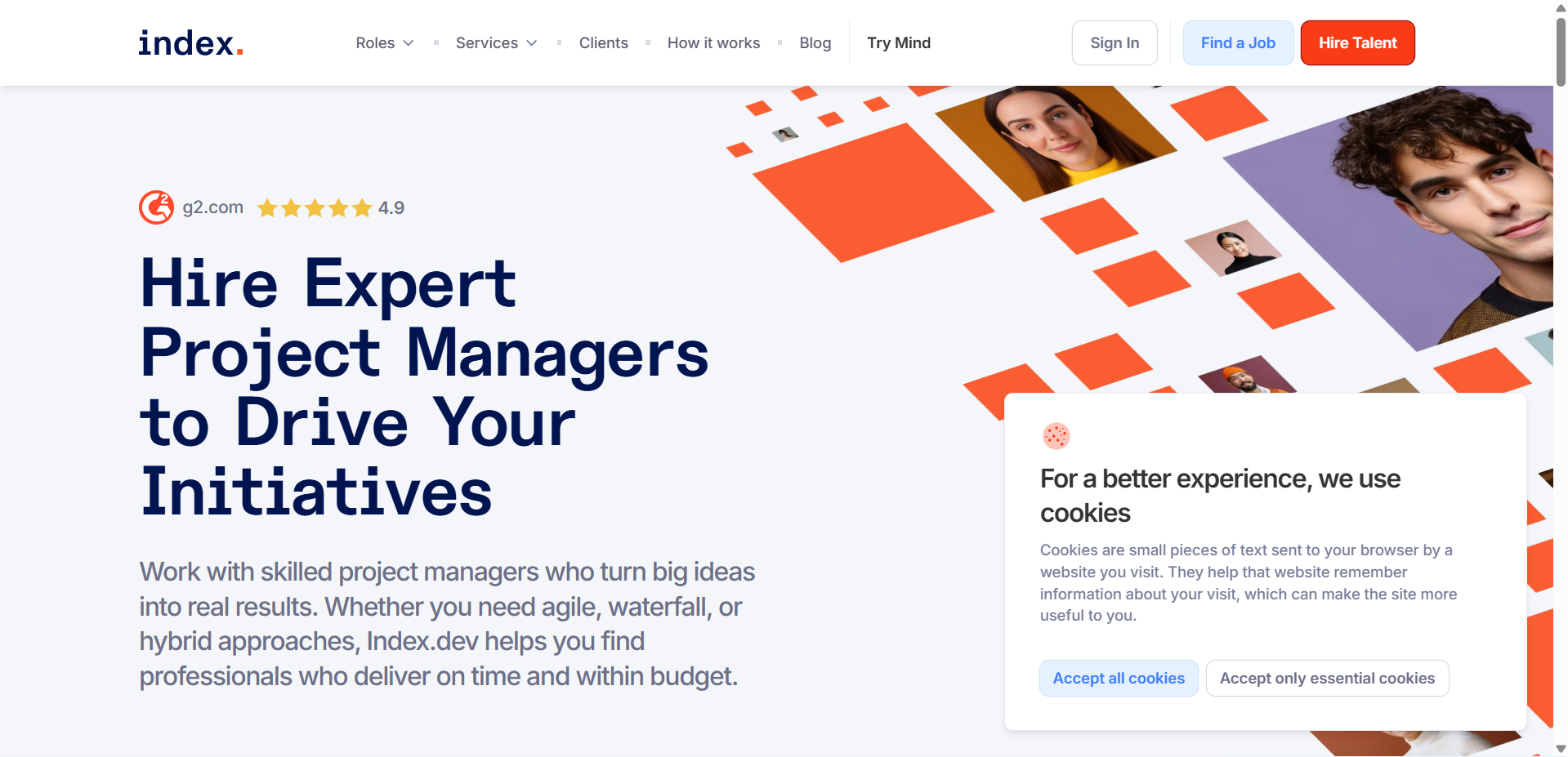
Index.dev is designed for companies that need highly skilled project managers and want to hire with confidence. Instead of sifting through piles of resumes, managers get matched with vetted professionals who already have experience leading teams and delivering results.
The platform specializes in connecting businesses with experts in agile, waterfall, or hybrid project management, which makes it especially useful when hiring for leadership roles in tech and product development.
How Index.dev works
1. Start with a project discussion:
The first step is simple. You either fill out a quick form with your project requirements or schedule a short call with the Index.dev team. This is where you explain what kind of project manager you need, whether it’s someone to own an entire build or step in for a specific phase.
2. Get matched with vetted managers:
Instead of giving you a stack of resumes, Index.dev handpicks candidates from their pre-vetted network. Each project manager is screened for technical skills, leadership ability, and real-world experience. They also consider time zones and communication preferences, so you’re not wasting time trying to coordinate across mismatched schedules.
3. Onboard and get started quickly:
Once you’ve chosen the right fit, contracts are handled directly through the platform. Onboarding is quick, and most project managers are ready to start within days. The goal is to help hiring managers skip the delays and get a capable leader on the ground fast.

Key features
- Access to the top 5% of project managers, who have already tested for skills and leadership ability.
- Global talent pool of over 16,000 professionals across 100+ technical and managerial skills
- Flexible hiring models: contract, direct hire, or full project team engagement
- Expertise in agile, waterfall, and hybrid methodologies for different project needs
- Matching by time zone and communication style so managers don’t lose time coordinating
- Onboarding is fast, so projects can start without weeks of delays
Pricing
- Full-Time PM: Starting at $30/hour + custom quotes
- Part-Time PM: Starting at $45/hour + custom quotes
- Project-Based: Custom pricing based on scope
2. Zoho Recruit
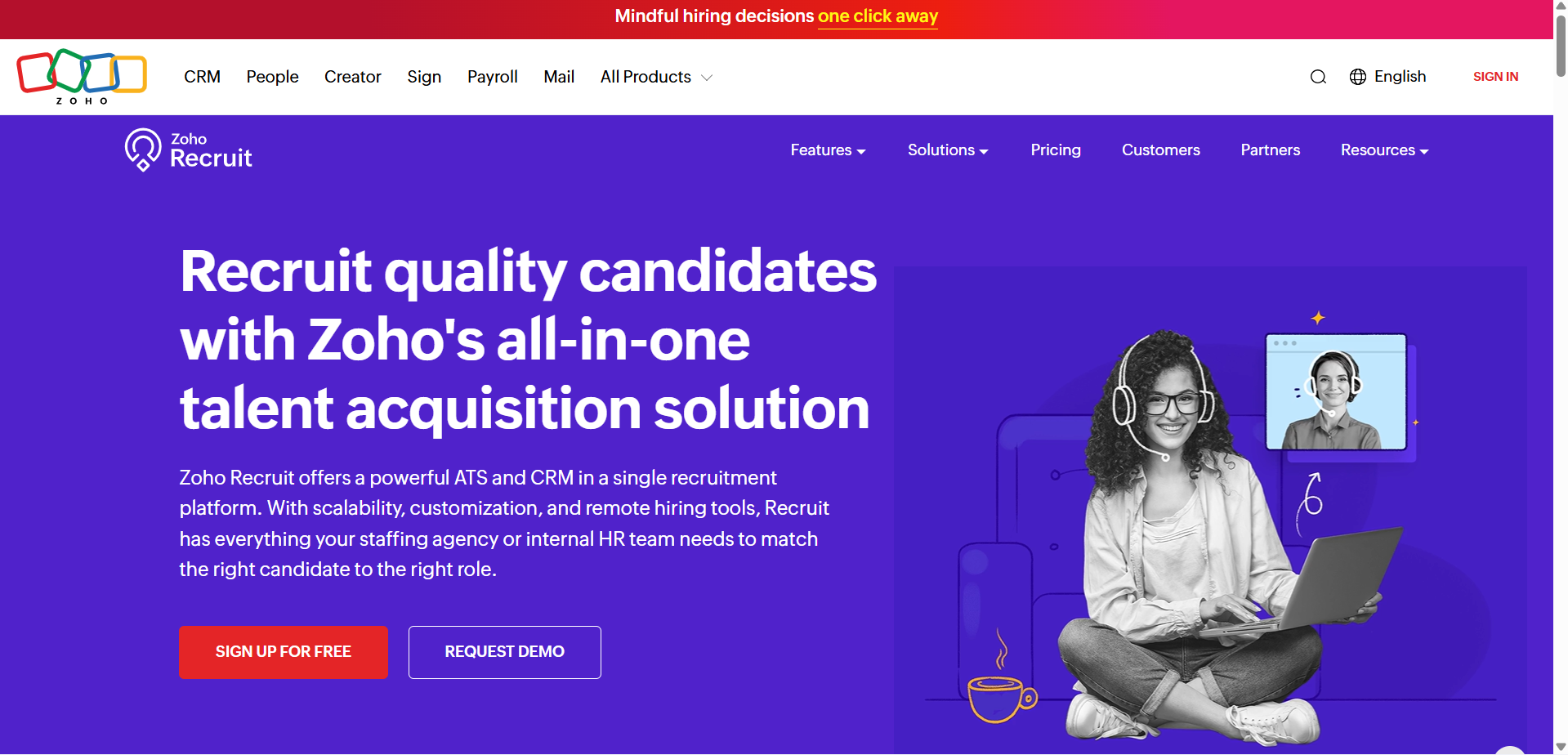
Zoho Recruit is an AI-powered applicant tracking system that helps hiring managers go beyond keyword searches and find the right leadership talent. Its AI engine (Zia) matches candidates based on skills, experience, and role requirements while cutting out bias.
For managers tasked with filling mid to senior-level roles, Zoho Recruit saves hours of manual screening and improves the quality of shortlists.
How Zoho Recruit works
1. Set up your account and pipeline:
After signing up, you can create a hiring pipeline tailored to leadership positions. Stages like resume parsing, leadership assessments, and structured interviews can be set up in minutes.
2. Engage candidates through AI chatbots:
Zoho’s chatbot greets candidates, collects resumes, and even runs pre-screening questions. This ensures only qualified profiles enter your pipeline.
3. Leverage Zia AI for matching:
Zia automatically connects top candidates to the right roles by analyzing skill sets, experience, and your custom criteria. For managerial hiring, it emphasizes leadership history, team management experience, and industry expertise.
4. Automate workflows:
Recruitment workflows like interview scheduling, candidate communications, and bulk resume scanning run automatically in the background, so managers can focus on final evaluations.
5. Collaborate and decide:
Hiring managers, recruiters, and stakeholders can share notes, rate candidates, and track progress in one central dashboard. The system also integrates video interviews for deeper evaluations.
Key features
- AI chatbots that engage candidates and collect applications instantly
- Zia AI for bias-free candidate matching and leadership-focused shortlisting
- Resume parsing and instant job-to-candidate matching in seconds
- Automation of repetitive hiring tasks like scheduling and assessments
- Data-driven insights and advanced analytics to evaluate candidate quality
- Centralized portal for managers and recruiters to collaborate on decisions
Pricing
- Free plan – $0, includes 1 active job with basic candidate and email management.
- Standard plan – about $15 per user/month, includes sourcing, premium job boards, social recruiting, applicant tracking, and 50+ integrations.
- Professional plan – about $30 per user/month, adds AI candidate matching, advanced analytics, custom dashboards, and a candidate portal.s
- Enterprise plan – about $45 per user/month, built for bulk hiring with client portals, staffing portals, custom workflows, and advanced automation features
3. Marlee
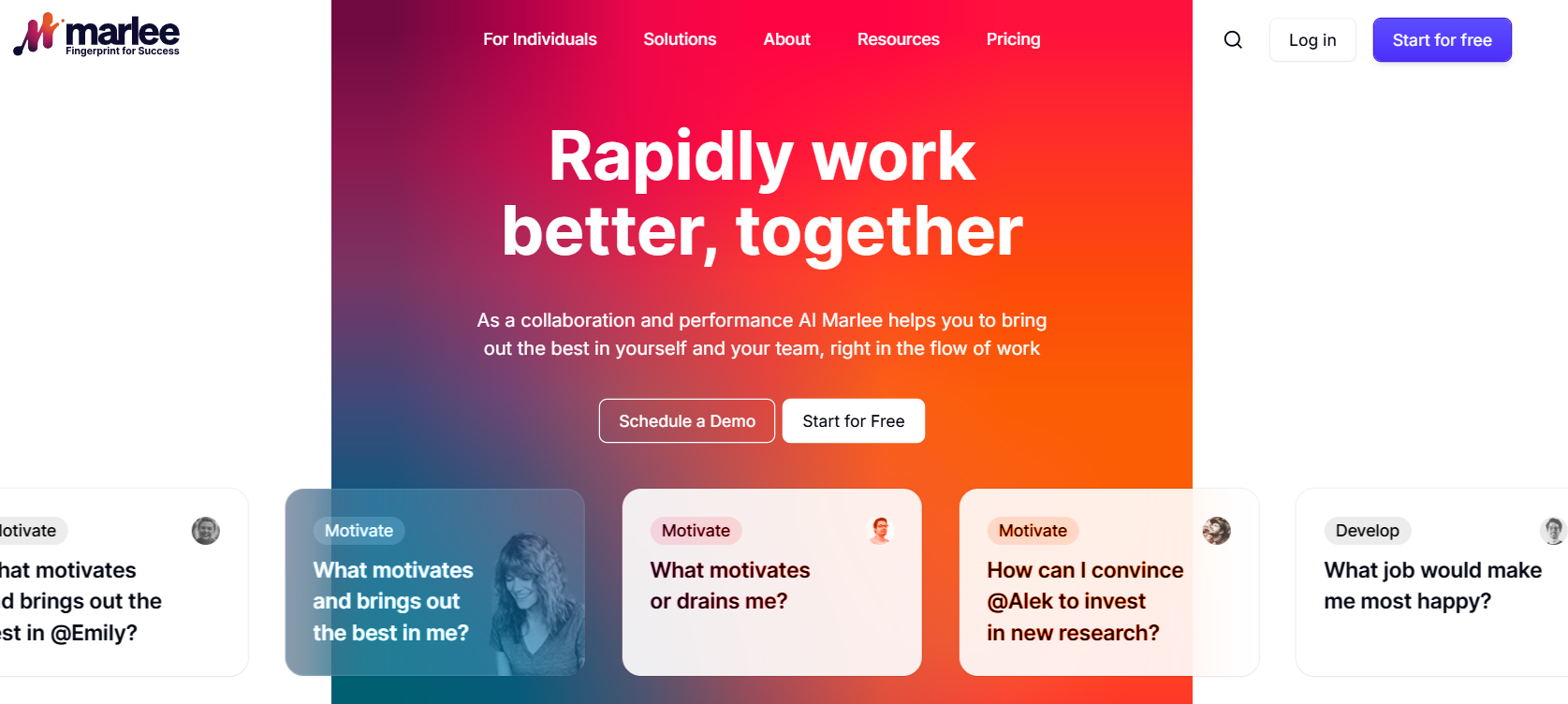
Marlee is a performance AI platform built for HR teams that want to understand the motivations, strengths, and collaboration styles of candidates and employees. Instead of evaluating talent based solely on past experience, Marlee uses science-backed motivation assessments to reveal what drives high performance inside teams.
For hiring managers, this means identifying candidates whose motivations align with the team’s culture and long-term goals—leading to better collaboration, stronger engagement, and reduced turnover.
How Marlee works
- Run motivation and performance assessments:
HR teams can send fast, science-based assessments to candidates to measure work preferences, teamwork style, and intrinsic drivers of performance. Results are easy to understand and ideal for early-stage screening.
- Instant, AI-powered insights:
Marlee interprets each profile using performance AI to highlight strengths, potential blind spots, and culture fit. Hiring managers receive actionable insights instead of generic personality scores.
- Compare and shortlist candidates: The platform shows how candidates align with the team’s working style, helping teams predict collaboration quality before the candidate is even hired.
- Support long-term development:
Because Marlee is also used for employee coaching, new hires can receive personalized guidance from day one—turning recruitment insights into ongoing performance improvement.
Key features
- Motivation and performance assessments rooted in behavioral science
- AI-generated insights for predicting high-performing, high-collaboration hires
- Side-by-side candidate comparison for culture and team fit
- Automated coaching pathways for onboarding and long-term development
- Dashboard and Boards that visualize strengths across teams
- Integrations with major HR and talent platforms
Pricing
Marlee typically operates on a subscription model tailored to team size and organizational needs. Pricing is designed to be more accessible than enterprise-level recruiting suites, making it suitable for startups, midsize companies, and growing HR teams focused on performance culture.
4. HireVue
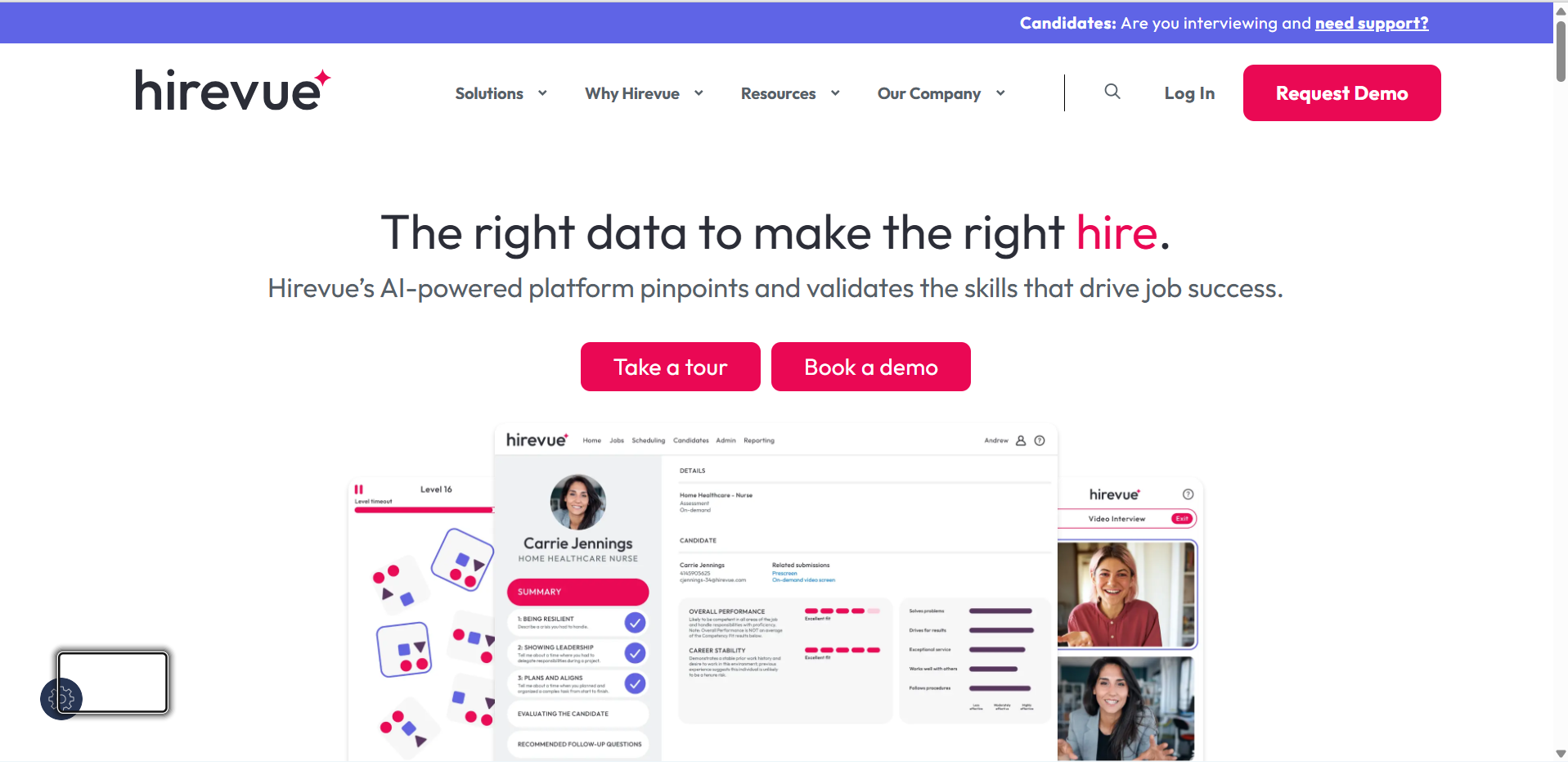
HireVue is an AI-powered hiring platform built around video interviewing and skill assessments. Instead of relying only on resumes, it uses AI-driven evaluations to measure both technical and soft skills.
For managerial hiring, this means you can test leadership qualities, problem-solving ability, and communication skills early in the process. These are the traits that matter most when selecting future leaders.
How HireVue works
1. Create structured assessments and interviews:
Managers can set up job-specific assessments, including leadership simulations, coding tests, or virtual job tryouts. Interview templates can be customized within minutes.
2. Engage candidates on their schedule:
Candidates record video interviews and complete assessments when it suits them. This removes scheduling bottlenecks and keeps the hiring funnel moving.
3. AI analysis of responses:
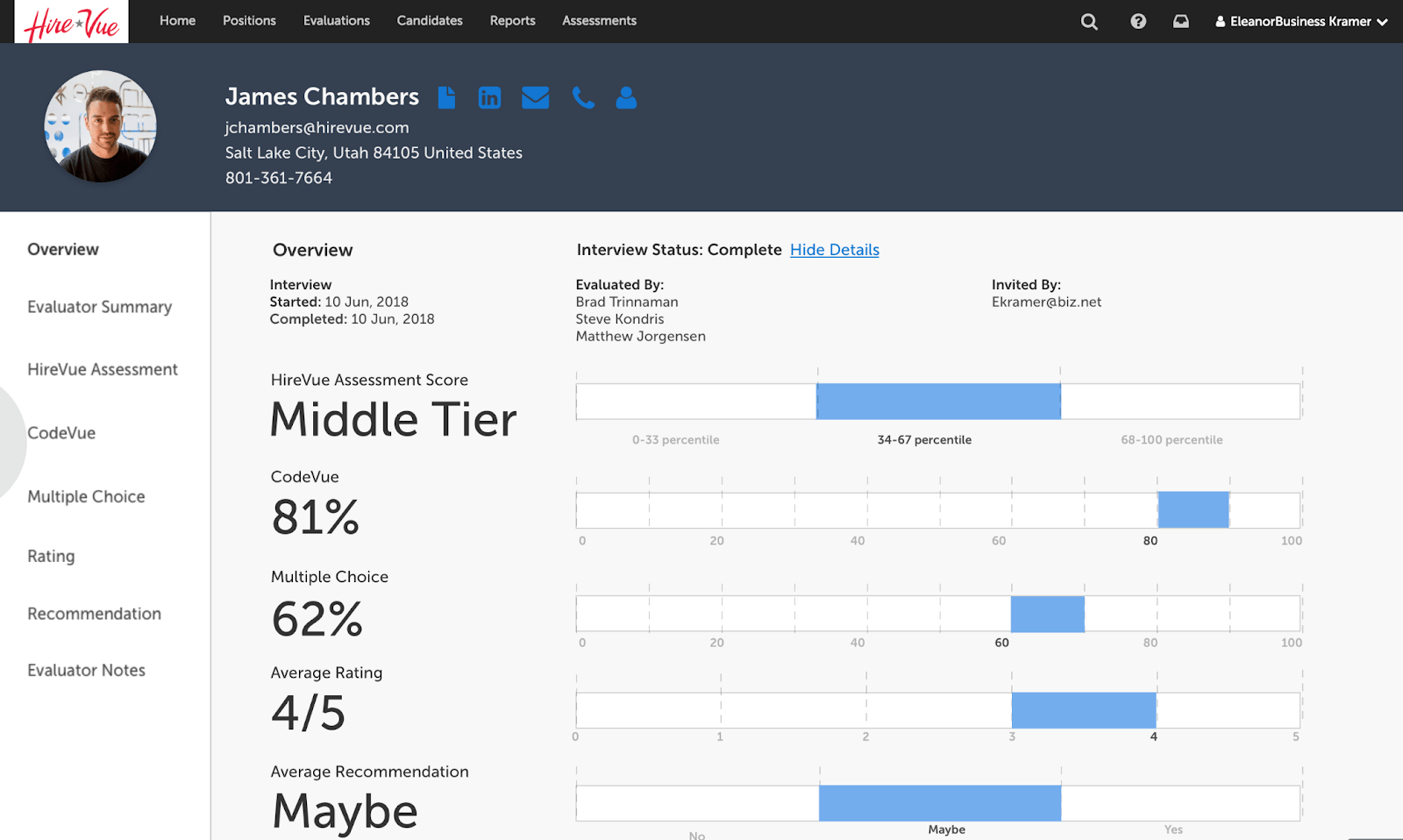
HireVue’s AI reviews interviews and assessments, scoring them against benchmarks for leadership, communication, and job performance. Managers get structured insights rather than gut-feel impressions.
4. Collaborate and decide:
All results, videos, and scoring are stored in one place, so hiring managers and teams can share feedback and align on final decisions.
Key features
- AI-powered video interviews that highlight leadership and communication skills
- Virtual Job Tryouts to validate real-world problem-solving ability
- Self-scheduling and automated interview workflows that save managers time
- Candidate engagement tools to keep pipelines active
- Data-driven assessments that reduce bias and predict performance
- Seamless integrations with existing ATS and HR tools
- Multilingual support in 40+ languages for global leadership roles
- Strong compliance and security, trusted even in the public sector hiring
Pricing
HireVue positions itself at the enterprise level. The structure looks like this:
- Essentials plan – starts at 35,000 $ per year. Suited for companies with 2,500–7,500 employees. Includes video interviewing and structured assessments.
- Enterprise plan – starts at 75,000 $ per year. Built for companies with more than 7,500 employees. Adds AI assessments, advanced analytics, and ATS integrations.
- Premium plan – custom pricing for large corporations. Includes all Enterprise features plus chatbots, text-to-apply, and potential assessments.
Additional costs to consider:
- Implementation fees: 5,000–50,000 $, one-time
- Recruiter and manager licenses: 150–300 $ per user annually
- AI assessments: 25–50 $ each, depending on volume
- CodeVue technical add-on: 20,000–40,000 $ per year
- Premium support: 15,000–30,000 $ per year
In practice, most contracts average around 50,000 $ per year. Larger organizations with more than 10,000 interviews annually often receive discounts of 20–40 percent.
5. Workable
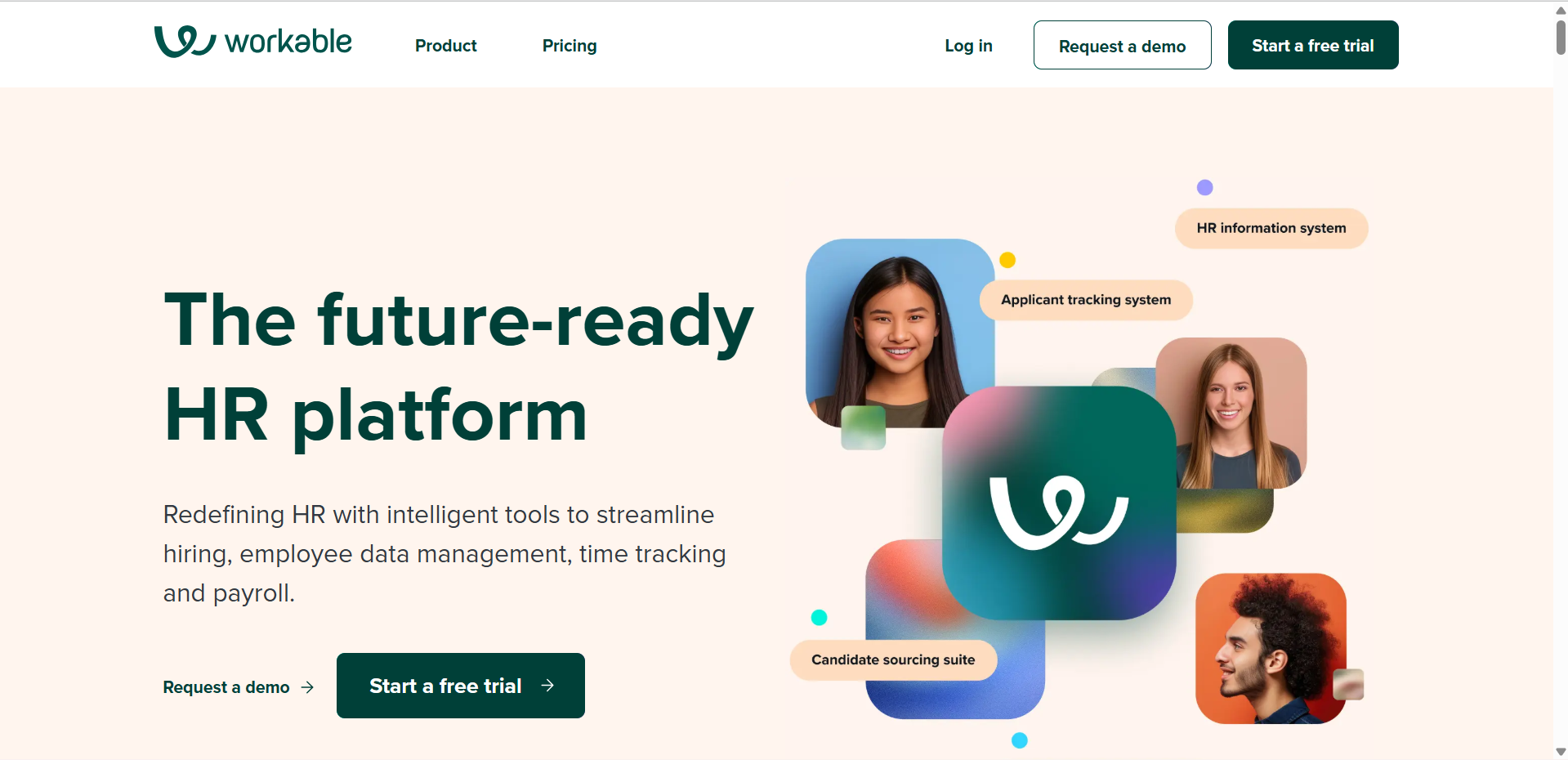
Workable is an all-in-one HR and recruiting platform used by more than 27,000 companies. It combines applicant tracking, AI-powered sourcing, video interviews, and HR management into a single system.
For hiring managers, the strength of Workable lies in how it automates routine work, surfaces high-quality candidates, and helps evaluate leadership talent with structured assessments.
Beyond recruiting, it also supports onboarding, time-off tracking, payroll, and performance management, making it a good fit for organizations that want one platform to handle the full employee lifecycle.
How Workable works
1. Create and distribute job postings:
Managers can post roles to over 200 job boards and social channels in one click. Workable’s AI also taps into a database of more than 400 million profiles to identify passive candidates who may be a fit for leadership roles.
2. Screen and shortlist with AI:
Resumes are parsed automatically, with AI highlighting the candidates whose skills and experience best align with the role. For managerial hiring, it doesn’t just flag technical ability; it also considers leadership history and career progression.
3. Engage and interview candidates:
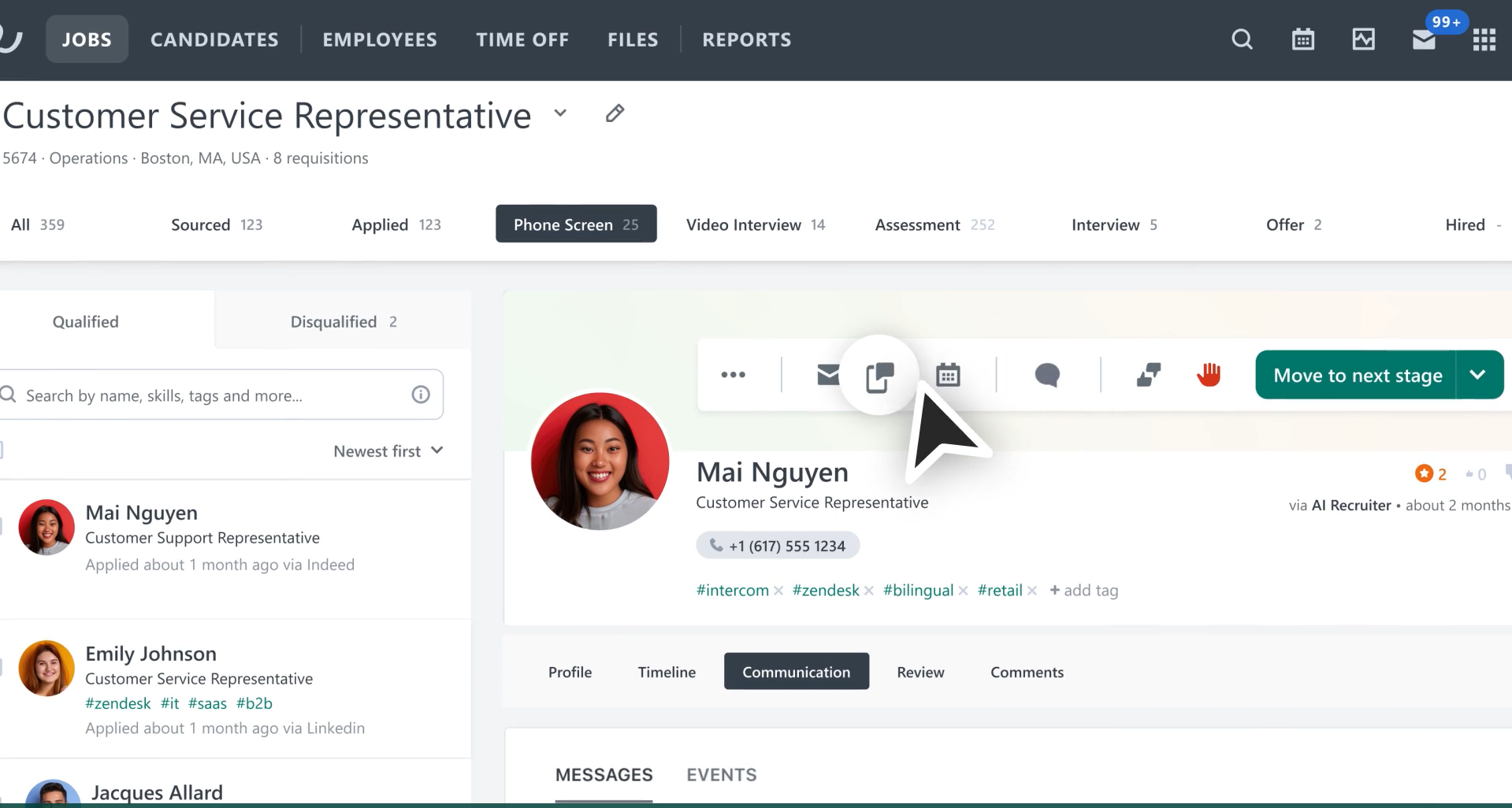
Candidates can self-schedule interviews, respond via SMS (with near-instant response rates), or complete one-way video interviews. Managers can then use structured scorecards and interview kits to evaluate leadership and decision-making skills consistently.
4. Collaborate and manage the pipeline:
Notes, evaluations, and feedback are all stored in one dashboard, so hiring managers and HR teams can stay aligned. Automation keeps the process moving, from scheduling interviews to sending assessments.
6. Onboard and manage employees:
Once a hire is made, Workable handles onboarding with role-specific workflows, e-signatures, and performance review tools. Managers also gain ongoing visibility through attendance tracking, payroll integration, and compliance reporting.
Key features
- AI-driven resume screening and candidate matching for leadership roles
- Job distribution to 200+ job boards and social networks in 100+ countries
- Access to a database of 400 million passive candidates
- Structured interview kits and scorecards for fair evaluations
- One-way video interviews and automated candidate scheduling
- SMS candidate communication with 98% response rates
- Automated onboarding, document management, and HR workflows
- Payroll integration and compliance-ready reporting
- Analytics dashboards to track recruitment and performance metrics
Pricing
- Standard plan – $299 per month for 1–20 employees, or $3,588 per year when billed annually. Includes candidate sourcing suite, applicant tracking system, unlimited active jobs, a hiring plan, and 5 native language options. Premium recruiting add-ons: texting ($79 per month), video interviews ($99 per month), and assessments ($59 per month). HR add-on: performance reviews available at $39 per month.
- Premier plan – $599 per month for 1–20 employees, or $7,188 per year when billed annually. Includes everything in Standard plus HR features like HRIS, employee onboarding, time-off and time tracking, e-signatures, payroll preparation, and payroll integrations. All premium recruiting tools are included (texting, video interviews, assessments). HR performance reviews and advanced services are also included (single sign-on, premium support, and custom account onboarding).
- Additional notes – Workable offers bundle discounts (up to 30%) if recruiting and HR packages are combined, and a 20% discount for annual billing
7. AI Agents for HR | IBM
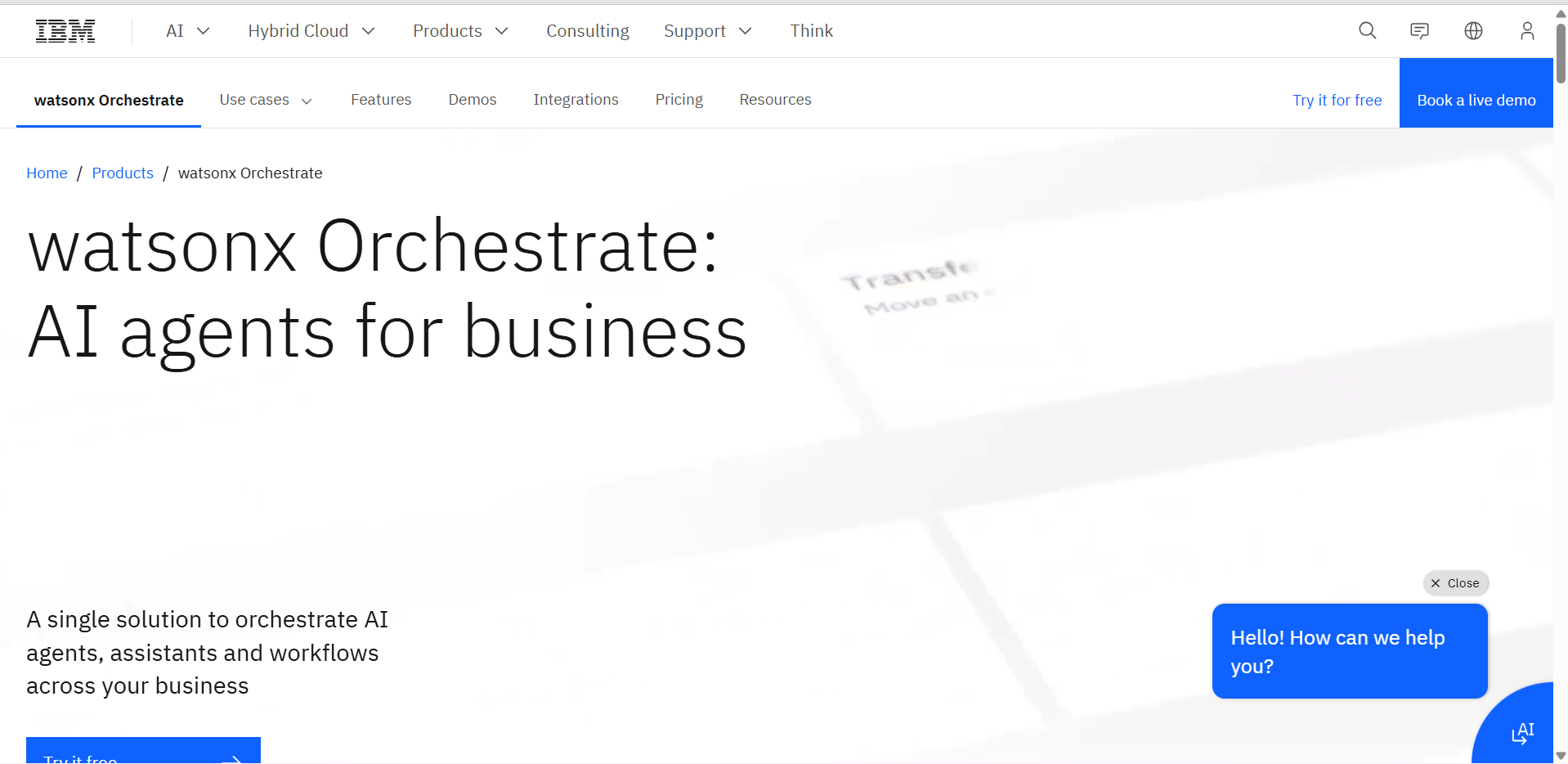
IBM’s WatsonX Orchestrate brings AI agents into HR, designed to automate repetitive tasks and streamline complex workflows. For hiring managers, it means less time lost on scheduling, screening, and document handling, and more focus on evaluating candidates for leadership potential.
These AI agents integrate with existing HR tools, follow compliance rules automatically, and work around the clock to handle requests that would normally sit in an email queue.
How IBM AI Agents for HR work
1. Set up your AI agent:
Managers or HR teams define the workflows they want automated, such as screening managerial candidates, scheduling interviews, or sending out performance review requests. IBM provides pre-built templates that can be customized without coding.
2. Connect existing systems:
The agent integrates with your ATS, HRIS, and communication tools. This allows it to pull candidate data, process applications, and sync schedules without forcing managers to jump between systems.
3. Automate routine tasks:
Once deployed, the AI agent handles requests like parsing resumes, answering candidate inquiries, arranging interviews, and ensuring all processes comply with company policy. For leadership roles, the agent also helps resurface qualified candidates from past searches.
4. Scale and improve over time:
The agent learns from use, improving its ability to prioritize tasks and recommend actions. Managers can rely on it to process thousands of interactions at scale while staying compliant and consistent.
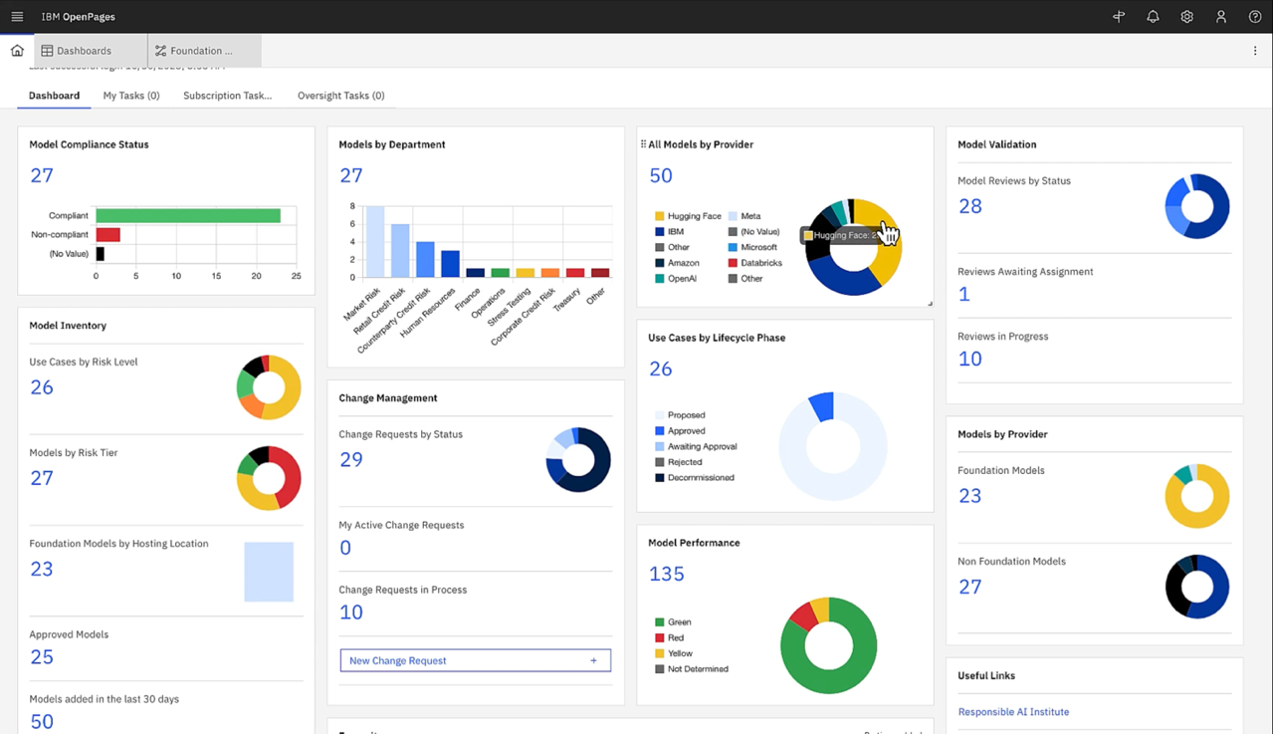
Key features
- Natural language interface so managers can assign tasks conversationally
- Cross-system integration with 80+ enterprise apps, including ATS and HR tools
- AI-powered sourcing, screening, and scheduling to speed up hiring pipelines
- Automated compliance with company policies and local regulations
- Performance review and employee support automation
- Learning and development workflows to identify and close skill gaps
- 24/7 availability for candidate and employee queries
- Enterprise-grade security and compliance controls
Pricing
- Essentials plan – starts at $500 per month per instance. Includes AI agent building, orchestration, integrations, custom tool creation, and deployment on cloud or on-prem. Add-ons for pre-built agents are available.
- Standard plan – contact IBM for a quote. Includes everything in Essentials plus advanced workflow automation, decision-making, and document processing. Add-ons for pre-built agents for HR, procurement, and sales are also available.
Pricing may vary by country and does not include taxes or duties.
8. Paradox
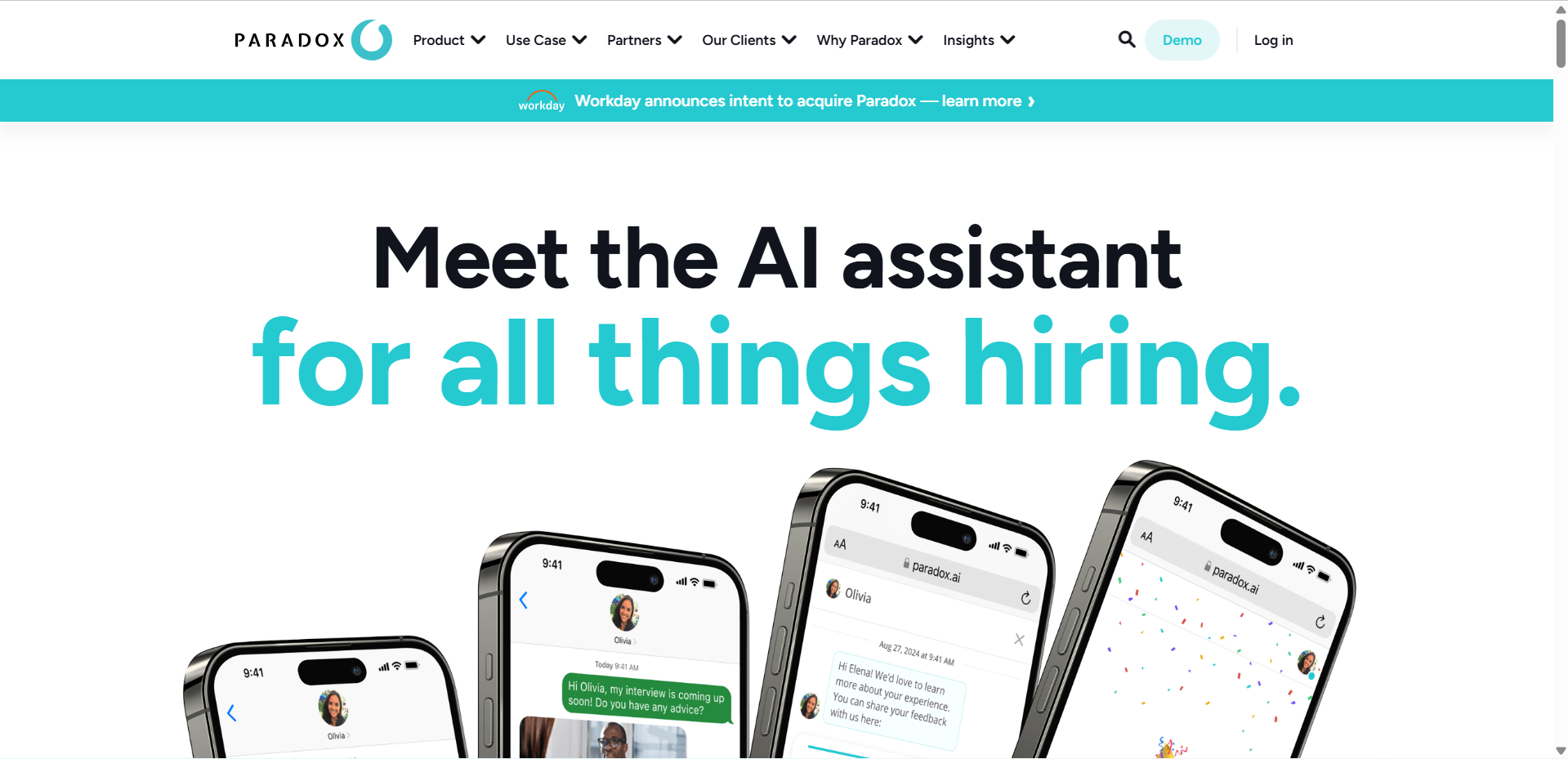
Paradox is built around Olivia, a conversational AI assistant that takes over the repetitive parts of recruiting. Instead of spending hours posting jobs, chasing candidates, and moving interviews around, hiring managers can hand those tasks to Olivia and focus on evaluating people.
For leadership and supervisory roles, Olivia acts like an extra team member who never gets tired of handling scheduling, reminders, and candidate questions around the clock.
How Paradox works
1. Post jobs from mobile:
Managers can create and publish a job opening in just a few taps using the Paradox mobile app. There’s no need to sit down at a computer or log into a bulky ATS. Once submitted, the posting goes live instantly across job boards and connected platforms. For busy managers working in fast-moving environments like retail or hospitality, this saves hours each week.
2. Screen candidates automatically:
When applications start coming in, Olivia, the AI assistant, engages with candidates immediately. She asks pre-screening questions tailored to the role, filters out unqualified applicants, and organizes the results so managers only see candidates who meet the basic criteria. This step alone eliminates most of the time managers normally spend digging through resumes.
3. Automate interview scheduling:
Scheduling interviews is one of the biggest time sinks in recruiting, and Paradox removes it entirely. Olivia syncs with the manager’s calendar and offers candidates available time slots. If someone cancels or needs to reschedule, Olivia automatically handles the update and sends reminders so candidates actually show up. Case studies from GM show that this reduced average scheduling time from five days to just 29 minutes.
4. Send offers instantly:
Once the manager decides who to hire, Olivia can send the job offer directly to the candidate’s phone. She then follows up with gentle reminders, helping increase offer acceptance rates. Managers can track responses in real time without picking up the phone or sending additional emails.
5. Keep candidates engaged 24/7:
Olivia isn’t limited to office hours. She answers candidate questions, provides status updates, and walks people through next steps at any time of day, in more than 100 languages. This round-the-clock availability keeps the hiring pipeline moving and improves the candidate experience, especially important when competing for leadership talent in global or high-turnover industries.
Key features
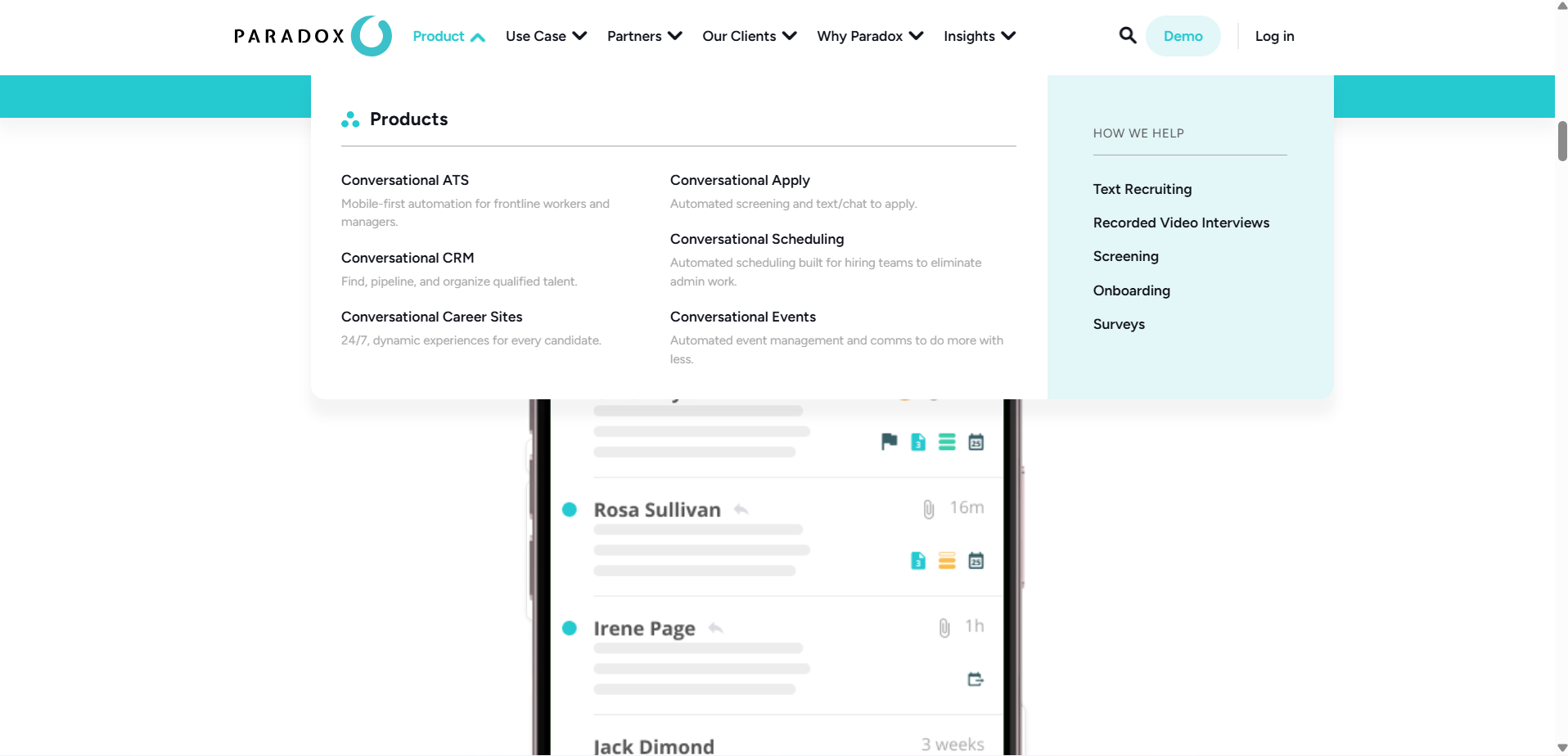
- Mobile-first design so managers can post jobs and manage candidates without leaving the floor
- Automated interview scheduling and rescheduling that removes constant back-and-forth
- Reminders and no-show management to cut wasted interview slots
- 24/7 candidate communication with support for over 100 languages
- Instant mobile offer sending with real-time status tracking
- Integrations with major ATS and HR systems like Workday and SAP SuccessFactors
- Analytics to track hiring funnel performance and spot bottlenecks
- Tools for both virtual and in-person hiring events
Pricing
- Basic package: $1,000 to $1,500 per month ($12,000 to $18,000 per year). Core Olivia features standard integrations.
- Mid-tier package: $2,500 to $8,000 per month ($30,000 to $96,000 per year). Adds advanced features, multiple ATS integrations, and stronger analytics.
- Enterprise package: custom pricing starting at $25,000 per year. Includes full access, custom workflows, and dedicated support.
Setup and training usually cost extra, ranging from $5,000 to $20,000 for implementation and $2,000 to $10,000 for training. Custom development and premium support are also available for larger organizations.
7. Lever
Lever is both an applicant tracking system and a candidate relationship management platform. It’s built for companies that deal with high-volume hiring but still want to maintain quality. For hiring managers, Lever helps reduce resume overload, automate repetitive tasks, and keep track of talent relationships over time.
Instead of juggling spreadsheets and emails, managers get a central platform where AI handles resume review, pipeline movement, and candidate engagement, freeing them up to focus on evaluating leadership potential.
How Lever works
1. Post jobs and build pipelines:
Managers or recruiters post openings that instantly sync across job boards and career sites. Lever’s CRM features also allow you to build candidate pipelines in advance, so when a leadership role opens, you already have warm prospects to reach out to.
2. AI screening and shortlisting:
Lever’s Talent Fit AI automatically highlights the candidates most likely to succeed in the role. Instead of skimming hundreds of resumes, managers see ranked shortlists with clear reasoning behind each match.
3. Automate repetitive tasks:
The platform’s Automation Hub takes over the busywork tagging, emailing, advancing candidates through stages, and archiving records. Managers can focus their time on interviews and final decisions rather than process management.
4. Collaborate with the team:
Lever centralizes feedback from interviewers and stakeholders. Managers can review notes, see bottlenecks in real time, and make data-informed decisions with everyone aligned.
5. Measure and improve:
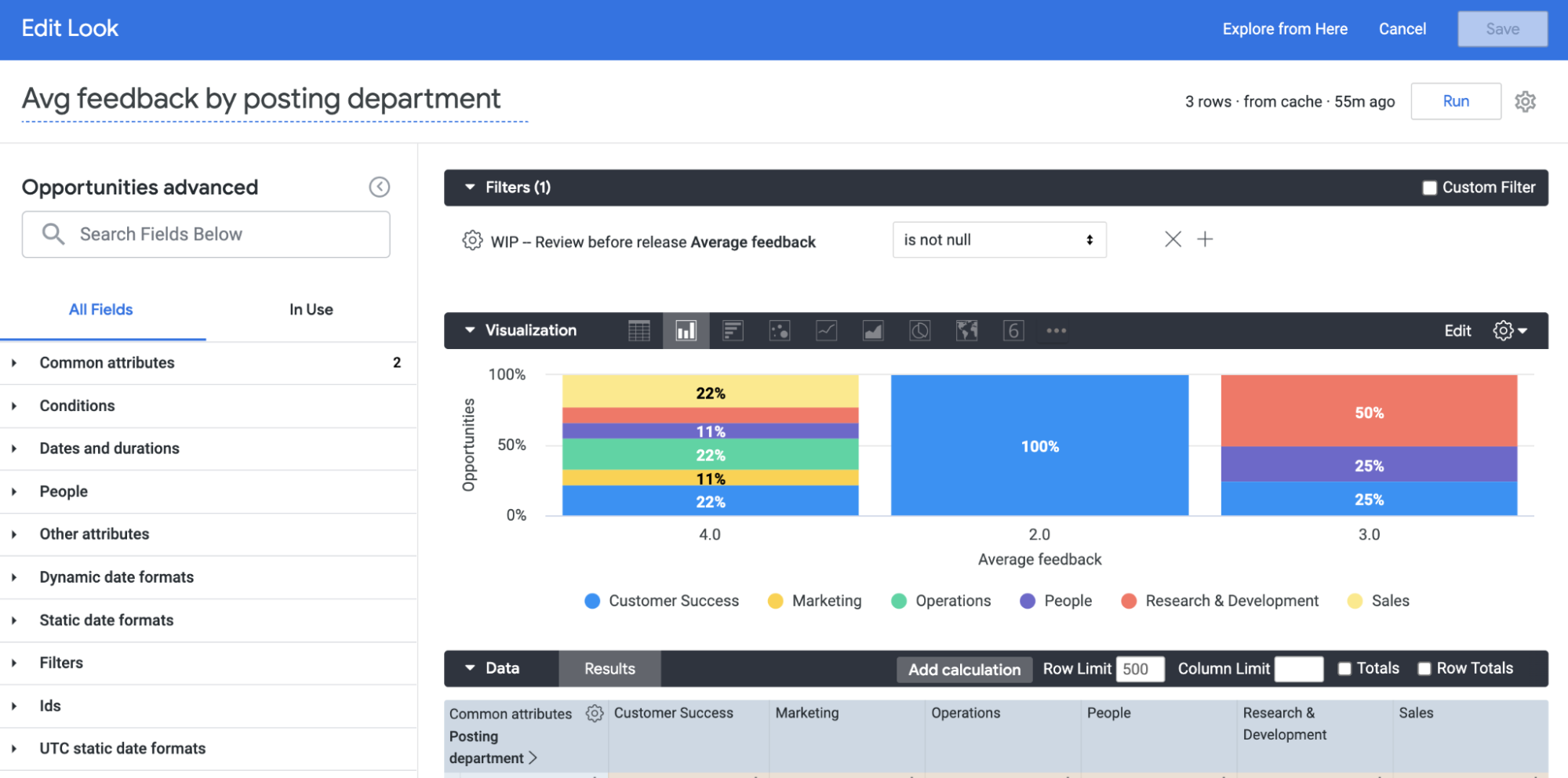
With real-time analytics dashboards, managers get visibility into where candidates are dropping off, how long the process takes, and how effective their interviews are. This helps improve both speed and quality for future hires.
Key features
- AI-powered resume review and predictive scoring for managerial candidates
- Automation Hub to handle repetitive hiring tasks like emails, tagging, and advancing
- Candidate relationship management tools to nurture long-term talent pipelines
- Real-time analytics dashboards that track hiring speed and quality
- Pipeline building and proactive sourcing before roles officially open
- Integrations with 300+ tools, including LinkedIn Recruiter, Workday, Slack, and Zoom
- AI-driven skills gap analysis and interview summary generation
- Enterprise-grade security with SOC 2 Type II certification and GDPR compliance
Pricing
- LeverTRM (Standard plan): Starts at about $3,500 per year ($292/month) for small teams of 1–10 employees. Pricing scales with company size $7,000 per year for 51–100 employees, $13,000 per year for 101–250 employees, and around $22,500 per year for mid-sized organizations. For enterprises with 1,000+ employees, pricing starts at $140,000 per year.
- LeverTRM Enterprise: Adds advanced automation, bulk operations, predictive analytics, and high-volume hiring tools. Premium features like candidate texting cost an additional $2,000–$5,000 per year, and custom career site builders run $3,000–$8,000 annually.
- Implementation and training costs: Setup fees typically range from $1,500–$5,000, with complex integrations costing $5,000–$25,000. Data migration and training add another $2,000–$15,000, depending on needs.
Explore 17 AI recruiting tools that make finding software engineers easier.
Comparison of each AI hiring tool for managerial posts
| Tool | How it makes hiring managers’ jobs easier | Candidate interaction & evaluation support |
| Index.dev | Quickly matches managers with vetted, leadership-ready experts | Provides shortlists with match scores and reasons |
| Zoho Recruit | Automates screening, scheduling, and workflow tasks | AI chatbots engage candidates; bias-free matching |
| HireVue | AI-driven video interviews and skill assessments simplify review | Structured leadership assessments; asynchronous interviews |
| Workable | Automates job posting, resume screening, and scheduling | One-way video interviews; structured scorecards |
| IBM AI Agents | Automates repetitive tasks (scheduling, compliance) | AI prioritizes candidates; automated communication |
| Paradox | AI assistant handles job posting, screening, and scheduling | 24/7 multilingual conversational AI engages candidates |
| Lever | Automates resume review, tracking, and communication | AI-powered ranking; collaborative feedback tools |
Final verdict
After digging into seven of the most popular AI recruiting platforms, we came away with a clear picture. Each one brings strong features to the table, but the ways they help us as hiring managers are quite different.
- Index.dev impressed us with its ability to quickly connect managers with vetted, leadership-ready candidates. It’s simple and practical, helping bypass endless piles of resumes and get straight to the people who really fit.
- Zoho Recruit and Workable stood out because they automate much of the heavy lifting, screening resumes, scheduling interviews, and keeping candidates engaged. If you’re handling multiple roles at once and want to keep things moving smoothly, these tools really take the pressure off.
- HireVue caught our attention with its AI-driven video interviews and leadership assessments. It’s a bit more complex, but for managers who want a deeper understanding beyond the resume, it offers valuable structured insights.
- Paradox felt like having an extra team member who never takes a break. It handles scheduling, screening, and candidate communication 24/7, which can be a game-changer when hiring moves fast.
- IBM’s AI Agents seem tailor-made for larger enterprises with complex systems and lots of moving parts. Lever also impressed us with its centralized platform that combines smart AI-driven ranking with collaboration, making it great for teams managing high volumes of hiring.
So what’s the bottom line? Some tools focus on speed and simplicity, others dig deeper into candidate evaluation or integrate tightly with workflows. There’s no one-size-fits-all answer here. The best fit comes down to where you want to save time or gain insight.
Get top tech talent, fast. Access the top 5% of global developers vetted by AI and human experts, risk-free for 30 days.
FAQs
1. What is the best AI recruiting software for leadership hiring?
Index.dev is the best AI recruiting software for leadership hiring because it matches managers with vetted project leaders, reducing time-to-hire and improving fit.
2. How does AI improve the hiring process?
AI improves hiring by automating resume screening, interview scheduling, and candidate ranking, allowing managers to focus on top talent while reducing bias and delays.
3. What are the benefits of using AI tools like Zoho Recruit and Workable?
Zoho Recruit and Workable automate screening, scheduling, and engagement, helping managers fill leadership roles faster with less manual effort and better candidate insights.
4. Why do hiring managers use AI tools like Paradox?
Hiring managers use Paradox to automate job posts, pre-screen candidates, and schedule interviews using its 24/7 AI assistant, reducing hiring time and boosting candidate engagement.
5. What is the main difference between Index.dev and HireVue?
The main difference between Index.dev and HireVue is that Index focuses on fast expert matching, while HireVue emphasizes AI video assessments for deeper candidate evaluation.