Code reviews are a fundamental practice in modern software development where team members systematically examine each other's code changes before merging them into the codebase. While sometimes viewed as a bottleneck or merely a bug-catching exercise, effective code reviews offer numerous benefits that extend far beyond just finding errors.
The reality of modern development is clear: poor code quality affects everything downstream. Security vulnerabilities increase, maintenance costs rise, and team confidence suffers. Implementing structured code review processes delivers multiple benefits simultaneously - fewer bugs reach production, knowledge spreads organically among team members, and best practices become standard.
The evidence supporting code reviews is compelling. GitHub's research demonstrates that teams using structured reviews experience up to 80% fewer post-release bugs. This dramatic improvement makes investing in robust review practices not just beneficial but essential for teams aiming for excellence.
Hire developers who value code reviews and deliver high-quality code. Access the elite 5% on index.dev, get matched in 48 hours, and start your 30-day free trial.
Establishing the Importance of Code Reviews
Let's face it—today's development moves at breakneck speed. The quality of your code affects literally everything else: how easily you can maintain it, how secure it is, and even how your team feels about working on it. Good code review processes do more than just catch bugs. They slash technical debt while creating a space where developers naturally share knowledge and follow best practices.
Real-world results back this up. Studies show teams conducting regular reviews see dramatically fewer bugs make it to production. Codacy found structured reviews cut post-release issues by numbers that would surprise most managers. This makes investing in solid review practices not just helpful, but necessary for teams who want to stay competitive.
Want more details about how reviews fit into modern development? Check out what Atlassian has published on effective code reviews.
Understanding Different Review Approaches
Let's explore the various ways your team can implement reviews:
- Peer code review: Your developers examine each other's work to identify potential issues and share valuable insights. This collaborative approach builds team cohesion while improving code quality.
- Over-the-shoulder sessions: More casual walkthroughs where team members explain their code directly to colleagues.
- Tool-assisted reviews: Leveraging automated systems to flag common issues before human reviewers dive in.
Each approach has its place in your development cycle. The key is finding which code quality improvement combinations work best for your unique team dynamics and project requirements.
Building Your Effective Review Workflow
A well-structured code review process forms the backbone of successful development practices. Here's how you can implement one that works for your team:
1. Preparation Phase
Before sending code for review, ensure you've:
- Defined clear objectives and standards
- Created comprehensive documentation
- Completed basic self-review checks
This preparation saves everyone time and makes the entire process more productive.
2. Active Review Stage
During the peer code review stage, your team should focus on:
- Identifying logical errors that automated tests might miss
- Spotting security vulnerabilities before they reach production
- Suggesting performance optimizations based on collective experience
The conversations that happen during this stage often lead to the most valuable code quality improvement opportunities.
3. Feedback Implementation
After receiving review comments, developers should:
- Address all critical issues before proceeding
- Document decisions made during the resolution process
- Apply consistent solutions to similar problems throughout the codebase
4. Verification and Closure
Once changes are implemented, a final check ensures all feedback has been properly addressed before code moves forward in your pipeline.
Also Read: 25 Must-Have Developer Coding Tools
Below is a simplified flowchart depicting the code review process:
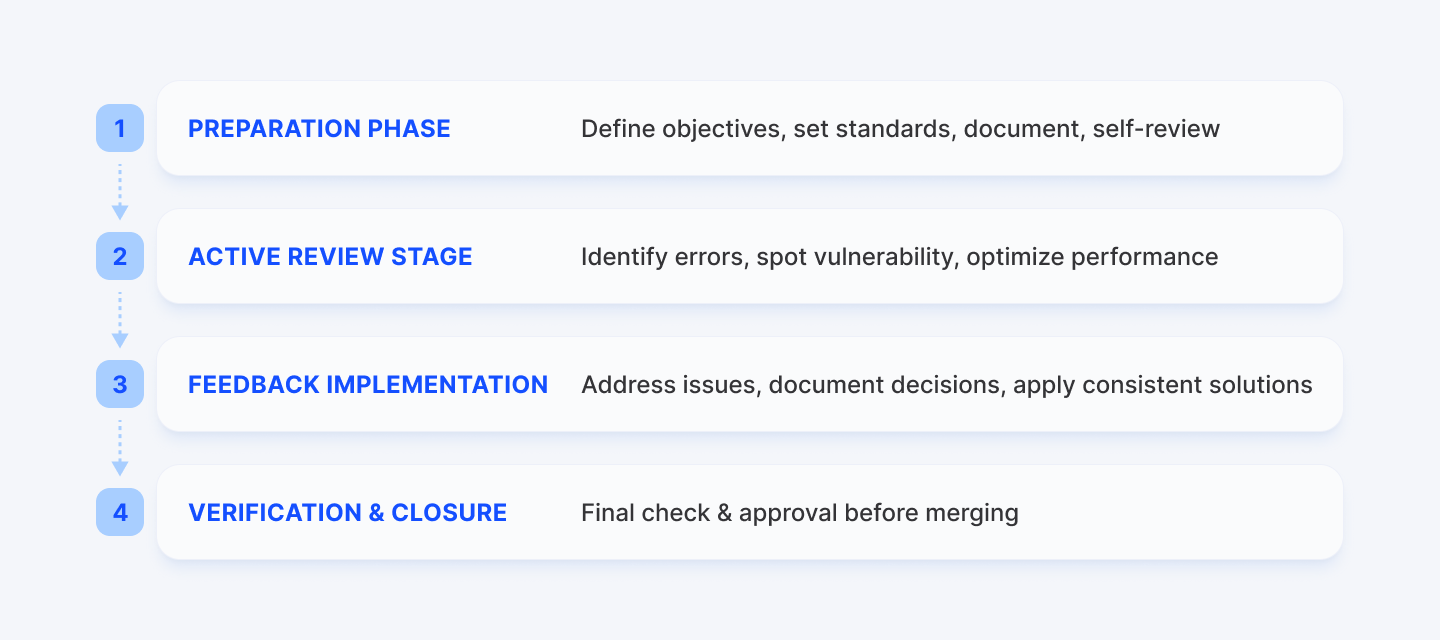
This flowchart is just one example of how you can structure your review cycle to maximize code review benefits.
The Benefits of Code Reviews
1. Building a Stronger Codebase
One of the most significant code review benefits is the dramatic improvement in overall quality. When we catch errors early, we avoid costly fixes later in development. Teams implementing structured reviews report up to 80% fewer post-release bugs, making your products more reliable and your customers happier.
2. Accelerating Team Growth
Peer code review sessions serve as outstanding learning opportunities. When your junior developers see how experienced team members approach problems, they develop skills faster than through documentation alone. Research by Marco Patiño López shows teams engaging in regular reviews achieve up to 50% faster onboarding—a crucial advantage in today's competitive hiring market.
3. Establishing Codebase Consistency
When projects grow beyond their initial scope, keeping code consistent gets tougher. Developers come and go, new features get bolted onto old ones, and what started as a clean project can quickly turn messy. A solid code review process gives you practical enforcement of your standards—not just documentation that nobody reads. This approach ensures your codebase stays maintainable even as team members change over time.
Teams that implement clear review guidelines report significant improvements in codebase consistency. These established standards for structure, naming conventions, and architectural patterns become embedded in your development workflow, creating a unified approach that benefits long-term maintenance efforts.
4. Minimizing Long-Term Maintenance Burden
Development teams frequently encounter complex bugs originating from code written in previous development cycles. These issues often represent technical debt that accumulates when potential problems go unidentified during initial implementation.
Consistent reviews provide an effective mechanism for early detection of subtle issues before they evolve into significant challenges. Problems that might require extensive debugging efforts post-deployment can typically be identified quickly during a structured review process.
This proactive approach yields measurable financial benefits. Organizations tracking maintenance metrics report approximately 30% reduction in maintenance costs after implementing comprehensive review practices. These savings directly enhance your development budget efficiency while reducing unplanned work interruptions.
5. Improved Security
Today's digital threats demand proactive security measures. Code reviews give you a powerful security advantage—studies show they catch up to 65% of vulnerabilities before deployment.
Your review team will spot issues that automated tools miss. Many teams have uncovered serious flaws during review sessions, from basic input validation gaps to encryption weaknesses. These discoveries protect both your users' data and your company's reputation.
The cost of fixing security issues post-deployment far exceeds the investment in thorough reviews. By building this security checkpoint into your process, you meet compliance requirements while avoiding potentially devastating breaches.
6. Increased Development Efficiency Through Better Reviews
Counterintuitively, taking time for code reviews actually speeds up your overall delivery timeline. Why? Because fixing issues during review costs dramatically less than addressing them after deployment.
A problem caught early might take twenty minutes to resolve. That same issue discovered in production could demand days of debugging, emergency patches, and customer support challenges.
Teams tracking their metrics confirm this reality. While reviews add some time upfront, the overall development cycle becomes more predictable and efficient. You'll ship with greater confidence, experience fewer critical failures, and maintain more consistent delivery schedules—all because you invested in quality at the right moment.
Measurable Code Quality Improvement Through Reviews
It’s not just about catching bugs early; a systematic approach to code reviews can lead to significant code quality improvement over time. A study by SmartBear suggests that teams engaging in regular code reviews see up to a 65% reduction in defects (SmartBear). These improvements are a direct outcome of rigorous peer code review sessions where diverse perspectives help uncover subtle issues that automated tests might miss.
Key Metrics to Track
To fully appreciate the code review benefits, consider tracking the following metrics:
- Defect Density: Measure the number of defects per thousand lines of code.
- Review Efficiency: Evaluate the time taken to complete each review cycle.
- Feedback Implementation: Monitor the percentage of feedback items successfully implemented.
Using dashboards and visual reports can make these metrics more digestible. For example, a bar chart comparing defect density before and after implementing regular reviews can clearly illustrate the impact of your code review process.
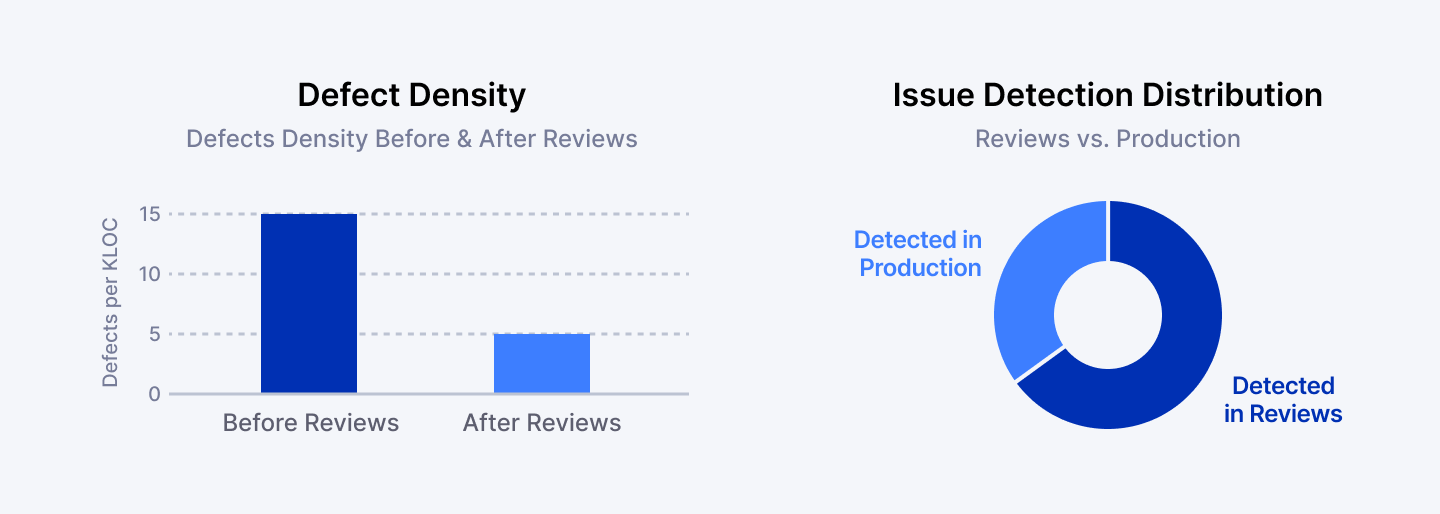
Note: KLOC stands for "thousand lines of code." It’s a metric used to quantify the size of a software codebase, and in this context, it's used to measure the defect density (i.e., the number of defects per thousand lines of code). This standard measurement helps teams compare code quality before and after implementing code review practices.
Developing a Code Review Culture
Reviews only stick when they become part of how your team naturally works. Here's what that takes:
Establish Clear Guidelines
Start with clear standards everyone understands. Create a straightforward checklist covering quality, security, and future maintenance needs. When everyone knows exactly what to look for, reviews become faster and more consistent. Recent studies from Codacy highlight how teams with established code review best practices catch more issues while creating less friction.
Use of Effective Tools
Good platforms make reviews feel natural instead of forced. GitHub and GitLab handle the basics like tracking changes and managing feedback threads. Some teams also benefit from newer AI tools that spot common issues before human reviewers even start. The right combination for your team depends on your specific workflow.
Encourage Constructive Feedback
Reviews fail when they feel like criticism rather than collaboration. Train your team to give specific, actionable code quality improvement feedback focused entirely on the code itself. Regular practice sessions using real examples from your codebase help everyone improve their review skills. When developers see reviews as valuable learning opportunities rather than judgments, the entire process transforms.

Also Check Out: 15 Best Developer Assessment Tools in 2025 (Free+Paid)
Afterword
In conclusion, the strategic implementation of a robust code review process brings numerous code review benefits. Reviews don't just make your code better—they transform how your entire team works. Developers learn from each other, standards get followed consistently, technical debt shrinks, security improves, and your whole development cycle moves faster. These advantages will only become more important as we navigate the challenges of building software in 2025.
When you make peer code reviews a regular part of your workflow and back them with the right tools and clear guidelines, you create conditions where everyone can do their best work. Companies like Index.dev excel by making these practices central to how they deliver services. We are seriously committed to quality pay offs through better productivity and more innovative solutions. Our teams work alongside yours, bringing specialized expertise that complements what you already have in-house—letting your developers stay focused on core priorities while still maintaining high standards across your entire codebase.
For Clients:
Need qualified developers who follow best coding review practices? Hire from Index.dev’s elite 5% vetted talent—matched in 48 hours with a 30-day free trial!
For Developers:
Want to work with teams that value clean code and collaboration? Join Index.dev to get matched with top global companies and build a great remote career!