A solid Freelance Software Developer Contract Template is instrumental in creating a mutually successful relationship between an independent contractor and business. A good, ethical contract shields both parties as well as creates a clear path of deliverables, legal protections, and expectations.
At Index.dev, we use contracts not just to outline terms, but to build long-term relationships with freelancers. It’s part of how we hire, manage, and support tech talent globally. We’ve also included a customizable freelance developer contract template you can adapt for your needs.
Need reliable contractors? Hire the best through Index.dev's elite network—48-hour matching, 30-day free trial, and more!
Why You Need a Freelance Software Developer Contract Template
A well-drafted contractor template is important because it defines the expectations, obligations, and roles of both parties. Developers and companies have enjoyed utilizing formalized contracts that limit miscommunications and legal consequences. When you utilize a contract template, you are setting the stage for a business relationship built on honesty and respect.
- Risk Mitigation: Safeguards both parties by defining deliverables and timelines.
- Legal Clarity: Guarantees payment schedules, intellectual property ownership, and confidentiality requirements are well-defined.
- Dispute Resolution: Clearly outlines the exact procedures for conflict management.
- Termination Clauses: Well-defined conditions for ending the contract are stated.
- Professional Standards: Application of a Freelance Software Developer Contract Template exhibits the professionalism and adherence to professional best practices from both parties—the company as well as the developer.
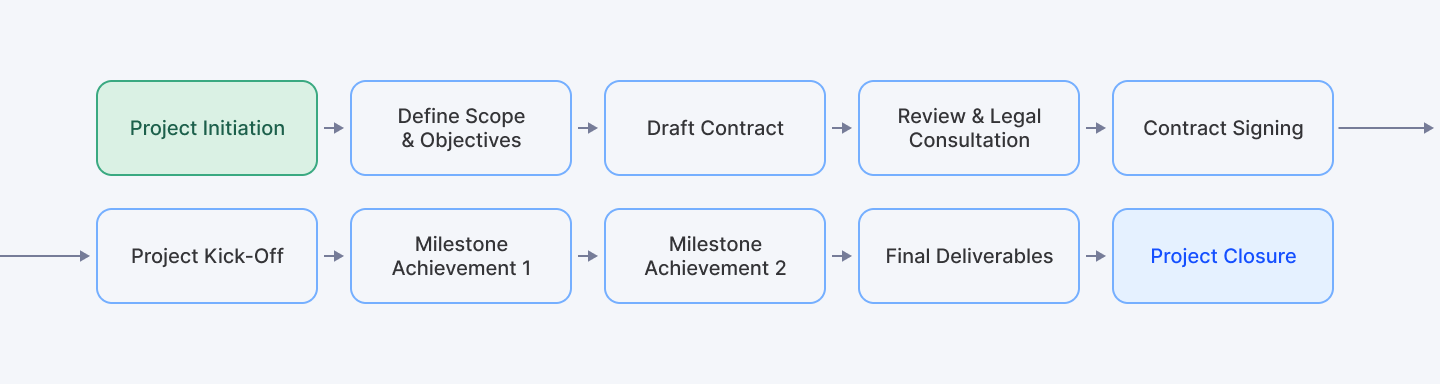
Having these sections explicitly laid out reduces risk and provides a good basis for an effective collaboration. For further specific legal guidance, you can consult FindLaw or check Rocket Lawyer for common contract clauses. You can also understand industry information on Index.dev to find out how technology businesses are changing in contract processes.
Key Elements of a Freelance Software Developer Contract Template
A comprehensive freelance software developer contract template should cover the following components:
1. Project Scope and Deliverables
- Detailed Description: Outline every task, expected deliverable, and milestones.
- Timeline: Set clear deadlines and specify what constitutes project completion.
- Milestones: Divide the project into well-defined phases, making it easier to track progress and maintain both parties' alignment.
- Amendment Procedures: Explicitly indicate how any modification or extension to the project scope will be treated and recorded.
2. Payment Terms and Conditions
- Compensation Structure: Establish rates, fixed or hourly, and payment schedule.
- Upfront Deposits: Think about requesting a deposit for securing services and incurring initial expenses, which lessens developers' risk.
- Invoicing Procedures: Outline the manner and timing for submitting and processing invoices.
- Tools: Consider using tools like Freshbooks software to streamline billing and ensure timely payments.
- Penalty Clauses: Detail any fee for late payment or rewards for early completion.
3. Intellectual Property (IP) Rights
- Ownership: Define whether absolute ownership is passed over to the client upon payment or whether rights for code snippet reuse are reserved by the developer.
- Licensing Terms: Specify any licensing terms if the software or parts of it are for future use or redistribution.
- Copyright Considerations: As new technologies such as AI impact copyright law, there is a need to stay abreast of legal changes.
4. Confidentiality and Data Security
- NDA Requirements: Ensure sensitive information is protected proprietary or sensitive data should be not disclosed. This agreement should be signed by both parties encompassing a time period that extends during and after the project.
- Data Handling Provisions: Define how confidential information will be stored, processed, and shared in compliance with legal standards.
5. Liability and Dispute Resolution
- Limitations on Liability: Specify if liability is capped at the contract’s value and what types of damages are excluded.
- Indemnification: Outline responsibilities in case of legal disputes or losses caused by breaches or negligence .
- Arbitration or Mediation: Suggest how disputes are to be resolved outside of court.
- Governing Law and Jurisdiction: Define clearly what legal framework and jurisdiction will be applicable, so both parties are aware of the legal environment in which they are agreeing.
6. Termination Clauses
- Notice Periods: Define precisely how much notice should be given prior to termination of the agreement.
- Grounds for Termination: Enumerate reasons like breach of contract or failure to meet performance standards on which termination can be based.
- Dispute Resolution Mechanisms: Define mechanisms such as mediation or arbitration for resolving disputes harmoniously.
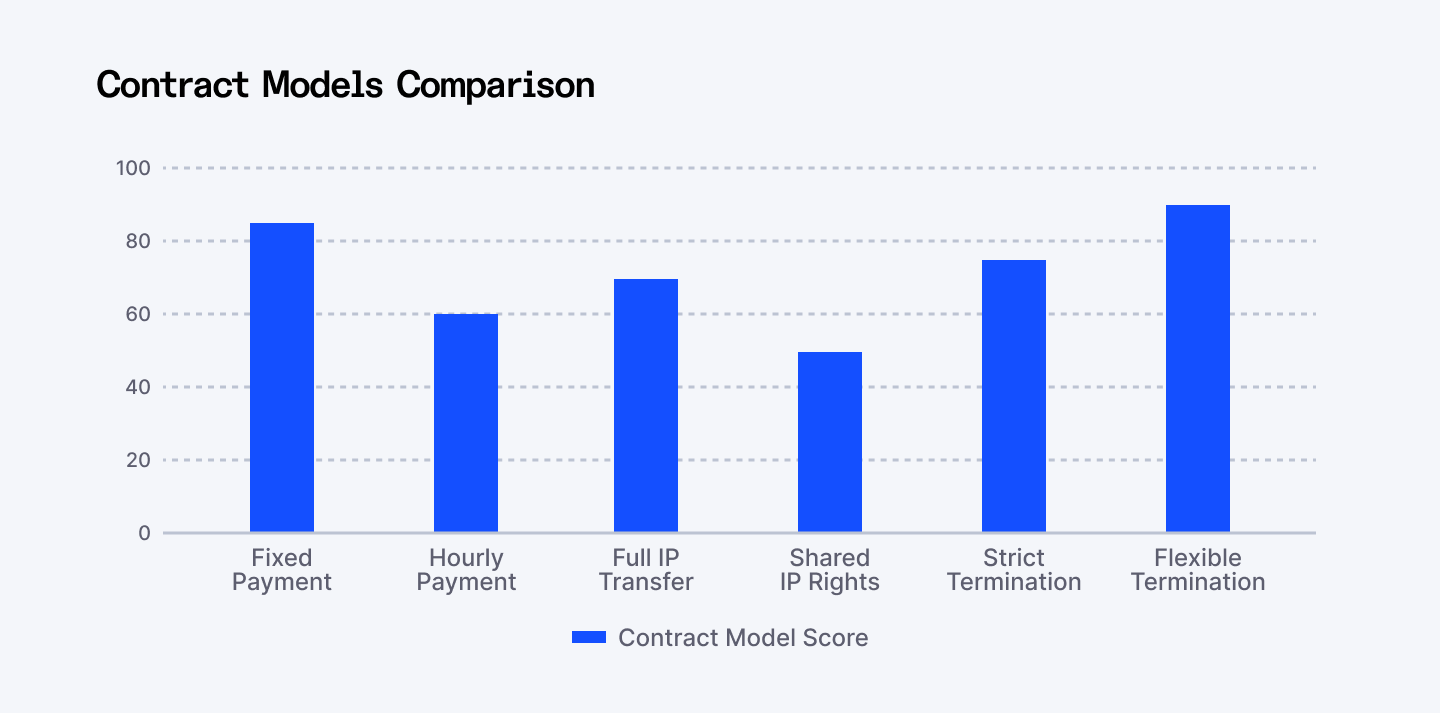
This bar chart comparing different contract models displays variations in payment structures (fixed vs. hourly), differences in IP rights allocation, and termination conditions from several successful contracts in the industry on a scale from 0 to 100.
For in-depth legal standards reference, you can check the guidelines of reputed sources like Nolo's legal resources or Upwork's community guidelines.
Industry Trends and Market Insights
The freelance economy is transforming at an unprecedented pace. Current market insights reveal that:
- Hybrid Work Policies: Almost 64% of businesses today adopt hybrid work policies, integrating remote and in-office work.
- Cost Savings: Businesses are seeing possible annual cost savings of as much as $11,000 per remote worker via flexible staffing models.
These trends reinforce why a revised freelance software developer contract template is needed—not just to protect both sides but also to keep up with a rapidly changing workplace.
Customizing Your Freelance Software Developer Contract Template
Although a generic freelance software developer contract template is a solid foundation, there must be customization. Each project is different, and making the following changes can assist you in customizing the contract:
- Industry-Specific Requirements: Tailor clauses to suit the requirements of certain industries such as fintech, healthcare, or gaming.
- Project Complexity: Have explicit sub-sections for projects that have new and developing technologies like cloud computing or artificial intelligence. Customize scope, milestones, and payment terms according to the project's specific requirements.
- Regional Legal Considerations: Make sure the contract adheres to regional labor and tax laws where the work is being done and international regulations if the work is in more than one country.
- Periodic Updates: As legal frameworks and industry standards evolve, update your freelance software developer contract template at regular intervals to stay compliant and effective.
Steer clear of ambiguity, and make all terms explicit and flexible enough to support the organic growth of project needs.
Sample Freelance Software Developer Contract Template
Below is a simplified sample template that can be adapted to suit your project’s needs:
1. Project Title:
[Insert Project Title Here]
2. Parties Involved
This contract is between [Company Name] ("Client") and [Developer Name] ("Freelance Developer").
3. Project Overview
This agreement sets forth the terms and conditions under which the Developer will provide software development services to the Client. The objective of this project is to [brief description of the project goals], with deliverables outlined below.
4. Project Scope
- Description of Services:
- The Developer shall provide services including, but not limited to, design, development, testing, and deployment of the agreed software solution.
- Deliverables:
- Detailed project specifications and design documents
- Source code and documentation
Tested, functioning software as described in the project plan
- Milestones:
- Milestone 1: [Description, Deadline, Payment Amount]
- Milestone 2: [Description, Deadline, Payment Amount]
- Final Delivery: [Description, Deadline, Payment Amount]
- Change Requests:
- Any increase or decrease in scope has to be approved in writing by both parties and can lead to changes in the project schedule or fees.
5. Payment Terms
- Fee Structure:
The project fee is based on a [fixed-price/hourly] model. The total agreed fee is [Insert Total Fee], payable according to the milestone schedule. - Payment Schedule:
- Deposit: [X%] of the total fee upon signing this contract
- Milestone Payments: As per the milestones described above
- Final Payment: Upon project completion and delivery
- Late Payment:
Payment not received on time can carry a late payment charge of [mention percentage or amount] after a [grace period, e.g., 7 days] certain time lag.
6. Intellectual Property Rights
- Ownership:
Upon full payment, the Client will have exclusive ownership of the final deliverables. The Developer retains no rights to the work, except for any pre-existing materials. - License for Developer’s Materials:
Any reusable code or materials that the Developer incorporates into the project remain the Developer’s property unless otherwise agreed. The Client is granted a non-exclusive, perpetual license to use these components within the delivered software.
7. Confidentiality
- Confidential Info:
The parties undertake to maintain confidential any sensitive or proprietary information shared under the project. - Data Handling:
The Developer will keep any information provided by the Client secure and only utilize it for the purposes of the project, in line with applicable data protection law. - Non-Disclosure:
Neither party shall disclose confidential information to any third party without written consent, save as is required by law.
8. Liability and Dispute Resolution
- Mediation/Arbitration:
In the event of any disagreement, both parties agree to attempt to resolve the disagreement by mediation. Where a settlement is not possible, the dispute shall be referred to binding arbitration according to [list jurisdiction or rules]. - Governing Law:
This agreement will be governed and construed in accordance with the laws of [State/Country].
9. Termination Clause
- Termination for Convenience:
Either party may terminate the agreement with a [30-day] written notice. In such cases, the Developer will be compensated for work completed up to the termination date. - Termination for Cause:
If either party breaches the terms of this contract, the non-breaching party may terminate the agreement immediately after providing written notice. - Return of Materials:
Upon termination, the Developer will return all Client materials and any work in progress unless otherwise agreed.
10. Miscellaneous
- Entire Agreement:
This agreement forms the sole contract between Client and Developer that replaces all negotiations, discussions, and agreements hitherto. - Amendments:
Any variation to this agreement has to be done in writing and executed by both parties. - Notices:
Any notices under this agreement should be forwarded to the above addresses.
11. Signatures:
Client Signature: _________________________ Date: ___________
Developer Signature: ______________________ Date: ___________
Best Practices for Implementing a Freelance Software Developer Contract Template
For a contract to be truly effective, both companies and developers should consider the following best practices:
- Review and Revise Regularly: Maintain current knowledge of industry standards and legal environments. Implement regular contractual reviews based on evolving industry standards and changing project scopes.
- Consult Legal Experts: While templates are great starting points, professional legal counsel is irreplaceable. They ensure that the contract meets all legal requirements.
- Transparent Communication: Transparent communication prevents more legal headaches than any clause ever written. Open channels means fewer misunderstandings, and therefore better negotiation.
- Documentation and Record Keeping: Keep detailed records of everything. Every modification, every conversation—document it and leave a paper trail.
Integrating these practices ensures that the freelance software developer contract template remains a living document that evolves with your projects.
Explore More: Why Use Contract Staff for Technical Projects | Benefits & Best Practices
Conclusion
A well-written freelance software developer contract template is most important in constructing clear, win-win agreements. As we rattle past 2025, it is increasingly crucial to include detailed scopes, explicit payment terms, robust IP provisions, strict confidentiality provisions, and flexible termination and liability provisions.
With continuous sensitivity to prevailing market forces and legal developments, you can create contracts that not only protect both sides but also lay the ground for lucrative, extended partnerships.
We suggest you modify this template for your project's specific requirements and check and maintain it regularly as practices change in the industry. For additional legal advice, refer to reliable sources and local law professionals.
By following these best practices, you position yourself for success in the high-speed freelance world so that each working relationship is founded on transparency, trust, and mutual progress.
Hire with confidence: Find vetted freelancers with clear contracts via Index.dev. Start your free trial!