Open-source coding models are changing how developers write and debug code.
But which one actually performs best in real-world tasks?
We tested five popular LLMs—Qwen 3, DeepSeek R1, LLaMA 4, Gemma 3, and Cohere — across practical coding challenges like code generation, debugging, and UI building.
This hands-on ranking reveals which model is truly developer ready in 2026, not just in theory, but in action.
Join Index.dev and work with companies building next-gen AI tools!
How We Tested These Models (Methodology)
To fairly evaluate each open-source LLM, we designed a set of five practical coding tasks. Each task tested a specific real-world coding skill:
- Code Generation – Can the model produce accurate, working code?
- Explanation Quality – Can it clearly explain how the code works?
- Debugging Ability – Can it identify and fix code issues or errors?
- Optimization – Can it simplify or improve existing code?
- Frontend & UI Handling – Can it build clean, responsive web interfaces?
All five models—Qwen 2.5, DeepSeek R1, LLaMA 4, Gemma 3, and Cohere—received the exact same prompt for each task to ensure a level playing field.
Scoring Criteria
Each model was scored manually on a 3-point scale per task:
- 🟢 High (3 points) – Complete, correct, and clearly explained with thoughtful improvements or design
- 🟡 Medium (2 points) – Mostly correct with minor gaps in interactivity, logic, or clarity
- 🔴 Low (1 point) – Missed critical requirements, failed to explain, or lacked basic usability
The maximum total score per model was 15 points (5 tasks × 3 points).
What We Measured and Why It Mattered
| Parameter | What It Measured | Scoring Focus |
| Code Accuracy | Did the output run without errors? Was the logic correct? | Full marks for functional, bug-free logic |
| Clarity | Was the explanation or code easy to understand for beginners? | Clear, step-by-step logic with helpful comments |
| Optimization | Did the model simplify or improve the code structure? | Bonus for concise, efficient, readable code |
| Error Detection | Could the model find and fix bugs correctly? | High scores for identifying real bugs with fixes |
| UI & UX Design | Could the model build a usable, responsive frontend interface? | Higher marks for layout clarity and interactivity |
| Responsiveness | How quickly and consistently the LLM replied to prompts | Slower replies were fine unless the quality dropped |
By scoring across these real-world categories, we aimed to simulate how a developer—beginner or expert—might actually use these models. The final rankings reflect not just raw output, but also usability, reliability, and developer experience.
Task 1
Prompt used:
Write a Python program that reads a list of numbers and returns the second-highest number.
Parameters Tested:
- Code Accuracy
- Speed of the LLM
What We Are Testing:
We are testing the model’s ability to handle lists, apply sorting or filtering logic, and correctly identify the second-highest value using efficient and clean code.
Qwen 3 Response
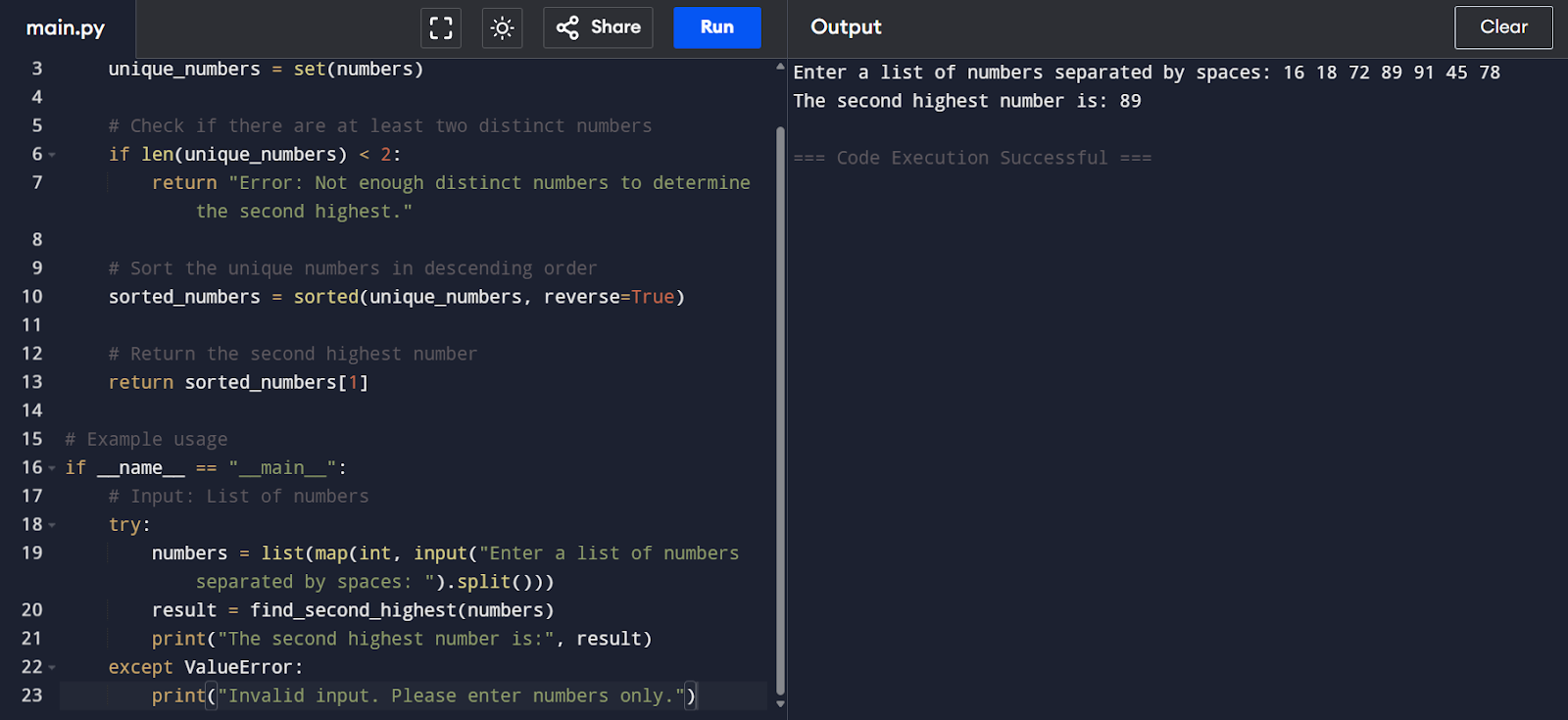
What's Working
- Removes repeated numbers.
- Make sure there are at least two different numbers.
- Arranges numbers from biggest to smallest.
- Let users type numbers with spaces between them.
- Shows a message if the input is wrong.
- Keeps the code organized so it can be reused easily.
Potential Improvements
- Type Flexibility: Only allows int input; switching to float might improve usability if decimal input is needed.
DeepSeek R1 Response
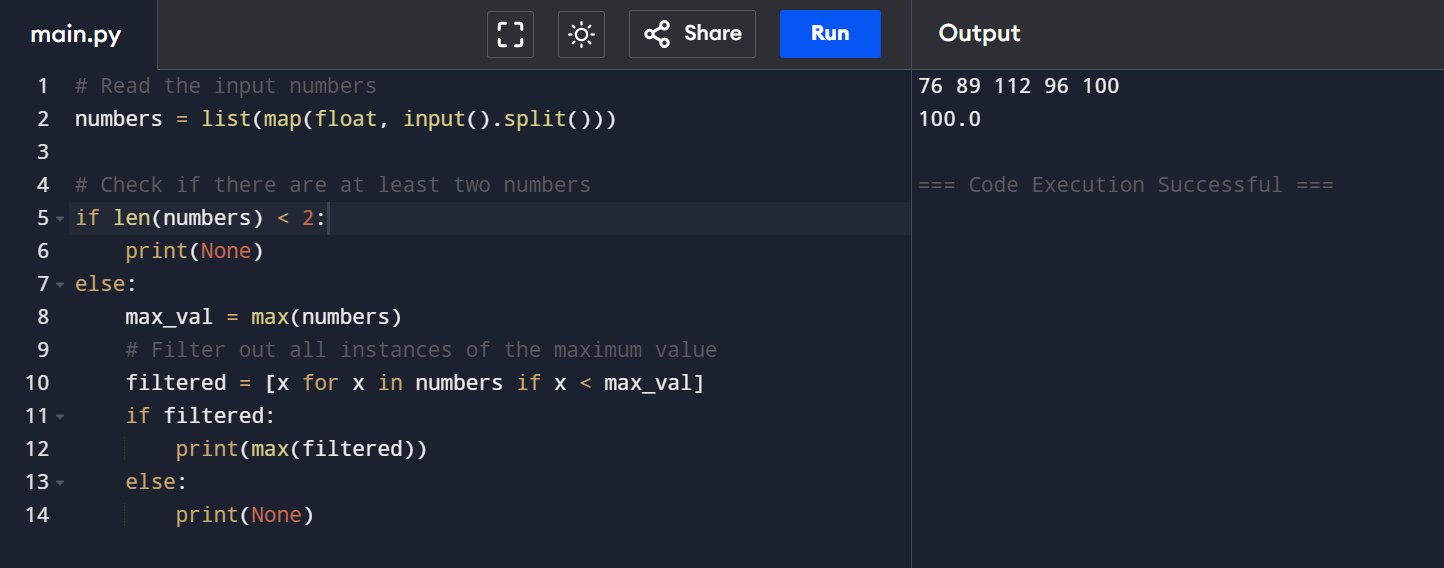
What's Working
- Reads multiple float values from user input.
- Checks if the list has at least two numbers.
- Finds the max value and filters it out.
- Finds and prints the new max (i.e., second-largest), or None if not found.
Potential Improvements
- No prompt for user input: It might be helpful to add a prompt like:

Gemma 3
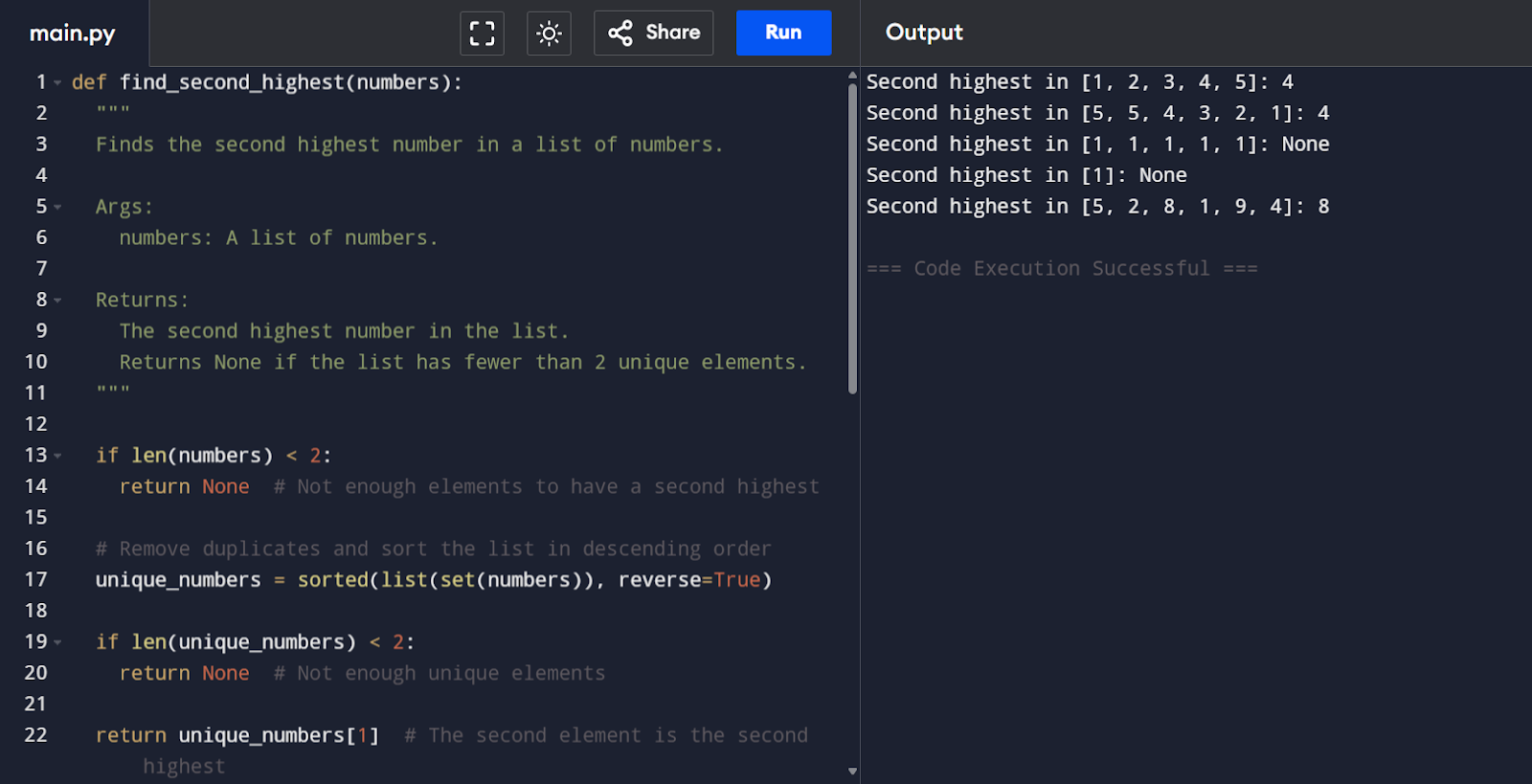
What's Working
- Handles lists with duplicate values using set()
- Sorts the numbers in descending order
- Returns None if fewer than two unique numbers exist
- Gives correct results for predefined (hardcoded) lists
- Clean and readable logic with comments and docstring
- Good example cases provided to test multiple scenarios
Potential Improvements
- Does not accept user input – only works with hardcoded lists, add input() to make it interactive.
Cohere Response
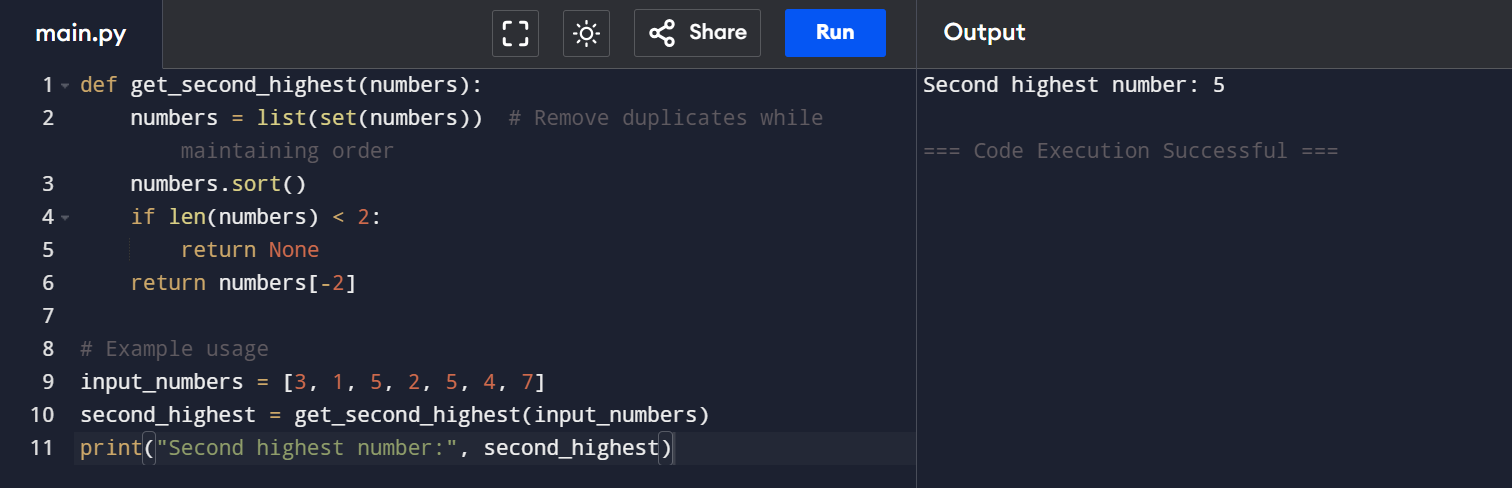
What’s Working
- Removes repeated numbers.
- Finds the second biggest number.
- Gives the right answer for the example.
- Checks if there are enough numbers to compare.
- Steps are clear and easy to follow.
Potential Improvements
- No user input: The code uses a hardcoded list (input_numbers). It should ask the user to input numbers dynamically using input() to make it interactive.
Llama 4
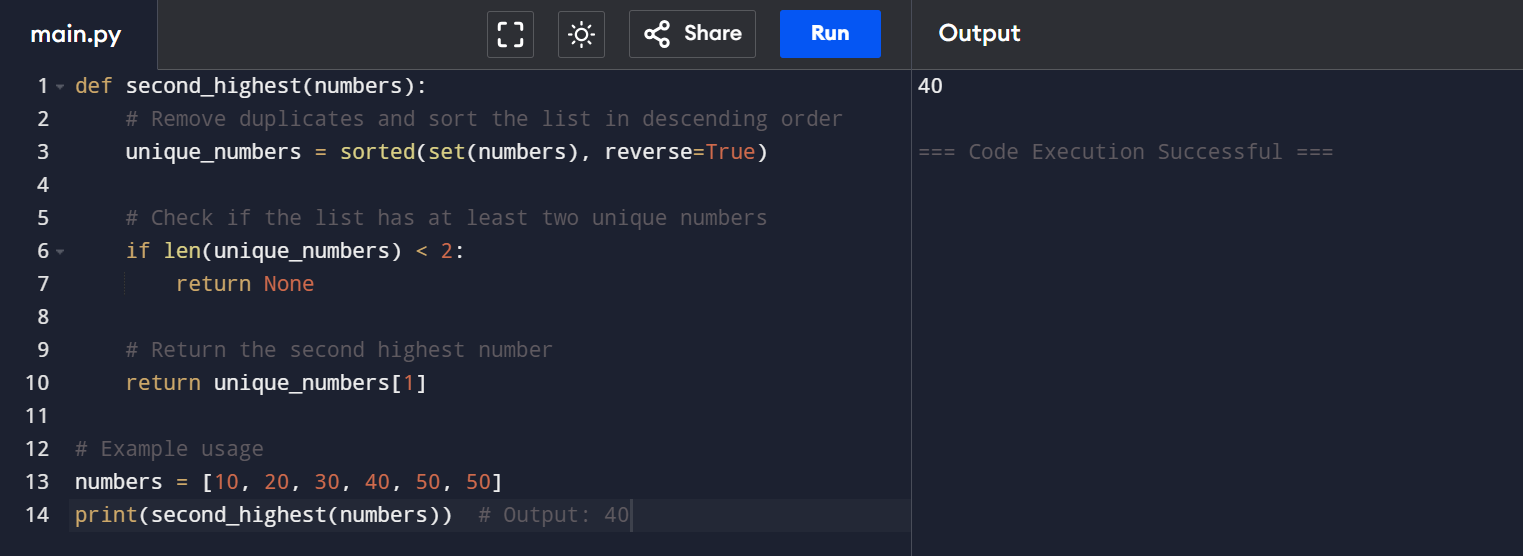
What’s Working
- Removes repeated numbers.
- Puts numbers in order from biggest to smallest.
- Finds the second biggest number correctly.
- Checks if there are enough different numbers to compare.
- Gives the right result when tested with example numbers.
Potential Improvements
- No user input: The code uses a hardcoded list, it does not ask the user to enter their own numbers.
Ranking for Task 1
- Qwen 2.5 (High)
- DeepSeek R1 (Medium)
- Gemma 3 (Medium)
- Cohere (Medium)
- LLaMA 4 (Low)
Task 2
Prompt Used:
Write a Python program to check if a sentence is a palindrome.
Parameters Tested:
- Clarity of code
- Code Optimization
What We Are Testing:
We are testing if the model can clearly structure logic to preprocess strings (remove spaces, convert to lowercase) and check for palindromes in an optimized and readable way.
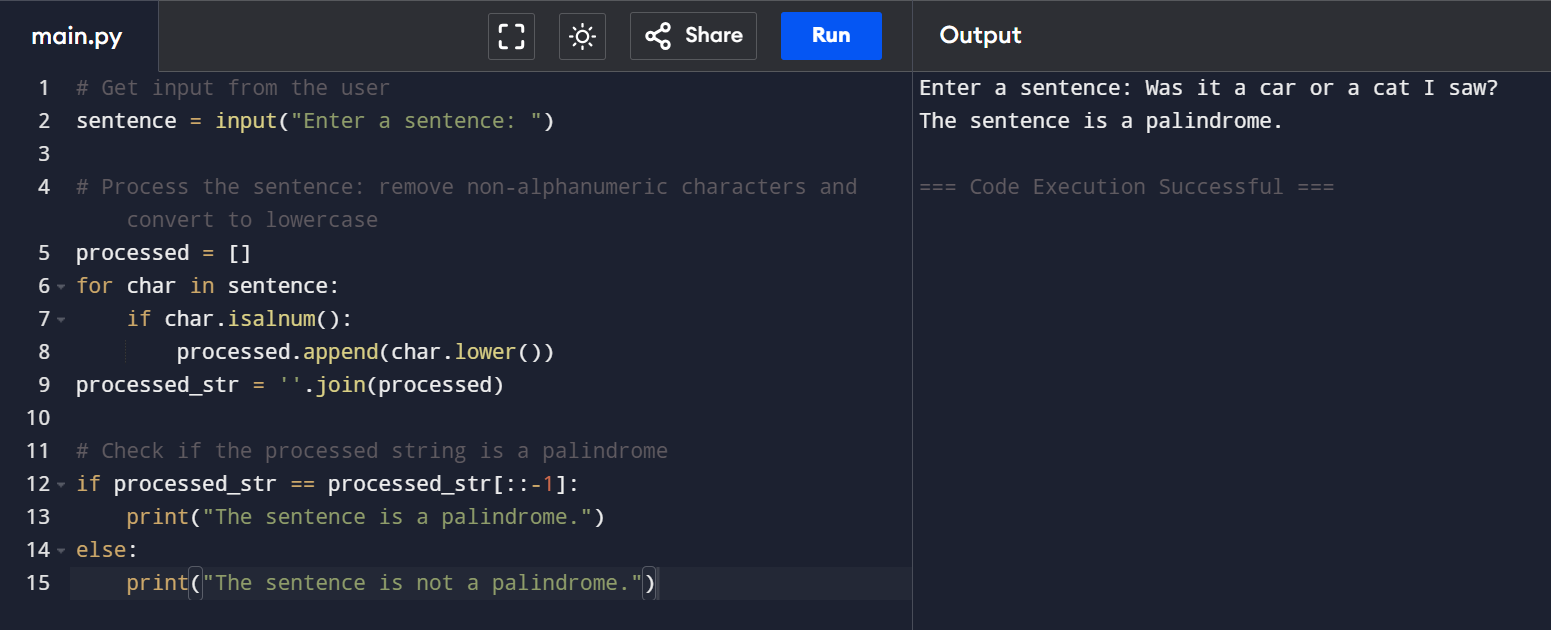
Qwen 2.5 Response
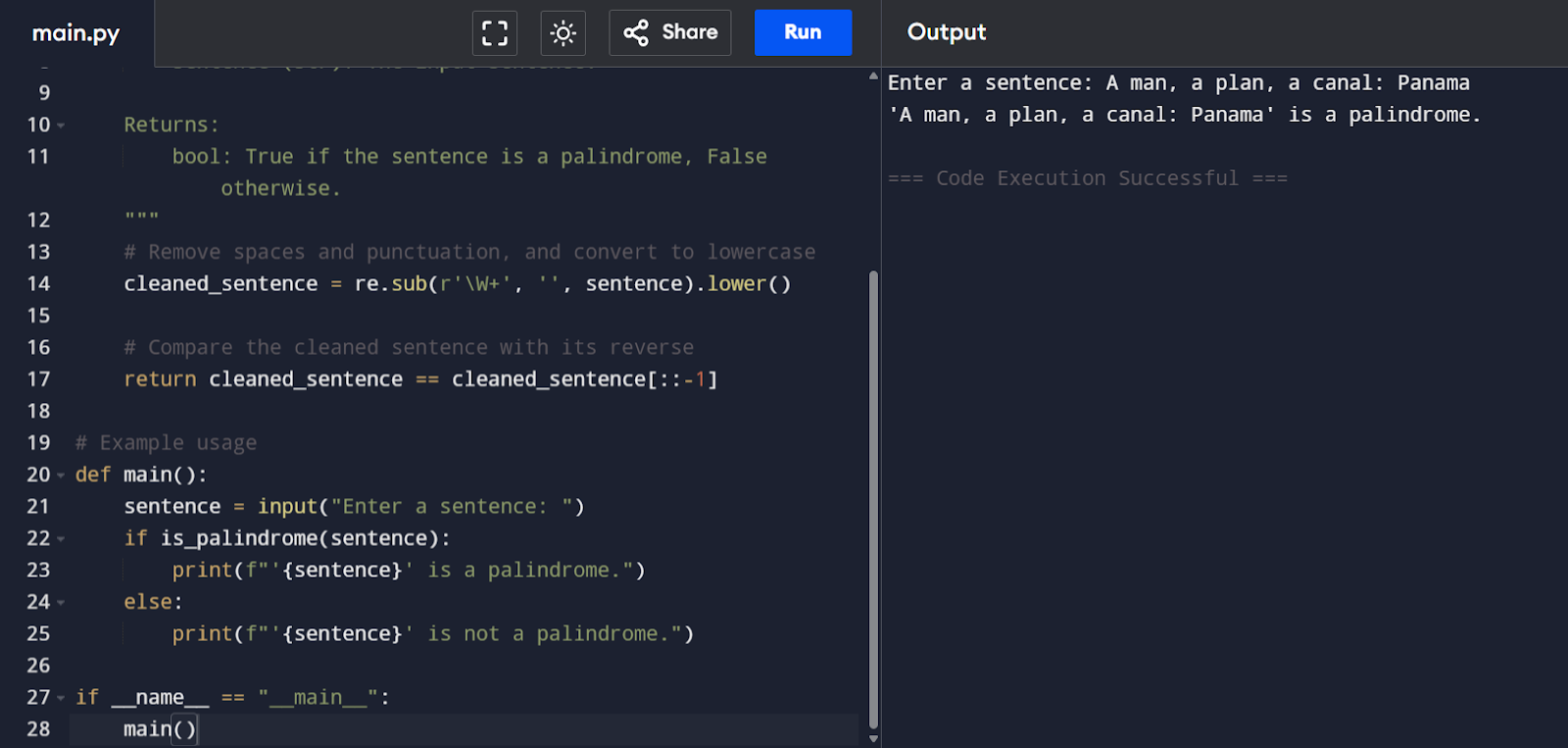
Llama 4 Response
DeepSeek R1 Response
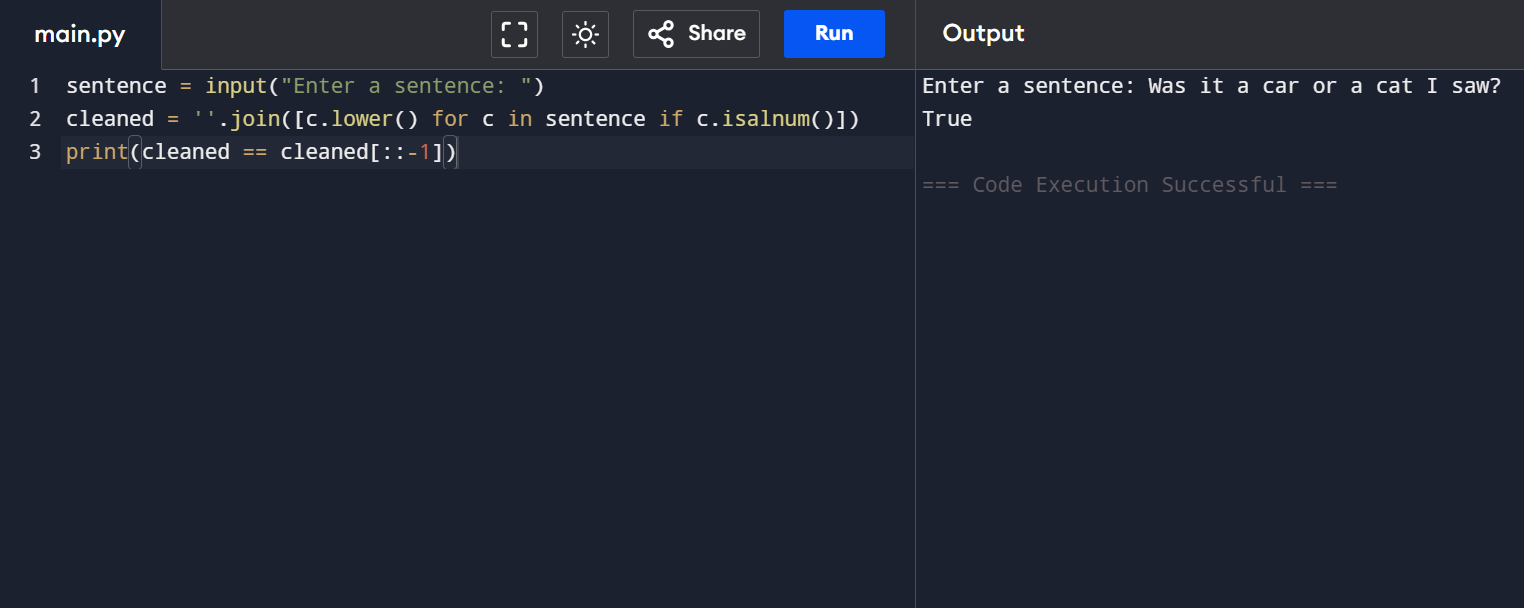
What’s Working in Qwen, LLaMA 4, Deepseek R1
- Accurate Palindrome Detection: All models correctly identified palindromes even with complex formatting.
- Ignores Spaces: They removed all spaces before comparison.
- Case Insensitive: Converted the input to lowercase to ensure fair comparison.
- Punctuation Handling: Successfully removed commas, periods, colons, and other punctuation.
- Handles Edge Cases: Managed special characters and mixed casing like in "A man, a plan, a canal: Panama".
- Clean Logic: Used slicing or equivalent logic to reverse and compare the normalized string.
Gemma 3 Response
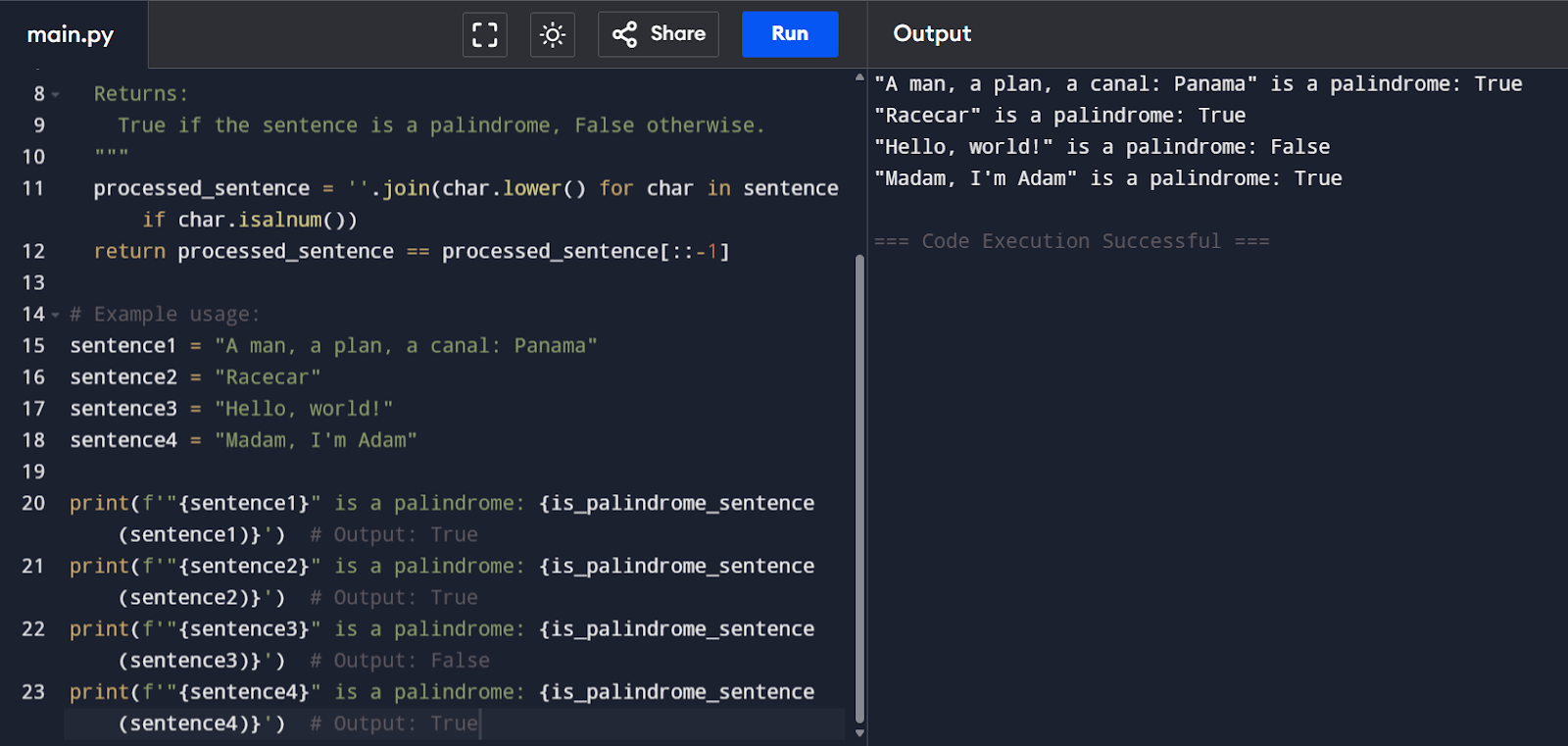
What’s Working
- Removes spaces and ignores ca, ensures a basic level of normalization.
- The code is short and easy to follow.
- Efficient comparison: Uses slicing [::-1] for reverse check.
- Successfully removed commas, periods, colons, and other punctuation.
Potential Improvements
- No input option: The sentence is hardcoded — it would be better to allow user input for flexibility.
Cohere Response
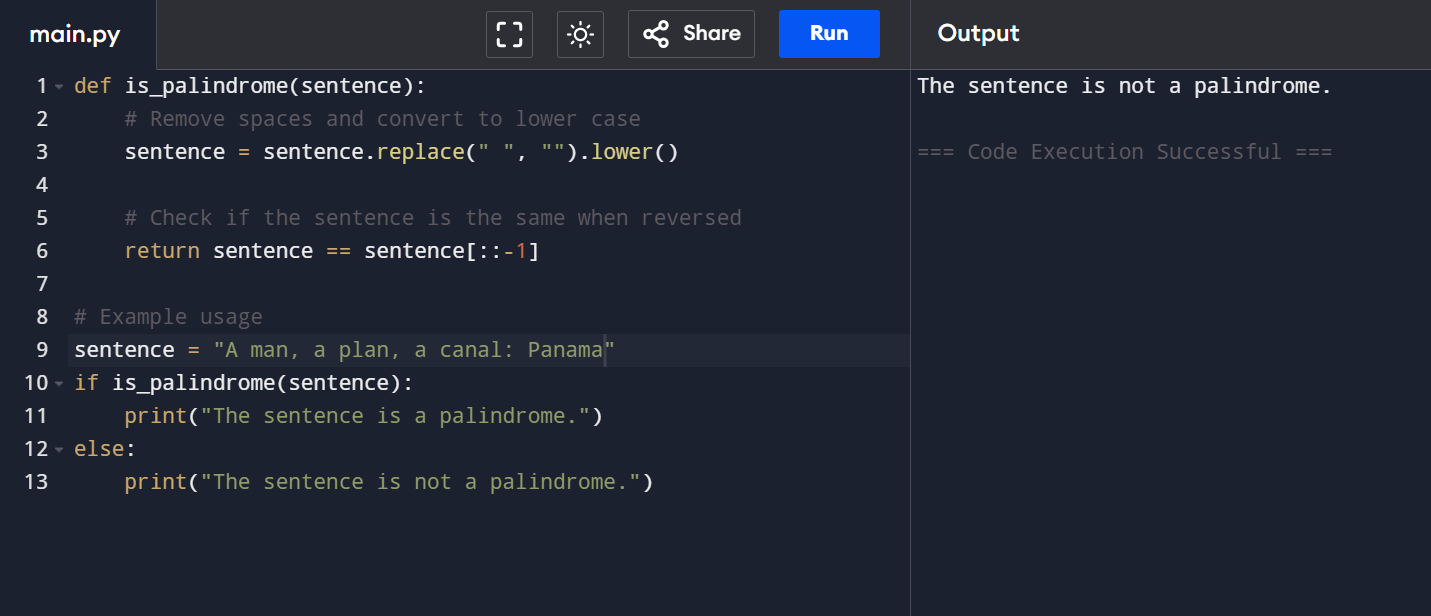
What’s Working
- Correctly removes all spaces to avoid a mismatch due to spacing.
- Converts to lowercase, ensuring consistent comparison.
- Uses slicing ([::-1]) to reverse and compare the string.
- Works for simple sentences without punctuation.
Potential Improvements
- Punctuation not handled: It fails on sentences like "A man, a plan, a canal: Panama" because of commas and colons.
- No input option: The sentence is hardcoded — it would be better to allow user input for flexibility.
Ranking for Task 2
- Qwen 2.5 (High)
- LLaMA 4 (High)
- DeepSeek R1 (Medium)
- Gemma 3 (Low)
- Cohere (Low)
Explore More: Llama 4 vs ChatGPT-4 for Coding
Task 3
Prompt Used:
Explain the code (Code Snippet attached)
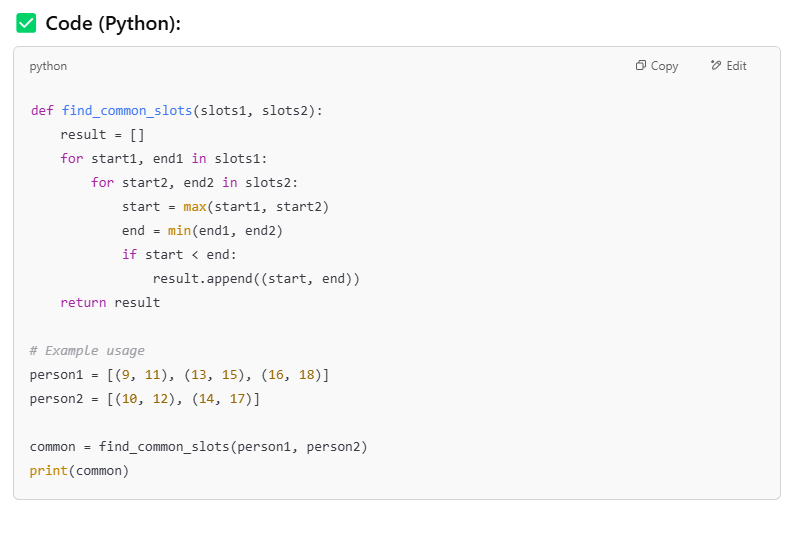
Parameters Tested:
- Explanation Quality
- Loop and condition understanding
- Tuple handling
- Output interpretation
What We Are Testing:
This code tests explanation quality by evaluating if the LLMs can clearly describe how overlapping time slots are identified using nested loops and range comparisons. It checks understanding of tuple unpacking, use of max() and min(), and the condition start < end. The code's real-world use in scheduling makes it ideal for testing clarity, logic, and relevance.
Deepseek R1 Response
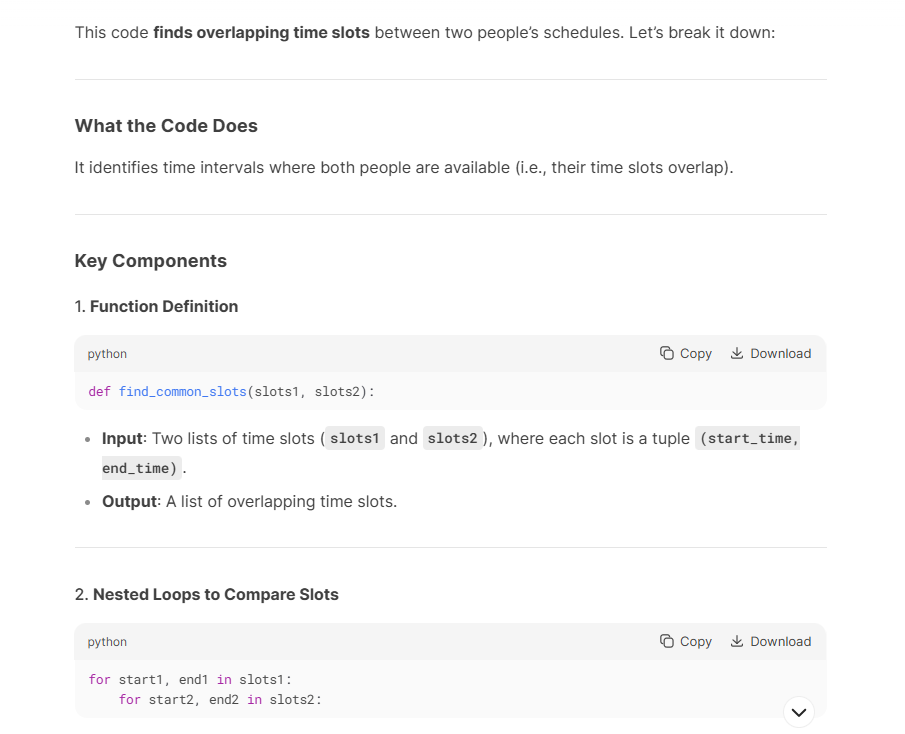
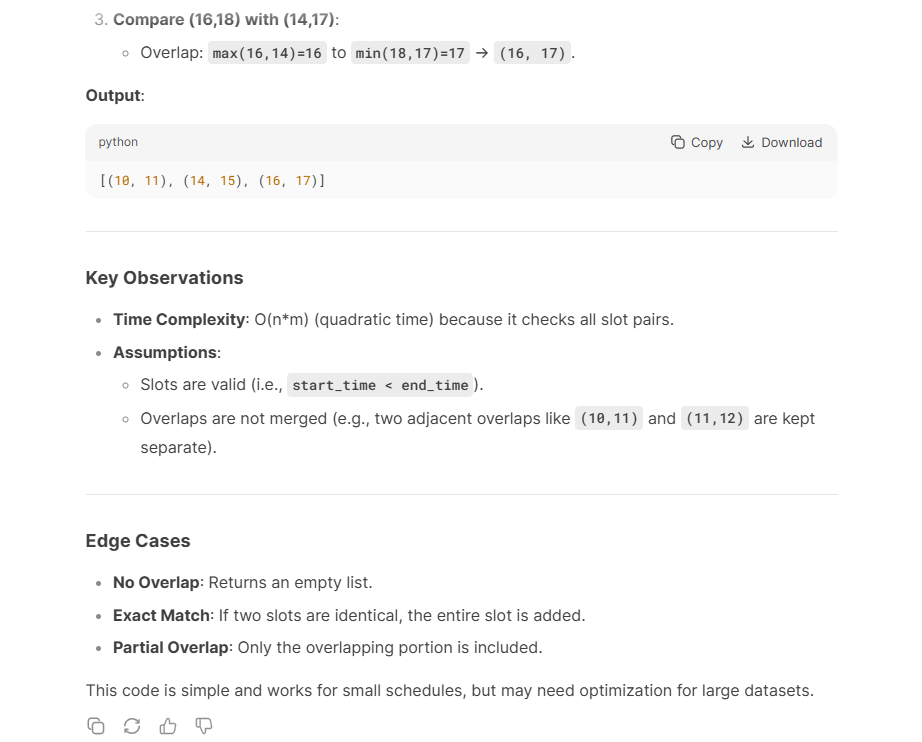
What’s Working
- Clear breakdown: Explains each part of the code step-by-step — function, loops, logic.
- Real-world example: Uses a relatable input to show how overlaps are found.
- Highlights logic: Clearly explains why max() and min() are used and how overlaps are validated.
- Mentions complexity: Notes time complexity (O(n*m)), showing awareness of performance.
- Edge case coverage: Considers no overlap, exact match, and partial overlap scenarios.
Qwen 2.5 Response
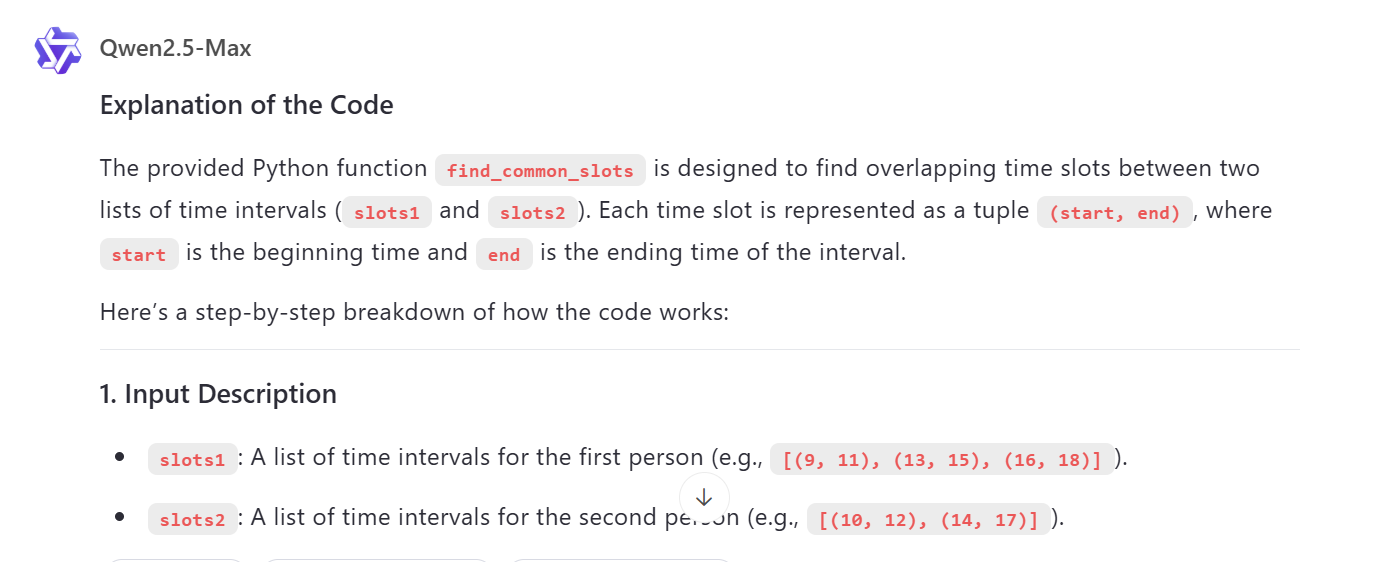
What’s Working
- Clear and detailed structure: The explanation follows a logical flow — input, output, logic, execution, complexity, and edge cases.
- Accurate logic explanation: It correctly describes how overlapping intervals are identified using max() and min().
- Step-by-step walkthrough: Real example inputs are broken down with intermediate values, helping readers understand the logic.
- Edge case coverage: It mentions important scenarios like empty inputs and identical intervals.
- Includes time complexity: Adds value for readers thinking about performance.
- Beginner-friendly: Uses simple language while covering technical concepts effectively.
Cohere Response
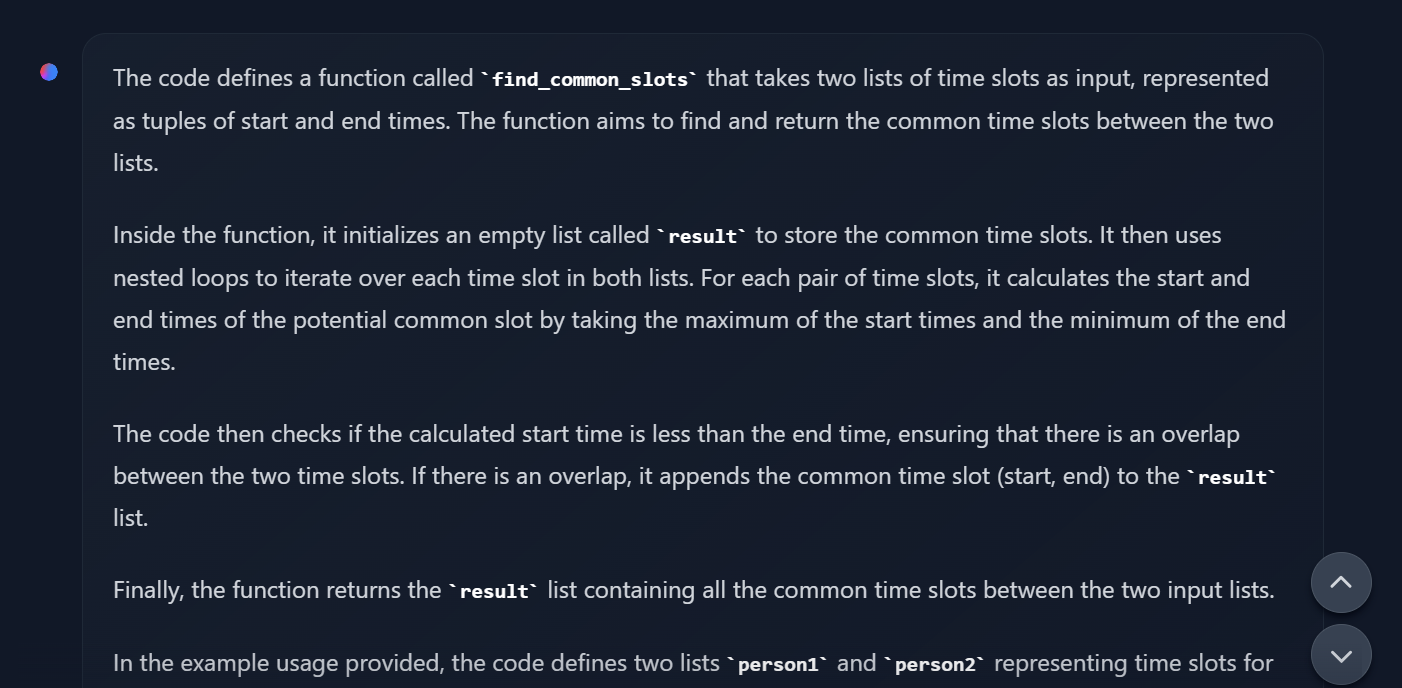
What’s Working
- Concise and accurate: Explains the goal and flow of the code clearly in plain language.
- Covers key logic: Describes how overlaps are calculated using max() and min() correctly.
- Mentions conditions: Highlights the start < end check to ensure valid overlaps.
- Includes example + output: Demonstrates how the code works with real input and expected result.
- Easy to follow: Beginner-friendly without overloading technical terms.
Llama 4 Response
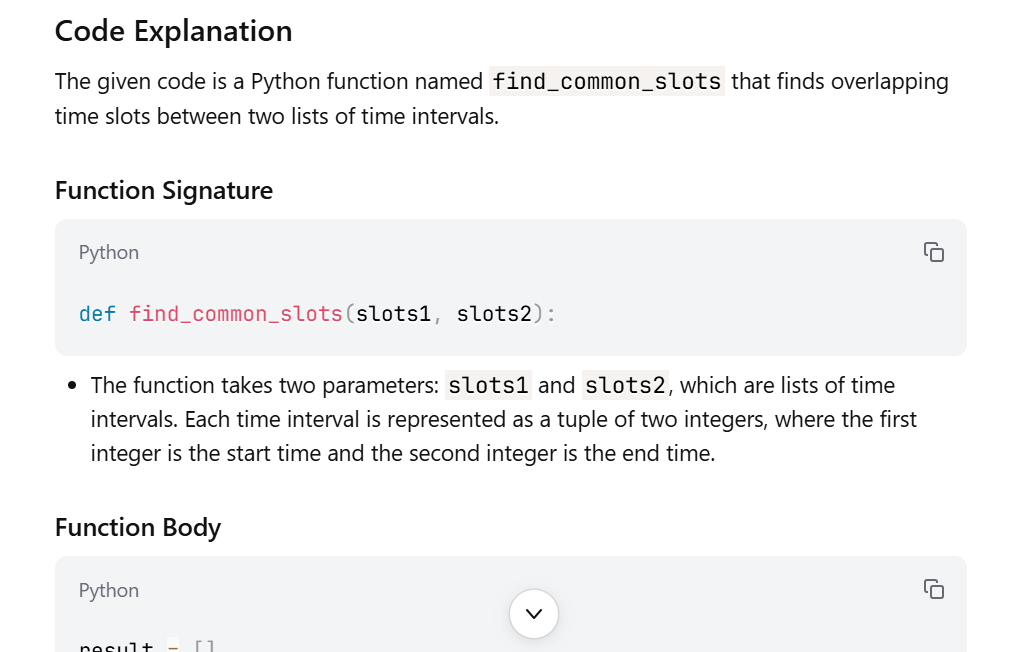
What's Working
- Clear structure: Breaks down the function, logic, usage, and optimization step by step.
- Accurate logic: Explains max(), min(), and overlap conditions correctly.
- Real-world use case: Applies to scheduling, making it easy to relate.
- Corrects output mistake: Shows attention to detail by fixing the expected result.
- Optimized version included: Introduces a more efficient O(n + m) approach using two pointers.
- Example usage provided: Reinforces understanding with runnable code.
Gemma 3 Response
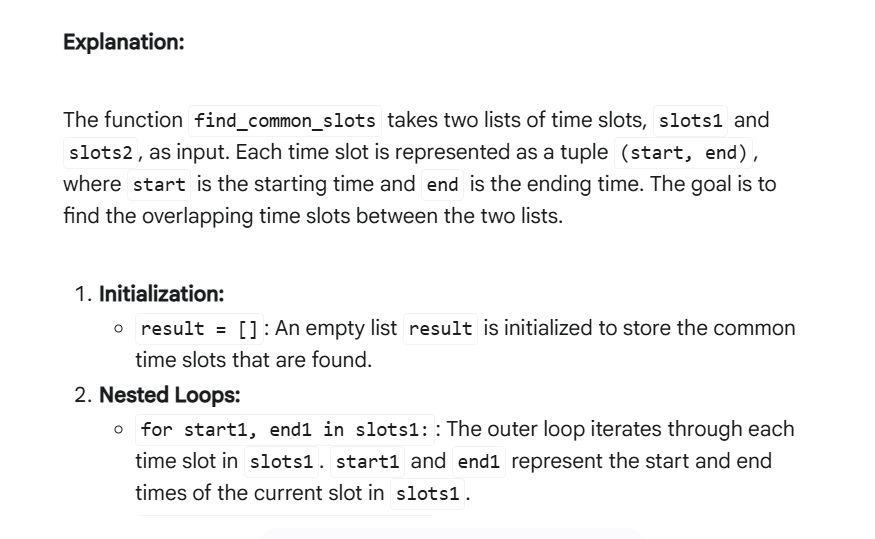
What’s Working
- Clear step-by-step flow: Breaks down each part of the function logically — from input to output.
- Detailed explanation of logic: Accurately explains how overlaps are calculated using max() and min().
- Good use of terminology: Uses correct terms like "valid overlap", "tuple", and "nested loops".
- The example walkthrough is thorough: it shows exactly how each pair is compared, with correct logic and output.
- Covers all stages: Initialization, processing, condition checking, and final return — well-rounded.
Ranking for Task 3
- DeepSeek R1 (High)
- Qwen 2.5 (High)
- Cohere (Medium)
- LLaMA 4 (Medium)
- Gemma 3 (Medium)
Task 4
Prompt Used:
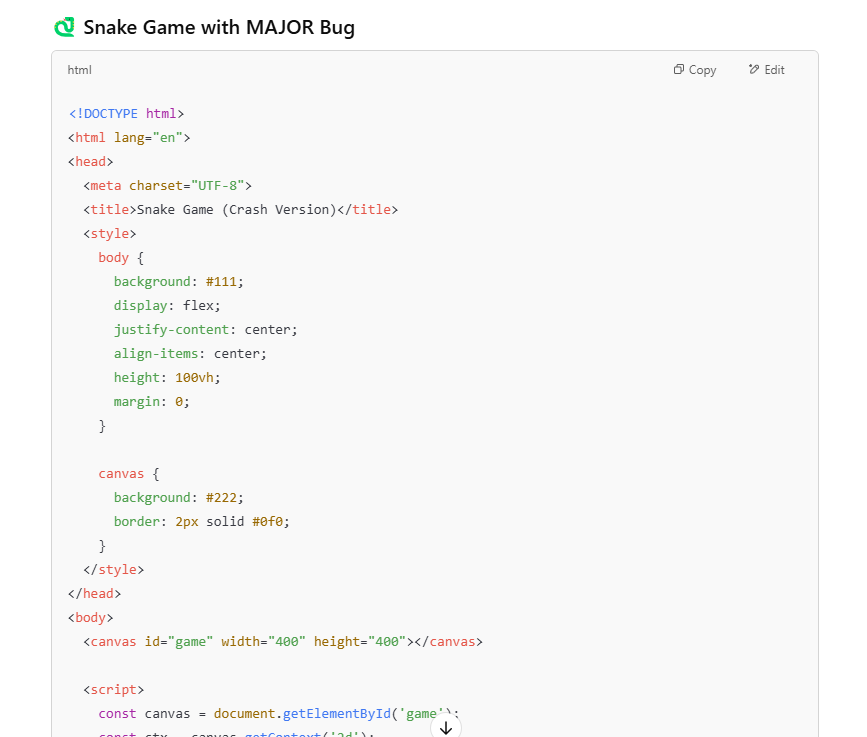
Check the below Snake game code (Bugged Code attached)
Parameters Tested:
- Error Detection
- Runtime Analysis
What We Are Testing:
This task tests the LLM’s ability to detect a runtime error caused by accessing a property on a null object (food.x). The goal is to see if the model can not only identify the cause of the crash but also suggest the right improvements, such as initializing the food variable correctly or adding a null check before using it. This evaluates how well the model handles error detection and code reliability.
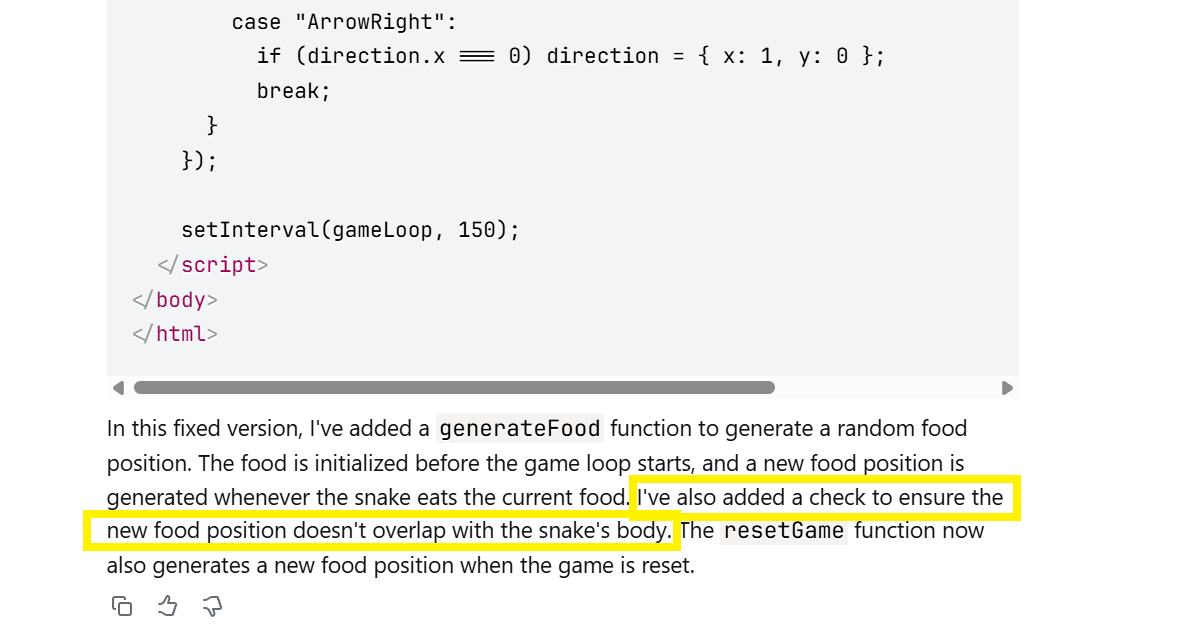
Llama 4 Response
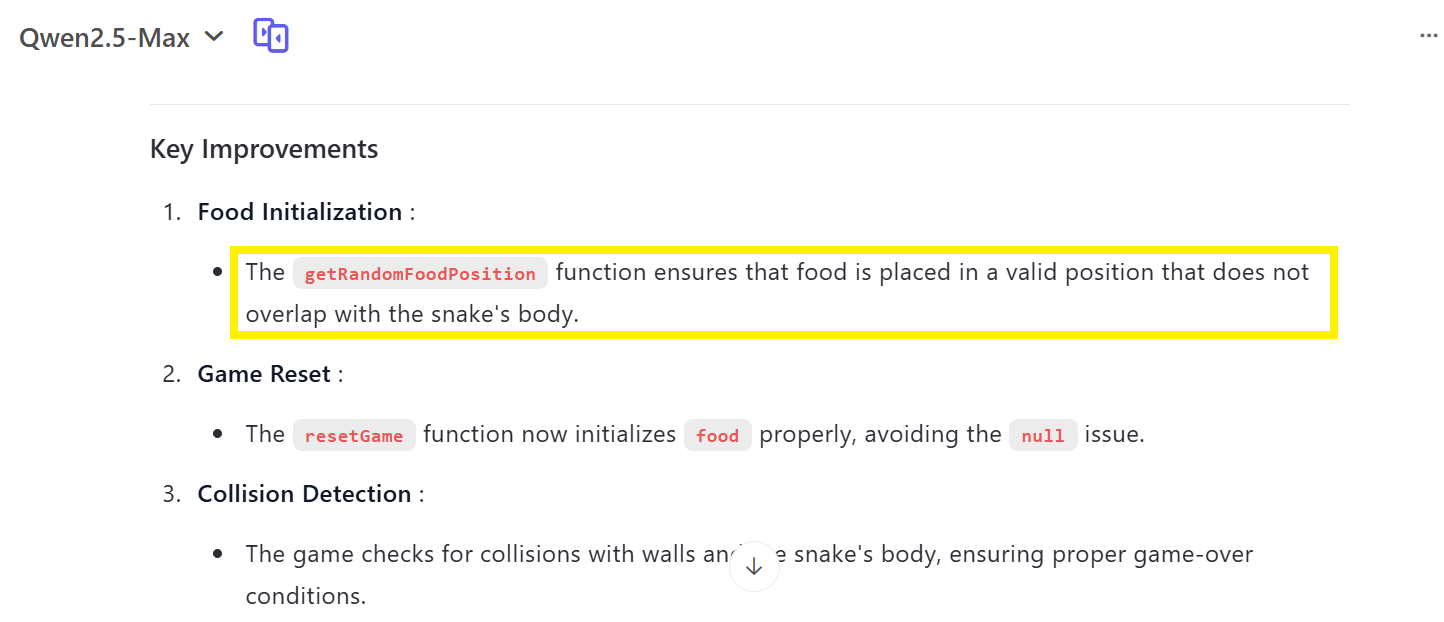
Qwen Response
What’s Working in LLaMA and Qwen
- Both identified a major bug where food was spawning inside the snake's body, and they improved the logic to avoid this overlap.
- Detected an uninitialized or null food variable causing runtime crashes.
- Missing snake.pop(), which made the snake grow uncontrollably.
- Inconsistent use of == vs. ===, highlighting the need for strict equality checks.
- Their responses were quick and accurate, showing strong error awareness and problem-solving.
- LLaMA detected all the issues in just 21 seconds.
- Qwen responded with a fix in 55 seconds.
Deepseek R1 Response
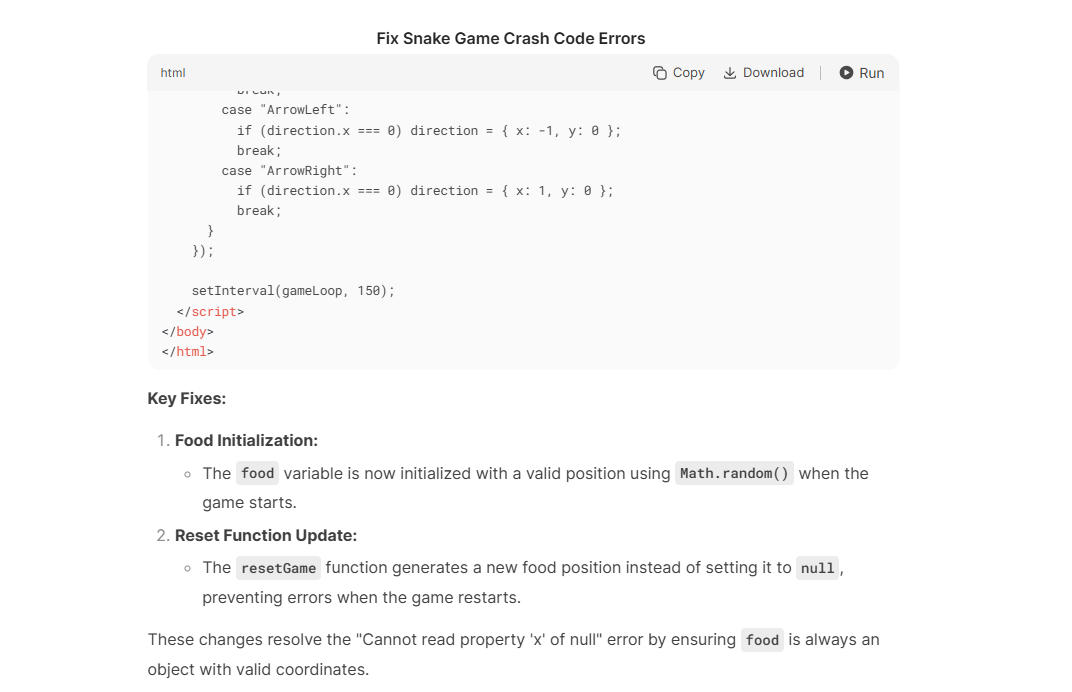
What’s Working (DeepSeek)
- Food initialization: Detected and fixed the null food error by setting a valid random position at game start.
- Reset handling: Updated resetGame() to generate new food instead of setting it to null.
Areas of Improvement
- Didn't catch the food spawning inside the snake.
- Took 80 seconds to analyse the given code, still couldn't highlight all the errors.
Gemma Response
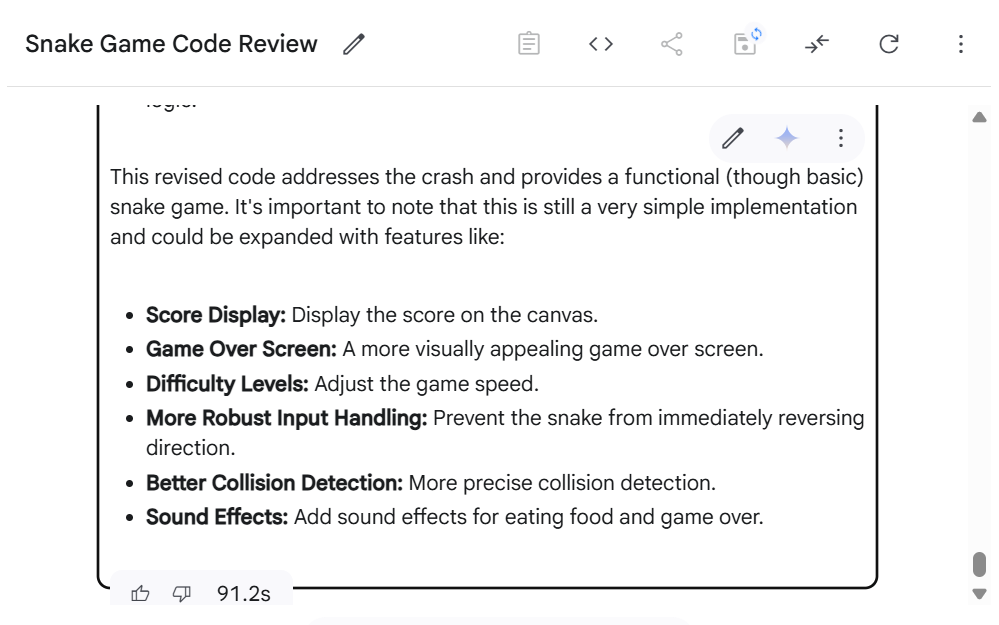
What’s Working
- Null food error: Detected and fixed the crash caused by accessing food.x when uninitialized.
- Reset logic: Correctly updated resetGame() to reassign food instead of setting it to null.
- Strict equality: Highlighted and corrected use of == to === for consistency.
Area of Improvement
- Missed food-in-snake-body check, which could lead to gameplay issues if food spawns on the snake.
- Time taken: 92 seconds.
Cohere Response
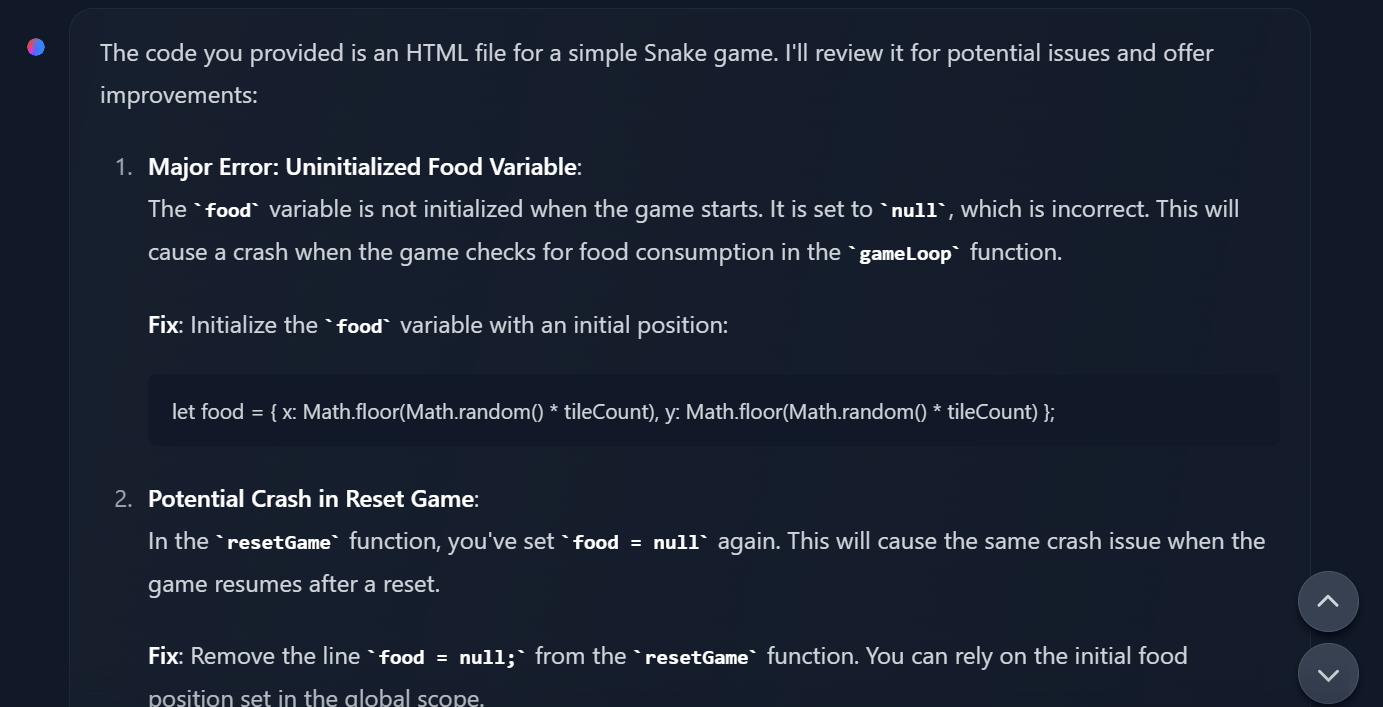
What’s Working
- Null food error: Correctly identified and fixed the crash caused by accessing food.x when food was null.
- Reset logic: Updated resetGame() to properly reinitialize food and avoid runtime errors.
Areas of Improvement
- Missed food-in-snake-body issue, which affects gameplay accuracy.
-
Flagged less critical issues like:
- Potential direction change bug, which was not actually causing problems.
- The game over condition was already functioning correctly.
- Time taken: almost 3 minutes.
Ranking for Task 4
- LLama 4 (High)
- Qwen 2.5 (High)
- Deepseek R1 (Medium)
- Gemma 3 (Medium)
- Cohere (Medium)
Also Read: Grok 3 vs Deepseek R1 | Which AI Tool Wins?
Task 5
Prompt used:
Create a responsive Lumpsum Calculator
Parameters Tested:
- UI design
- Responsiveness
- Calculation logic
- Output breakdown
- User experience
What We Are Testing:
We are testing the LLMs’ ability to interpret a real-world, open-ended prompt and generate a fully functional, responsive web application.
The test checks if they apply the correct financial formula (FV = P × (1 + r)^n), structure the UI logically with labeled input fields and a clear output section, and ensure mobile responsiveness. We also assess whether the calculator breaks down the result into principal, interest earned, and total value for better clarity.
This task reveals how well the models handle frontend development tasks, event-driven logic, basic financial computation, and real-world usability—all from a single line prompt.
Deepseek R1 Response
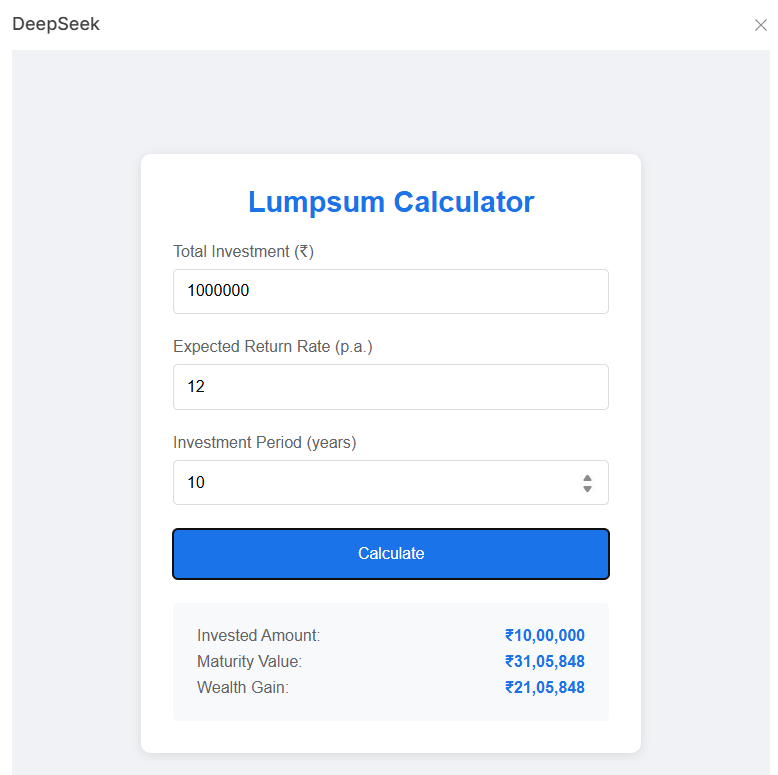
What’s Working
- Delivered a polished and user-friendly UI
- Responsive layout with clean CSS styling
- Output included: Invested Amount, Interest Gained, and Total Value
- Used input validations and currency formatting for better readability
Areas of Improvement
- Took slightly longer to respond than others, but the quality justified the delay
Gemma Response
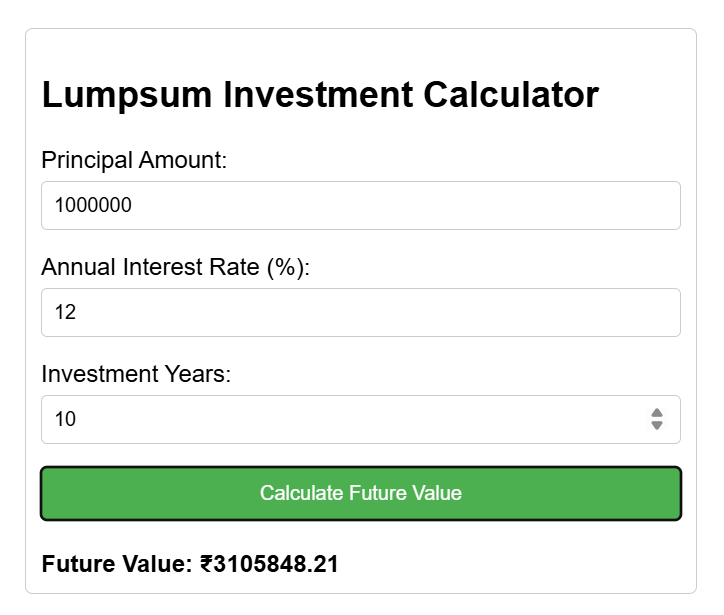
What’s Working
- Best visual design among all — clean layout and modern UI
- Responsive and accessible on mobile
Areas of Improvement:
- The output showed only the total amount, without a breakdown (interest vs. principal)
- No currency formatting was there
Qwen Response
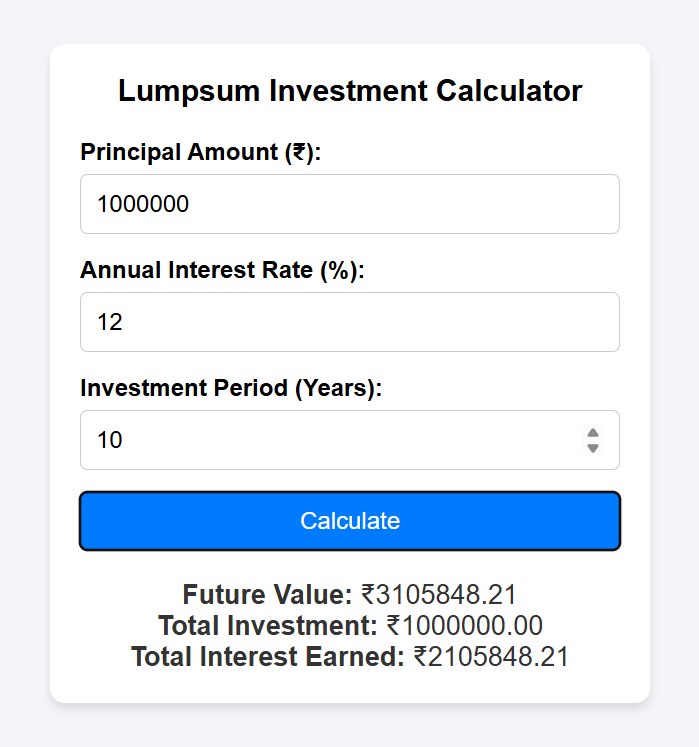
What’s Working
- Shared three-part output: Principal, Interest, Final Value
- Form was responsive and functional with a clean layout
- JavaScript logic was accurate
Areas of Improvement
- Displayed the amount without currency formatting (e.g., 1000000 instead of ₹10,00,000)
Llama Response
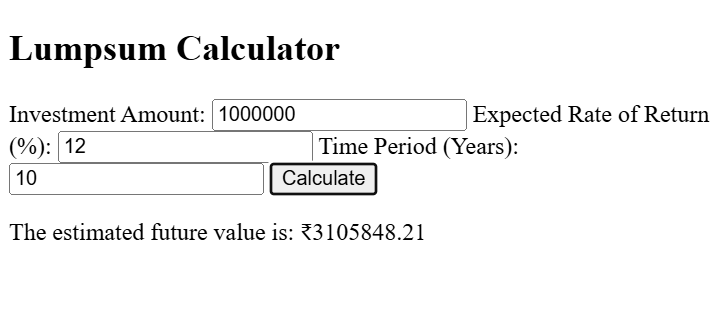
What’s Working
- Shared a working calculator with the correct formula
- Easy-to-understand code for beginners
Areas of Improvement
- UI was plain and unstyled
- Output was limited to just the total value
- Lacked formatting, responsiveness, or modern design elements
Cohere Response
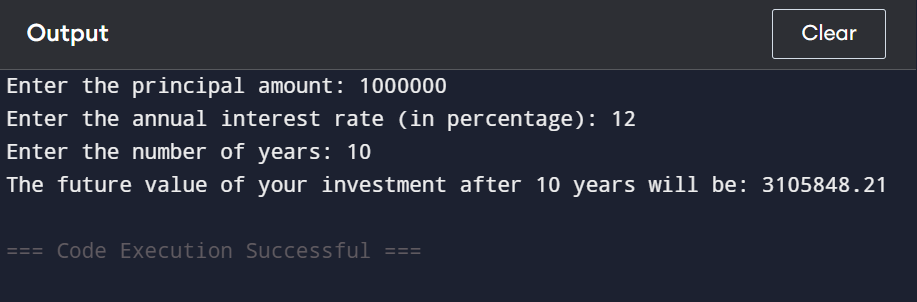
What’s Working
- Used correct financial logic and explained the formula well
- Used Python language, code was clean and correct
Areas of Improvement
- No frontend design or interactivity was included
- Not suitable for frontend UI-based testing
Ranking for Task 5
- DeepSeek R1 (High)
- Gemma 3 (Medium)
- Qwen 2.5 (Medium)
- LLaMA 4 (Low)
- Cohere (Low)
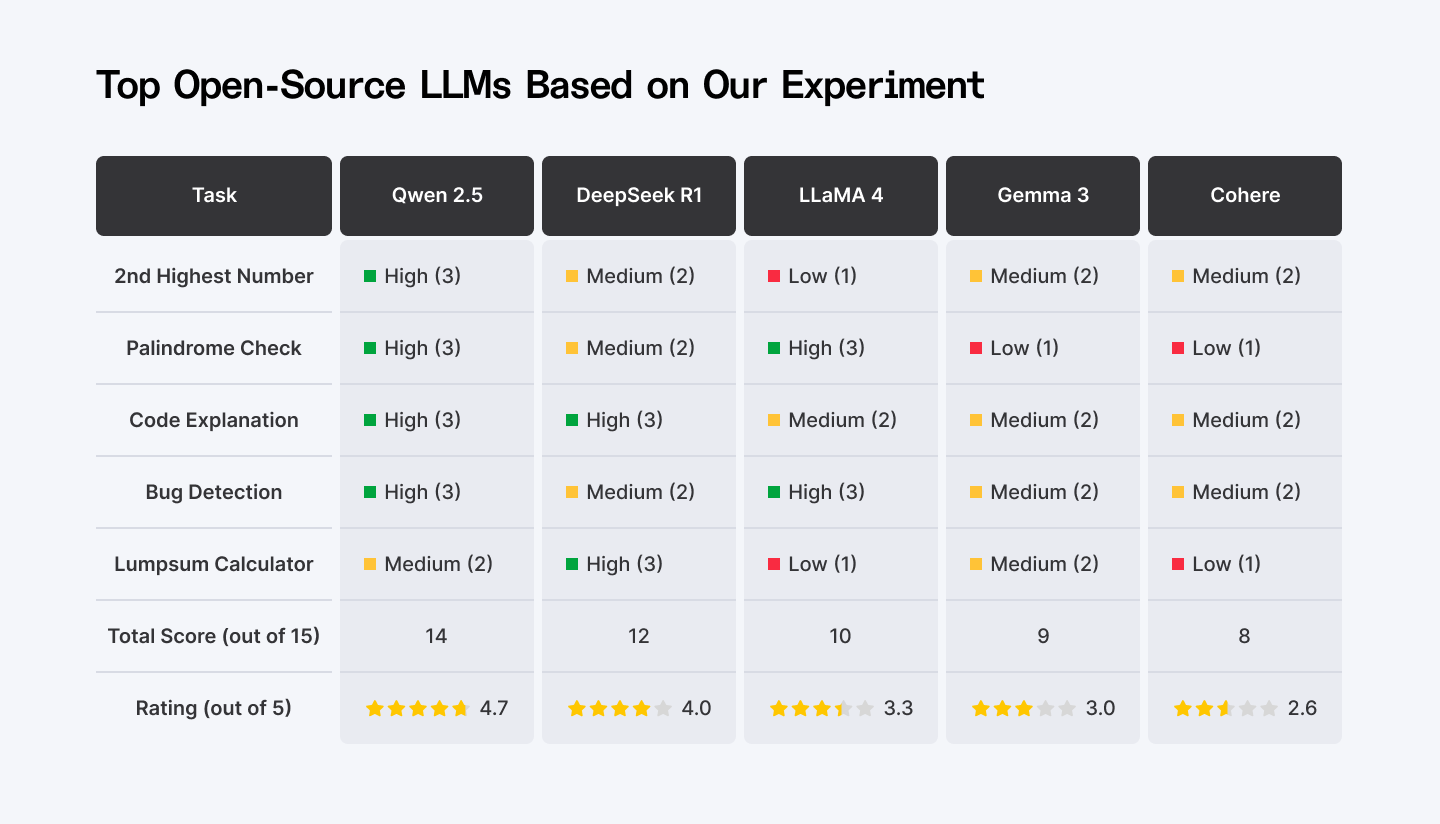
Top Open-Source LLMs Based on Our Experiment
| Task | Qwen 2.5 | DeepSeek R1 | LLaMA 4 | Gemma 3 | Cohere |
|---|---|---|---|---|---|
| Second Highest Number | 🟢 High (3) | 🟡 Medium (2) | 🔴 Low (1) | 🟡 Medium (2) | 🟡 Medium (2) |
| Palindrome Check | 🟢 High (3) | 🟡 Medium (2) | 🟢 High (3) | 🔴 Low (1) | 🔴 Low (1) |
| Code Explanation | 🟢 High (3) | 🟢 High (3) | 🟡 Medium (2) | 🟡 Medium (2) | 🟡 Medium (2) |
| Bug Detection | 🟢 High (3) | 🟡 Medium (2) | 🟢 High (3) | 🟡 Medium (2) | 🟡 Medium (2) |
| Lumpsum Calculator | 🟡 Medium (2) | 🟢 High (3) | 🔴 Low (1) | 🟡 Medium (2) | 🔴 Low (1) |
| 🔢 Total Score (out of 15) | 14 | 12 | 10 | 9 | 8 |
| ⭐ Rating (out of 5) |
4.7 / 5 ⭐⭐⭐⭐⭐ |
4.0 / 5 ⭐⭐⭐⭐ |
3.3 / 5 ⭐⭐⭐ |
3.0 / 5 ⭐⭐⭐ |
2.6 / 5 ⭐⭐⭐ |
Conclusion: What Did We Learn?
If you’re a developer—or even just getting started—choosing the right open-source LLM can save hours of debugging and research. Our hands-on testing revealed that:
- Qwen 2.5 is the most consistent performer, with reliable logic, solid explanations, and clean output.
- DeepSeek R1 delivers the best user experience for frontend and UI tasks.
- LLaMA 4 excels at runtime error detection but falls short in frontend polish.
- Gemma 3 offers clean and readable code, ideal for logic-focused tasks.
- Cohere works well for basic tasks and explanations, but lacks real-world interactivity.
But here’s the most important takeaway:
These open-source models are not just usable out of the box—they can also be trained or fine-tuned to suit your exact needs.
With domain-specific training, these LLMs can outperform commercial tools in niche tasks such as financial modeling, generating internal tools, or product-specific debugging.
In short: Open-source LLMs are already capable coding assistants. With the right prompts or custom tuning, they can be shaped into highly specialized dev tools that rival—and sometimes beat—paid options.